Three blue chips from the Straits Times Index (SGX: ^STI) spent more on share buybacks than any other primary-listed company in the week to 19 November.
The buying came just as the index slipped.
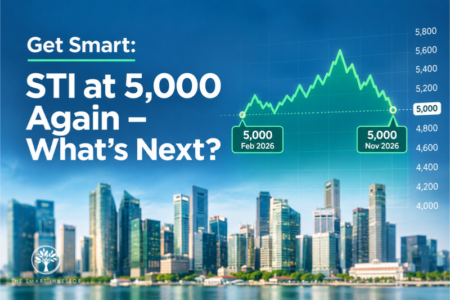
The STI fell below 5,000 on Friday, 20 November 2026.
Over those five sessions, 35 primary-listed companies bought back shares, up from 20 in the prior week.
Total spending rose to S$87.5 million from S$16.1 million.
Singapore Telecommunications Limited (SGX: Z74), or Singtel, Singapore Technologies Engineering Ltd (SGX: S63), or STE, and United Overseas Bank Limited (SGX: U11), or UOB, took the top three spots.
Together, they spent S$62.1 million, or about 71% of the week’s total.
Share buybacks by Singtel, STE and UOB, 13 to 19 November 2026
| Company | Shares repurchased | Total buyback value | Average price |
|---|---|---|---|
| Singtel | 10,000,000 | S$40,749,032 | S$4.07 |
| ST Engineering | 1,500,000 | S$13,860,291 | S$9.24 |
| UOB | 204,500 | S$7,513,535 | S$36.74 |
| Total | 11,704,500 | S$62,122,858 | – |
Source: SGX. Buyback value includes stamp duties and clearing charges.
How much room is left in Singtel’s buyback?
Singtel, a regional telecommunications and technology group with four business units, including Optus in Australia, topped the week’s table.
It bought back 10 million shares for S$40.7 million, or 46.6% of the week’s total.
The business behind the buyback is growing.
For the half year ended 30 September 2026 (1HFY2027), underlying net profit rose 10.4% year on year (YoY) to S$1.5 billion.
By 30 September 2026, Singtel had bought back and cancelled 216 million shares for S$974 million.
It had used 48.7% of its S$2 billion programme.
That left about S$1.0 billion.
The buybacks sit alongside capital recycling under its Singtel28 plan.
Singtel has unlocked S$6.8 billion since 2024, or 75% of its S$9 billion target.
About S$2.2 billion of the target remains.
In other words, both programmes still have room to run.
Shareholders also get a bigger dividend.
Singtel declared an interim dividend of S$0.09 per share, up 9.8% YoY.
It has two parts:
- Core dividend: S$0.071 per share, or 78% of underlying net profit
- Value realisation dividend: S$0.019 per share
The SGX update also lists a CEO or director disposal filing for Singtel that week, without a size.
Can ST Engineering’s order book carry its buybacks and dividend?
A global technology, defence and engineering group headquartered in Singapore, STE ranked second.
Its 1.5 million shares cost S$13.9 million, or 15.8% of the week’s total.
For the first nine months of 2026 (9M2026), STE’s revenue rose 10% YoY to S$10.0 billion.
STE does not report profit or cash flow at the nine-month mark, which means this update cannot show how much cash sits behind the buybacks.
The dividend record offers more to go on.
STE declared a third-quarter interim dividend of S$0.05 per share, up from S$0.04 a year ago.
Its 9M2026 payout reached S$0.14, against S$0.12 a year earlier.
STE’s FY2025 dividends also came in two parts:
- Ordinary dividends: S$0.18 per share, up from S$0.17 for FY2024
- Special dividend: S$0.05 per share
Under a new dividend policy from FY2026, STE will pay out about one-third of each year’s increase in net profit as extra dividends.
The order book gives revenue visibility.
It reached a record S$37.7 billion as at 30 September 2026, up from S$33.2 billion at end-2025.
The cash test comes with the full-year results.
What does it mean when UOB and its CEO buy in the same week?
UOB ranked third, buying back 204,500 shares for S$7.5 million.
Its chief executive was buying too.
On 18 November, Deputy Chairman and CEO Wee Ee Cheong bought 200,000 shares on the market for S$7.228 million.
UOB’s latest results pull in two directions.
For the third quarter of 2026 (3Q2026), operating profit before allowances fell 2.8% YoY to S$1.8 billion, and net interest margin narrowed to 1.68% from 1.82%.
Net profit attributable to shareholders rose 182.2% YoY to S$1.3 billion.
That rise came off a low base.
A year ago, UOB set aside S$1.4 billion in allowances, including pre-emptive provisions.
UOB pays dividends twice a year and did not declare one for the quarter, but that reflects its schedule, not a cut.
A CEO who buys with his own money alongside the company sends a signal worth noting.
However, it does not erase the margin pressure in the quarter.
Get Smart: Follow the money behind the buyback
A buyback tells you a company is willing to spend, but it does not tell you whether that spending can last.
Before you read a buyback as a vote of confidence, find the money behind it.
Singtel can show S$6.8 billion unlocked through capital recycling.
STE and UOB have more to prove: watch STE’s full-year cash flow and UOB’s operating profit.
After the STI’s fall below 5,000 on 20 November 2026, keep an eye on SGX’s weekly buyback table.
Will these three still be buying in the weeks ahead?
The world’s gotten unpredictable, but some Singapore companies have quietly kept thriving. You’ve probably seen them in your daily life. And yes, they’ve kept paying dividends through it all. Meet 5 resilient stocks built to navigate global storms. Get the free report here and see how they’ve done it.
Follow us on Facebook, Instagram, Telegram and YouTube for the latest investing news and analyses!
Disclosure: Joanna Sng owns shares in STE and UOB.