Most investors looking for a piece of the artificial intelligence (AI) boom turn to Wall Street.
But the boom depends on a long supply chain, and some of the businesses powering it are listed here in Singapore.
Micro-Mechanics (Holdings) Ltd (SGX: 5DD), Digital Core REIT (SGX: DCRU) and Info-Tech Systems Ltd (SGX: ITS) operate at different points along that chain, from the chip factory to the people putting AI to work.
| Company | Period | Revenue (YoY) | Earnings Measure (YoY) | Balance Sheet | Dividend / Distribution |
|---|---|---|---|---|---|
| Micro-Mechanics (SGX: 5DD) | 1QFY2027 (3 months) | +45.0% | Net profit +102.8% | S$33.3m cash, no bank borrowings | None declared (declares in 2Q and 4Q) |
| Digital Core REIT (SGX: DCRU) | 9M2026 | +1.6% | Distributable income -1.1% | Aggregate leverage 41.6% | Trailing 12-month distribution US$0.0360 |
| Info-Tech Systems (SGX: ITS) | 9M2026 | +20% | Not disclosed | Debt-free per CEO (no figures given) | Not covered in update |
Here’s how each business is benefiting from the trend, and what its numbers tell dividend investors.
How is Micro-Mechanics riding the chip cycle?
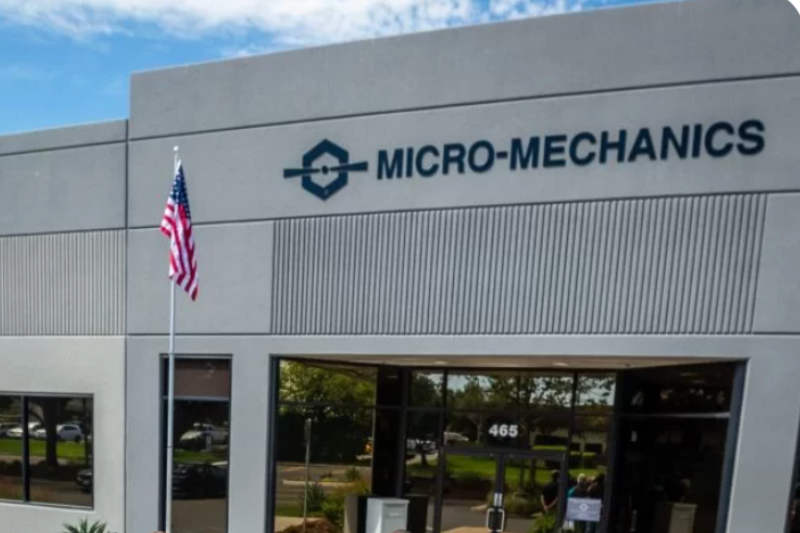
Micro-Mechanics makes precision tools and parts used in semiconductor manufacturing.
For the first quarter of fiscal 2027 ended 30 September 2026 (1QFY2027), its Consumable Tools division contributed 75.8% of revenue through the sale of tools that reduce defects and improve yields in advanced chip packaging, assembly and testing.
1QFY2027 revenue rose 45.0% year on year (YoY) to S$24.2 million, an all-time quarterly high.
Net profit climbed 102.8% YoY to S$6.4 million, also a quarterly record, while gross margin widened to a 20-quarter high of 55.0%, from 51.5% a year ago.
The company links its outlook to wider industry demand, noting that global chip sales grew amid strong demand for AI, computing and memory, while it continues to see strong demand across its key markets.
Under a five-year strategy launched in FY2027, Micro-Mechanics aims to double revenue from FY2026 levels to at least S$150 million by FY2031.
Its balance sheet also stands out, with S$33.3 million in cash and no bank borrowings as at 30 September 2026.
Free cash flow (operating cash flow minus capital expenditure), however, slipped 10.6% YoY to S$3.7 million as capital expenditure rose to S$0.9 million from S$0.3 million.
Spending is set to climb further, with the company planning to invest S$12.0 million in FY2027 to expand its manufacturing footprint.
No dividend was declared for the quarter, in line with its practice of usually declaring dividends in the second and fourth quarters.
The company says its net cash position allows it to pay consistent dividends.
Can Digital Core REIT’s data centres grow its DPU?
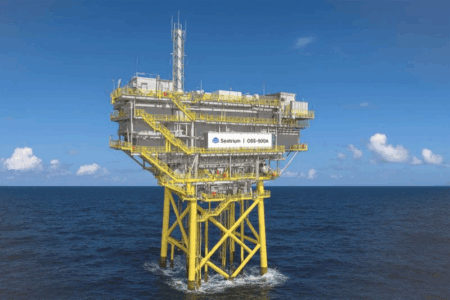
Digital Core REIT is a data centre real estate investment trust (REIT) sponsored by Digital Realty.
As at 30 September 2026, before a pending portfolio transaction, it owned 11 freehold data centres across the US, Canada, Germany and Japan.
It holds assets under management of US$1.9 billion.
Demand for data centres is showing up in rental rates, with new and renewal leases signed in the first nine months of 2026 (9M2026) achieving a cash rental reversion of 23%.
Management cites growth in AI workloads as a demand driver, but this has yet to translate into stronger income.
For 9M2026, revenue rose 1.6% YoY to US$134.5 million, but net property income (NPI) fell 4.3% to US$64.8 million, mainly due to the redevelopment of 8217 Linton Hall Road in Northern Virginia.
Distributable income to unitholders also slipped 1.1% YoY to US$34.8 million.
There could be an improvement ahead, as Linton Hall is now fully leased.
The lease is expected to start on 1 December 2026 and add US$18.1 million in annualised rent.
Management expects 2027 DPU of between US$0.0415 and US$0.0425, compared with a trailing 12-month distribution of US$0.0360, implying growth of roughly 15% to 18%.
Risks remain, though: in-service occupancy stood at 97.0%, while Los Angeles occupancy slipped to 84.1% from 85.6% as at 30 June 2026.
The pending portfolio transaction, which includes buying a 2.5% stake in a Singapore data centre, would also see the REIT enter Singapore.
The transaction would reduce aggregate leverage from 41.6% to 37.6% on a pro forma basis.
Where does Info-Tech Systems fit into the AI story?
Info-Tech Systems is a software-as-a-service (SaaS) provider of cloud-based HR, accounting and customer relationship management (CRM) software, serving more than 28,000 businesses across five countries.
Its AI connection is through people rather than infrastructure, as its Info-Tech Academy runs AI-related training courses that have helped drive growth in its services business.
For 9M2026, revenue rose 20% YoY to S$42.6 million, while subscription revenue, which accounts for about three-quarters of the total, grew 11% to S$32.2 million.
Services revenue grew much faster, rising 82% YoY to S$8.6 million on demand for the Academy’s AI-related WSQ courses in Singapore.
Services now account for 20% of revenue, up from 13% a year ago.
Dividend investors, however, have less information to work with, as the update relied on unaudited management accounts and did not disclose profit or free cash flow.
Its CEO described a strong cash position and a debt-free balance sheet but gave no figures, and the update made no mention of dividends.
Management expects demand for Academy courses to normalise after an exceptional surge in 4Q2025, which came ahead of the expiry of a S$500 SkillsFuture Credit top-up.
This leaves a high base for the fourth quarter.
Get Smart: Buy the dividend, not the theme
All three companies point to AI as a source of demand, but that does not automatically make them good income investments.
Dividend investors need to look beyond the theme and check whether each business generates enough cash after funding its growth.
Does it have a track record of returning that cash to shareholders?
On the figures disclosed, Micro-Mechanics clears both checks.
Digital Core REIT is counting on a lease expected to start in December.
Info-Tech has yet to disclose enough information to assess its cash generation and dividend prospects.
Before buying any AI-linked stock for income, ask yourself one question: when the excitement fades, will this business still pay you?
A new S$5 billion initiative is changing the landscape for Singapore investors. We dug into 5 local companies that could benefit most — names you probably already know. The best part? They’re paying dividends while you wait. See the full findings inside our latest FREE report here.
Follow us on Facebook, Instagram, Telegram and YouTube for the latest investing news and analyses!
Disclosure: Calvina L. does not own shares in any of the companies mentioned. Chin Hui Leong contributed to this article and owns shares in Micro-Mechanics.