Few numbers catch a dividend investor’s attention faster than a double-digit rise in distribution per unit (DPU).
Three SGX-listed REITs have just delivered one, but a bigger payout matters only if it can last.
| REIT | Period | DPU | Change (YoY) |
|---|---|---|---|
| Parkway Life REIT (SGX: C2PU) | 9M2026 | S$0.131 | +13.4% |
| Keppel DC REIT (SGX: AJBU) | 9M2026 | S$0.0857 | +11.7% |
| Suntec REIT (SGX: T82U) | 3Q2026 | S$0.02017 | +13.4% |
Each REIT got there in a different way, so the key question is where the extra income came from and whether that source can deliver again next year.
Why is Parkway Life REIT’s DPU growth built into its leases?
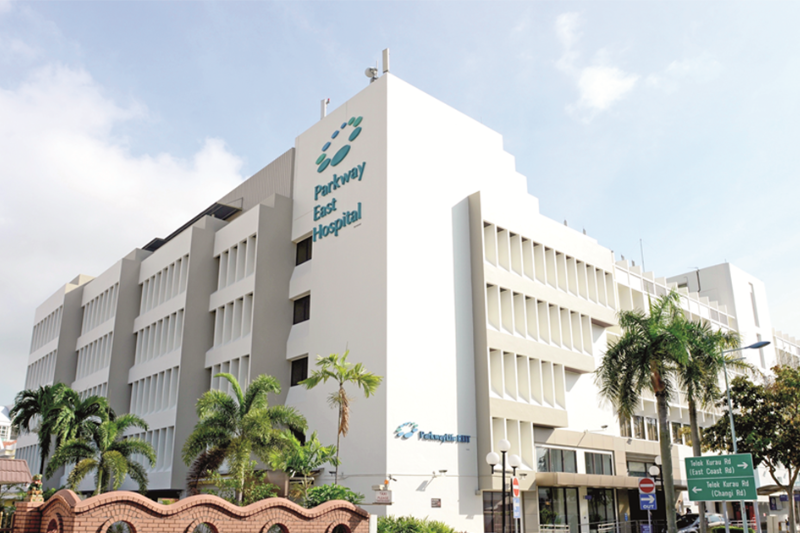
Parkway Life Real Estate Investment Trust (SGX: C2PU), or PLife REIT, owns 73 properties: three private hospitals in Singapore, 59 nursing homes in Japan and 11 in France.
For the first nine months of 2026 (9M2026), DPU climbed 13.4% year on year (YoY) to 13.10 cents, even as gross revenue slipped 1.9% to S$115.1 million and net property income (NPI) dipped 2.4% to S$108.0 million.
The declines were caused by a softer yen and a tenant exit at five Japanese nursing homes.
However, PLife REIT hedges its Japan income, and gains on its currency forward contracts are expected to offset the lower revenue
The DPU growth instead comes from Singapore, where the hospitals are leased to Parkway Hospitals Singapore until 31 December 2042.
For 2026, the rent is the higher of base plus variable rent, or the S$97.2 million initial rent raised by consumer price index (CPI) plus 1%.
That sets a guaranteed minimum rent of S$99.1 million, up 24.3% from S$79.7 million in FY2025.
Higher hospital rent, together with step-up leases in France, drove the distribution growth.
PLife REIT has also held back S$1.7 million of revenue sharing from the first half of 2026 (1H2026), which will be paid out in 2H2026.
In addition, it has agreed to buy three French nursing homes for €38.8 million (about S$56.5 million) in a sale and leaseback with DomusVi, with completion expected by December 2026, subject to conditions.
Can Keppel DC REIT keep raising its rents?
Keppel DC REIT (SGX: AJBU) owns 27 data centres across 10 countries, with 87.4% of its assets under management in Asia Pacific.
For 9M2026, DPU climbed 11.7% YoY to 8.57 cents, while NPI increased 13.1% to S$316.8 million.
A key driver was higher rents, with rental reversion at around 14% for the period.
Portfolio occupancy also improved to 93.0% as at 30 September 2026, up from 92.5% in 2Q2026, while the acquisition of Tokyo Data Centre 3 and higher effective interests in Keppel DC Singapore 3 and 4 added to growth.
However, higher income came with higher costs, as finance costs rose 28.1% YoY.
The September 2026 private placement also enlarged the unit base before the new Tokyo assets started contributing income.
Keppel DC REIT completed the purchase of an 88.62% effective interest in Tokyo Data Centres 4 and 5 on 1 October 2026 for around S$1.4 billion.
Their in-place rents are more than 30% below market levels, and the manager expects the deal to lift DPU by 2.0%.
The purchase was funded by a mix of new units from a private placement and a ¥24 billion loan, which adds to the REIT’s debt.
Aggregate leverage stood at 36.2% as at 30 September 2026 and would rise to 38.8% on a pro forma basis.
Will Suntec REIT’s DPU growth hold up?
Suntec Real Estate Investment Trust (SGX: T82U), or Suntec REIT, is a composite REIT with properties across Singapore, Australia and the UK.
Unlike those of the other two REITs, its latest figures cover a single quarter rather than nine months.
For the third quarter of 2026 (3Q2026), DPU rose 13.4% YoY to 2.017 cents, while NPI increased 6.2% to S$83.4 million.
Singapore was the main contributor, with committed occupancy at 99.6% for the office portfolio and 98.6% for retail, alongside rental reversions of 7.3% and 11.2%, respectively.
A S$1.8 million fall in financing costs also supported DPU growth, although cheaper funding is a less dependable source of growth than higher rent.
Growth was also achieved against a tougher base: the year-ago quarter included a S$2 million reversal of an Australian withholding tax provision.
Suntec REIT is also preparing to reshape its portfolio, having launched sales campaigns for three Australian properties to reduce its overseas exposure.
The manager lists a lower aggregate leverage ratio and/or unit buy-backs as possible outcomes.
Get Smart: Sort the growth before you count it
A DPU increase is only as durable as the income behind it, so investors should look beyond the headline figure.
Contracted growth is the most dependable of the three sources here.
PLife REIT’s hospital rent formula provides a floor under its income for years, while Keppel DC REIT’s rental growth depends on tenants continuing to renew their leases at higher rates.
Interest savings are less reliable because they can boost this year’s figures without necessarily repeating next year.
On the other hand, one-off items in the year-ago figures can make growth look weaker or stronger than it really is.
The next time a REIT announces a double-digit DPU increase, ask where the extra money came from.
Can that same source support another increase next year?
The world’s gotten unpredictable, but some Singapore companies have quietly kept thriving. You’ve probably seen them in your daily life. And yes, they’ve kept paying dividends through it all. Meet 5 resilient stocks built to navigate global storms. Get the free report here and see how they’ve done it.
Follow us on Facebook, Instagram, Telegram and YouTube for the latest investing news and analyses!
Disclosure: The Smart Investor owns units of Parkway Life REIT and Keppel DC REIT.