SpaceX 3Q2026 Core Segment & Company Summary
| Business Segment / Level | 3Q2026 Revenue | Operating Profit / Loss | Key Highlights & Growth Drivers |
|---|---|---|---|
| Super Intelligence (SI) | US$7.56 billion (+829.9% YoY) | US$431 million profit (vs. -$1.72 billion loss) | Largest revenue driver (51.9% share); 1.7 GW compute capacity with sub-1-year payback. |
| Connectivity (Starlink) | US$5.20 billion (+69.5% YoY) | US$2.37 billion profit (45.1% margin) | Core profit engine; consumer subscribers rose 88.9% YoY and Starlink Mobile reached >22 million users. |
| Consolidated SpaceX | US$14.58 billion (+161% YoY) | US$2.79 billion operating profit (Net: US$4.40 billion) | First profitable public quarter; backed by US$63 billion backlog and US$51 billion net cash position. |
Space Exploration Technologies Corp. (NASDAQ: SPCX), or SpaceX, has posted its first profitable quarter as a listed company in its third-quarter 2026 (3Q2026) results.
The reason?
A blowout quarter beyond consensus estimates, with artificial intelligence (AI) and Starlink doing the heavy lifting.
A Profitable Turn
SpaceX’s 3Q2026 revenue surged 161% year on year (YoY) to US$14.58 billion, while net income flipped from a US$1.05 billion loss to a US$4.40 billion profit, driven by rapid growth in Starlink’s customer base and higher revenue contributions from the Super Intelligence (SI) segment.
The surge in AI rental revenue has won over some analysts, but not all.
Morningstar raised its fair-value estimate for SpaceX but still considers the shares significantly overvalued, trading at roughly twice that estimate.
These improved results are landing SpaceX on growth investors’ watchlists.
Super Intelligence: The New Top-Line Powerhouse
SpaceX’s SI (previously AI) segment delivered a superb 3Q2026 performance, with revenue rising 829.9% YoY to US$7.56 billion, swinging from an operating loss of US$1.72 billion to an operating profit of US$431 million.
Large Grok Enterprise (including Cursor) customer accounts within the SI division – those that already generate over US$1 million in annual run-rate revenue – grew 50% quarter on quarter (QoQ) on a pro forma basis.
Remarkably, the SI segment now generates 51.9% of total net sales, surpassing satellite connectivity as the largest revenue contributor.
Crucially, it’s showing no signs of slowing.
While its active compute capacity reached 1.7 gigawatts (GW) as of 30 September 2026, management targets between 2.5 GW and 3.0 GW by the end of 2026 and around 13 GW by the end of 2027.
To sweeten the deal, management says the newly deployed compute is paying back its cost in less than a year at current rental prices.
That is a sign that, for now, demand is keeping pace with SpaceX’s build-out.
Starlink’s Profitability
While SI dominates the headlines, SpaceX’s Starlink and launch segments provide steady growth and space supremacy, respectively.
Revenue from the Connectivity segment, which houses Starlink, rose 69.5% YoY to US$5.20 billion, supported by an 88.9% jump in consumer subscribers and a US$1.02 billion increase in enterprise and government revenue, led by Starshield (its US government business) and airline installations.
Although average revenue per user (ARPU) for consumers fell 16.9% YoY to US$69 a month, the bigger subscriber base more than made up for it, with consumer revenue up 57%.
Starlink Mobile, its satellite-to-mobile broadband service, performed well, with monthly active users surging 37% QoQ to more than 22 million.
Generating $2.37 billion in operating profit at a 45.1% margin, the Connectivity segment remains SpaceX’s biggest profit engine.
Space Supremacy
SpaceX’s Space Operations 3Q2026 revenue rose 6.1% YoY to US$1.77 billion despite launches falling from 44 to 35, helped by a more favourable mix of customer missions.
That said, the segment slipped to a small operating loss of US$7 million, from a US$259 million profit a year ago, as SpaceX ramped up spending on Starship development.
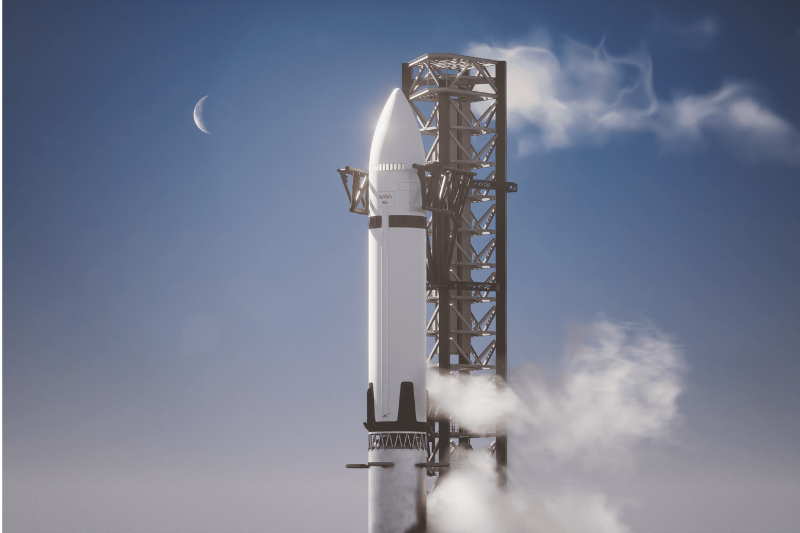
Notably, SpaceX successfully sent Starship – its towering next-generation rocket – into orbit for the first time on Flight 14 and delivered 26 of its latest Starlink V3 satellites, marking a major milestone.
According to Starlink, a single V3 satellite provides ten and twenty-two times the downlink and uplink capacity, respectively, compared with a V2 satellite, potentially reducing its cost per unit bandwidth, which could in turn drive future margin expansion.
Explosive Guidance vs. Spending Realities
SpaceX reiterated its target of US$100 billion in annualised revenue run rate (ARR) by the end of 2026, while CEO Elon Musk suggested ARR could reach $500 billion to $1 trillion by end-2027, a five- to tenfold increase within a year.
This comes after increased visibility into SpaceX’s compute contract pipeline over the next six months.
Its massive backlog of US$63 billion, of which $42 billion is expected to be recognised within twelve months, also bolstered management’s optimism.
However, behind the rosy guidance lies an immense capital commitment.
Beyond its compute hardware and power build-out, SpaceX is also constructing Starbase, Louisiana.
The new spaceport is designed to handle thousands of Starship flights a year, with its first launch targeted for 2029.
In the first nine months of 2026 (9M2026), its operating cash flow and capital expenditure (capex) stood at US$13.10 billion and US$48.07 billion, respectively, pushing its free cash flow (FCF) into the red.
With its fourth quarter 2026 (4Q2026) capex projected to spike from US$19.59 billion in 3Q2026 to between $35 billion and $40 billion, its negative FCF is expected to worsen.
As of 30 September 2026, SpaceX maintained a decent balance sheet, supported by a favourable current ratio of 3.08x and a net cash position of US$51 billion, providing a cushion against its cash burn.
Get Smart: The Takeaway for Growth Investors
SpaceX delivered its first profitable quarter as a listed company, powered by its SI and Starlink divisions.
Management’s outlook, including 1Q2027 revenue guidance of US$33 billion to US$37 billion, suggests this growth is set to continue.
While rising capex drags down its FCF, raising investor concerns, SpaceX’s sub-one-year payback on new compute at current pricing, alongside its massive backlog, should not be ignored.
Anchoring the space economy, SpaceX sits at the unique intersection of orbital infrastructure and artificial intelligence – an unmatched competitive advantage.
However, investors should size their positions carefully, given SpaceX’s increasingly intense capital spending.
Not all AI “winners” will survive this cycle.
But a few companies already have the scale, cash flow, and edge to pull ahead. We highlight what to look for in our FREE volatile market report. Download it here.
Follow us on Facebook, Instagram, Telegram and YouTube for the latest investing news and analyses!
Disclosure: Larry L owns shares of SpaceX.