Keppel DC REIT (SGX: AJBU) grew its distribution per unit (DPU) in the first half of 2026 (1H 2026).
DPU rose 11.3% year on year to S$0.05714, while distributable income grew even faster, up 18.5% to S$150.7 million.
Keppel DC REIT: Earnings Summary
| S$ million (except DPU) | 1H 2026 | 1H 2025 | Change (year on year) |
| Gross revenue | 242.0 | 211.3 | +14.5% |
| Net property income | 210.4 | 182.8 | +15.1% |
| Distributable income | 150.7 | 127.1 | +18.5% |
| DPU (S$) | 0.05714 | 0.05133 | +11.3% |
Positive rental reversions and escalations lifted income.
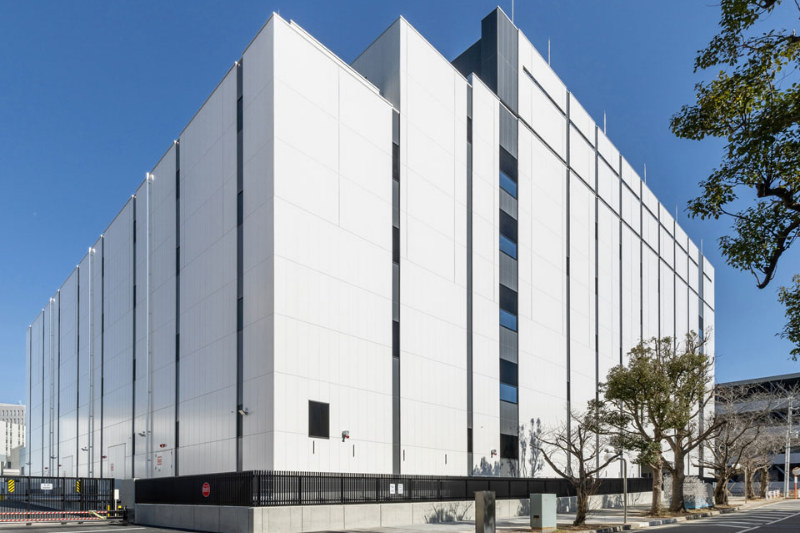
The REIT also bought Tokyo Data Centre 3 and, in February 2026, completed its purchase of the remaining interests in Keppel DC Singapore 3 and 4.
But that’s only part of the story.
Where is the growth coming from?
Demand for data centres is still the main engine.
The REIT manager points to forecasts that global data centre capacity will grow 25% a year to reach 256 GW by 2030.
What’s holding back the new supply isn’t money.
It’s power.
According to Keppel DC REIT, the hardest part of building a data centre is securing enough electricity and a grid connection, then winning planning approval.
These hurdles are steepest in established “Tier 1” markets such as Singapore, Japan and the major European hubs, where land and power are in short supply.
That scarcity plays to Keppel DC REIT’s strengths.
The REIT already owns operating data centres in exactly these markets, and clients have contracted around 95% of the power capacity it can earn revenue from.
How is Keppel DC REIT paying for its growth?
With more debt, though on better terms than a year ago:
- Average cost of debt fell to 2.6% in 1H 2026 from 3.0% a year ago.
- Interest cover rose to 6.9 times from 5.9 times.
- Fixed-rate debt rose to 87% of borrowings from 76%.
A bigger debt load still costs more.
Total borrowings grew from S$1.6 billion in 1H 2025 to around S$2.3 billion in 1H 2026, and finance costs climbed 25.2% year on year to S$30.7 million.
Gearing rose to 34% from 30%.
In short, Keppel DC REIT is carrying more debt at a lower interest rate.
That trade-off works as long as the newly acquired assets earn more than they cost, and net property income (NPI) growth of 15.1% to S$210.4 million suggests they do.
What are the risks?
Internet enterprise clients, mostly hyperscalers, accounted for 70.4% of rental income as of 30 June 2026, up from 67.4% a year earlier.
Here’s the rub: Keppel DC REIT’s single largest client contributes 43.5%.
This concentration cuts both ways.
Hyperscalers generally have higher credit quality and give investors direct exposure to AI-driven demand.
Unfortunately, Keppel DC REIT has not named its largest client.
Meanwhile, portfolio occupancy slipped to 92.5% in 1H 2026 from 95.8% a year ago.
Almost all of the decline comes from Cardiff Data Centre, whose contract expired in June 2026 and which now sits vacant.
Strip Cardiff out and portfolio occupancy would be 95.3%.
A few other assets still need work.
Keppel DC Singapore 1 remains at 46.5% occupancy after the non-renewal of its non-data-centre space, which makes up a significant portion of the asset.
The sale of Basis Bay, which has 40.2% occupancy, is taking longer than expected.
Keppel DC REIT announced the divestment on 2 January 2025 and had targeted completion by 3Q 2025.
In Guangdong, the manager has committed to no significant capital expenditure on its troubled data centres as it explores exit options.
Get Smart: Follow the rent back to who pays it
Keppel DC REIT owns data centres in markets where power limits new supply, and that position supports its growth.
A distribution, though, is only as dependable as the tenants who pay the rent.
When one client contributes 43.5%, that client’s financial health matters as much as the industry’s growth.
So before you weigh up any REIT’s DPU growth, ask yourself: how much of the rent comes from the biggest tenant, and how confident are you that it will keep paying?
The answer may give you a clue as to whether you should buy the REIT.
Don’t let market uncertainty hijack your financial dreams. While headlines scream gloom, 5 Singapore companies have been quietly building wealth and paying reliable dividends. You’re probably overlooking them. Discover these resilient giants and their secrets to sustained income, even through global storms. Click here to download your free report now and secure your financial future!
Follow us on Facebook, Instagram, Telegram and YouTube for the latest investing news and analyses!
Disclosure: Chin Hui Leong owns units of Keppel DC REIT.