Most dividend investors head straight for the profit numbers, but the balance sheet often tells you more.
A company with more cash than debt enjoys a comfortable cushion, allowing it to maintain dividend payouts even when earnings take a temporary dip.
Singapore Exchange Limited (SGX: S68), Venture Corporation (SGX: V03) and Genting Singapore (SGX: G13) all hold net cash.
However, each business puts its cash pile to work in distinctly different ways.
| Stock | Dividend | Free Cash Flow (FCF) |
| Singapore Exchange Limited(SGX: S68) | S$0.570 per share (FY2026 total) | S$788.8 million (+2% YoY) |
| Venture Corporation Limited(SGX: V03) | S$0.30 per share (1H interim) | -S$0.9 million(down from S$137.7M) |
| Genting Singapore Limited(SGX: G13) | S$0.02 per share (1H interim) | S$8.9 million(up from -S$5.8M) |
Can SGX keep raising its dividend?
Singapore Exchange (SGX) runs Singapore’s sole stock market.
At the end of FY2026 on 30 June 2026, the exchange held S$1.8 billion in cash against S$628.2 million in borrowings.
This leaves a net cash reserve of roughly S$1.2 billion, and management plans to repay all of its debt in FY2027.
On the back of these numbers, SGX’s full-year ordinary dividend comes to S$0.445 per share, alongside a proposed one-off additional dividend of S$0.125 per share from capital recycling gains.
This brings the full-year payout to S$0.570 per share.
Free cash flow, which ultimately powers sustainable distributions, came in strong at S$788.8 million, ahead of adjusted net profit of S$759.5 million.
Net revenue rose 13.9% year on year (YoY) to S$1.5 billion as securities daily average traded value jumped 34.9% to S$1.8 billion.
Reported net profit grew by a more modest 7.8% to S$698.4 million after accounting for a S$53.4 million goodwill impairment.
Management has committed to raising its quarterly dividend by 0.25 cents a quarter until FY2028.
The plan looks affordable today, but watch the cash flow.
Free cash flow grew just 2% even as revenue rose 13.9%, and management expects FY2027 expenses to rise 6% to 8% with capital expenditure of around S$100 million.
And remember, trading volumes can fall as fast as they have risen.
Why did Venture raise its ordinary dividend when free cash flow turned negative?
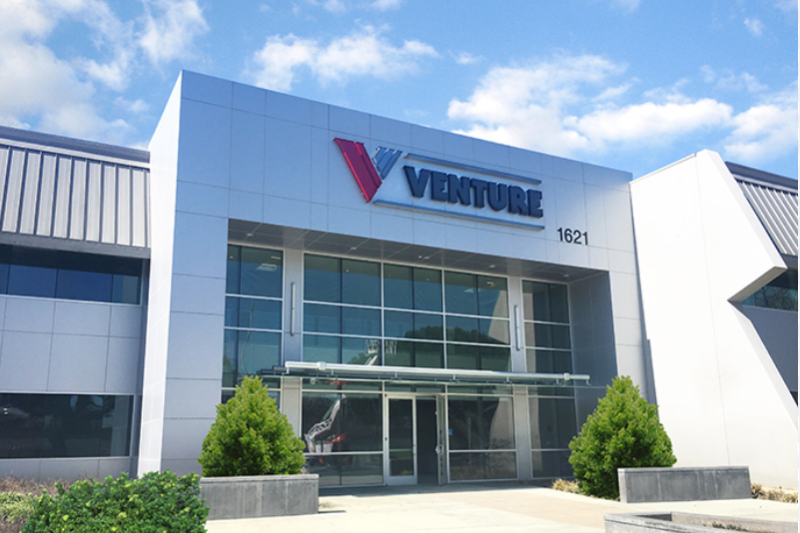
Venture provides technology solutions, products and services to the electronics industry.
As at 30 June 2026, the group held S$1.11 billion in cash and no borrowings.
For the first half of 2026, Venture declared an ordinary interim dividend of S$0.30 per share, up 20% from S$0.25 a year earlier.
Because no special dividend was declared this round – compared to S$0.05 previously – the total interim payout remains unchanged at S$0.30 per share.
A 20% increase sounds generous, but shareholders are receiving the same S$0.30 as last year.
With last year’s special dividend folded into the baseline payout, more of your dividend now comes as a regular payment.
What about the negative free cash flow?
The swing came from working capital, not from weaker operations.
Operating profit before working capital changes actually expanded to S$154 million from S$137.1 million.
Venture then directed S$194 million into inventory build-up to support business growth and bolster supply-chain resilience, which brought free cash flow to negative S$0.9 million from S$137.7 million a year ago.
Revenue rose 7.4% YoY to S$1.35 billion, while net profit grew 5.6% to S$119.3 million as demand picked up across key segments such as artificial intelligence infrastructure.
The group has also bought back around S$46 million of shares to date.
Venture’s net cash position gives it the flexibility to fund inventory growth while simultaneously rewarding shareholders.
That inventory still has to turn back into cash, and weaker volumes from a key Lifestyle Consumer customer show how quickly demand can shift.
What is Genting Singapore’s S$2.9 billion paying for?
Genting Singapore owns and operates Resorts World Sentosa (RWS), one of Singapore’s two integrated resorts.
It holds the largest cash cushion among the three companies: S$2.9 billion as at 30 June 2026, with no borrowings excluding lease liabilities.
On 22 September 2026, shareholders received a 1H2026 interim tax-exempt dividend of S$0.02 per share, unchanged from a year ago.
Free cash flow remained thin at S$8.9 million, though that was an improvement from negative S$5.8 million a year prior.
Heavy capital expenditure for the RWS 2.0 expansion absorbed S$322.5 million, taking up about 97% of the group’s S$331.4 million in operating cash flow.
Revenue slipped 0.9% YoY to S$1.2 billion, weighed down by a 4.2% drop in gaming revenue to S$804.4 million, even as non-gaming revenue grew 6.4% to S$398.8 million.
Net profit fell 33.5% to S$156.1 million as ongoing asset enhancement work pushed depreciation and amortisation up by 25%, while lower prevailing interest rates dragged interest income down by 55%.
Genting’s cash still protects the dividend, but falling rates mean it earns far less than a year ago.
Management flagged softer tourism demand and higher travel costs amid geopolitical uncertainty.
The ongoing resort enhancements will roll out progressively through 2027 and 2028 before the full completion of RWS 2.0 in 2030.
Until these new developments begin generating fresh earnings, the group’s net cash remains the dividend’s main line of defence.
Get Smart: Ask what the net cash is doing
Net cash tells you how much protection a dividend has.
Free cash flow tells you whether the company is dipping into it.
Compare the two for every dividend stock you own.
At SGX, free cash flow outpaced adjusted net profit.
This half, inventory soaked up Venture’s cash flow, while capital spending absorbed Genting’s.
Either can work for a while, but only cash flow can fund a dividend indefinitely.
Next time you read a results announcement, check the cash balance first.
Then ask yourself: is the business paying your dividend, or is the balance sheet?
Retirement doesn’t happen overnight. It’s built one decision at a time.
We found 6 SGX companies that have paid dividends every year for more than 20 years, through the Global Financial Crisis, COVID-19, and rising interest rates.
If you’re building long-term income for retirement, this free report is a great place to start. Download your copy today.
Follow us on Facebook, Instagram, Telegram and YouTube for the latest investing news and analyses!
Disclosure: The Smart Investor owns shares of SGX.