

Four Singapore real estate investment trusts (S-REITs) grew their distribution per unit (DPU) by 10% or more in the first half of 2026 (1H2026).
Naturally, unitholders are wondering whether that same momentum will carry into next year.
The answer largely depends on what is driving each payout.
Not all DPU growth is created equal.
Some increases are locked into long-term lease terms and will repeat for years.
Other gains depend heavily on demand cycles or currency movements, meaning they could easily reverse.
What’s powering PLife REIT’s 14.6% DPU growth?
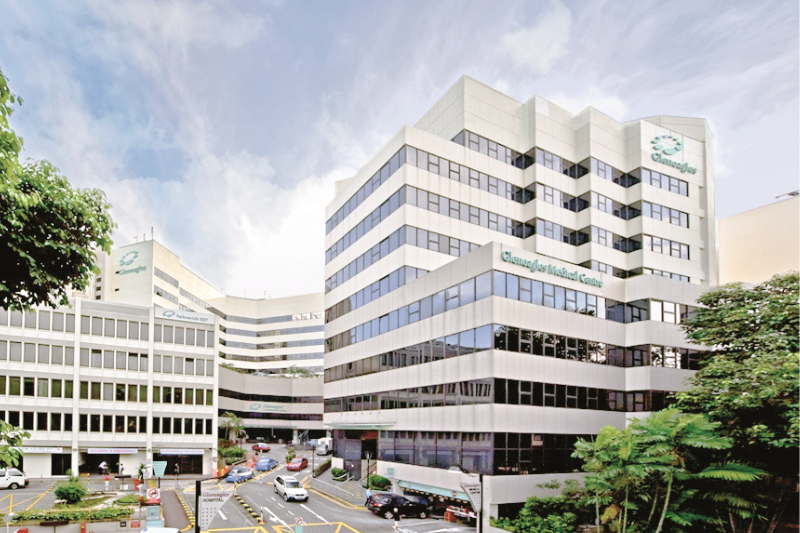
ParkwayLife REIT (SGX: C2PU), or PLife REIT, owns 73 healthcare properties across Singapore, Japan, and France, with a total portfolio valuation of S$2.56 billion as at 30 June 2026.
Gross revenue dipped 1.6% year on year (YoY) to S$77.1 million for 1H2026, while net property income (NPI) eased 2.0% to S$72.4 million.
A weaker Japanese yen and a tenant exit across five Japan nursing homes dragged down top-line performance.
DPU, however, told a completely different story.
It rose 14.6% YoY to S$0.0877.
The primary driver was the Annual Rent Review Formula for its Singapore hospitals.
Parkway Hospitals Singapore leases all three properties on a triple-net basis through 2042, with committed occupancy holding at a full 100%.
Under the formula, minimum rent jumps 24.3% from S$79.7 million in FY2025 to S$99.1 million in FY2026.
Step-up leases across its France portfolio provided an additional boost.
Furthermore, a tax provision that dragged on 1H2025 results did not recur, making the year-on-year comparison look even more favourable.
Gearing remained healthy at 33.8%.
Can Keppel DC REIT sustain its 11.3% DPU growth?
Keppel DC REIT (SGX: AJBU) owns 25 data centres across 10 countries, boasting assets under management of approximately S$6.3 billion.
Gross revenue rose 14.5% YoY to S$242.0 million for 1H2026, while NPI climbed 15.1% to S$210.4 million.
This drove an 11.3% YoY increase in DPU to S$0.05714.
Positive rental reversions of approximately 10% and the newly acquired Tokyo Data Centre 3 were the main catalysts behind the strong growth.
By lettable area, the weighted average lease expiry (WALE) stood comfortably at 6.7 years.
Portfolio occupancy dipped to 92.5% as at 30 June 2026, down from 95.6% a quarter earlier, largely due to the expiration of the Cardiff Data Centre contract in June.
Excluding Cardiff, occupancy would have sat at 95.3%.
Aggregate leverage remained prudent at 34.0%, with average cost of debt coming in at 2.6%.
Market forecasters expect global data centre demand to expand at a 25% compound annual growth rate to 256GW by 2030, offering strong tailwinds.
How did Sasseur REIT grow DPU by 10.2%?
Sasseur REIT (SGX: CRPU) owns four outlet malls in China valued at S$1.6 billion.
Rather than traditional NPI, the REIT’s income flows through an Entrusted Management Agreement (EMA) tied directly to outlet sales.
EMA rental income rose 6.8% YoY to S$65.4 million in Singapore dollar terms for 1H2026, aided by a stronger Renminbi against the Singapore dollar.
DPU climbed 10.2% to S$0.03366, even after retaining 10% of distributable income.
Record first-half outlet sales of RMB 2.3 billion – up 7.4% YoY – underpinned the performance, supported by a 20.7% surge in shopper traffic to 9.8 million.
Cost of debt also improved, falling to 3.7% from 4.4% at end-2025.
Aggregate leverage stood at 25.6%, making it one of the lowest among S-REITs, while portfolio occupancy held strong at 97.2%.
Because the EMA structure ties income directly to outlet sales, DPU could face pressure if Chinese consumer spending softens or if the RMB weakens against the Singapore dollar.
What’s behind OUE REIT’s 28.6% DPU increase?
OUE REIT (SGX: TS0U) owns office, hospitality and retail properties in Singapore and Sydney, valued at S$6.1 billion.
Revenue rose 3.8% YoY to S$136.1 million for 1H2026, while NPI increased 4.8% to S$110.3 million.
DPU jumped 28.6% YoY to S$0.0126.
Hospitality NPI was a standout, rising 12.3% to S$45.1 million as revenue per available room (RevPAR) climbed 10.7% to S$258.
Meanwhile, finance costs fell 16.6% to S$37.8 million, and joint venture contributions grew 30.6% to S$8.2 million.
OUE REIT also announced the proposed divestment of Crowne Plaza Changi Airport for S$500.0 million.
If completed, unitholders stand to receive S$20 million in special distributions, separate from recurring DPU.
On the risk side, aggregate leverage stood at 41.5% – the highest among the four – and committed occupancy for Singapore offices dropped 3.7 percentage points quarter on quarter to 91.5%.
Get Smart: What kind of DPU growth are you getting?
A headline DPU growth rate shows you the immediate reward, but it doesn’t guarantee that the reward will recur.
PLife REIT’s contractual rent review formula runs all the way to 2042, making its distribution growth the most predictable of the group.
The other three REITs rely on operational execution, retail sales, or hospitality demand – variables that can easily shift.
Every growth driver comes with a different shelf life.
Whenever you spot double-digit DPU growth, look beyond the main number.
Always ask what is driving the raise – and whether it actually has staying power.
What if every stock trade in Singapore puts money in your pocket? One company earns whenever the market moves. Its free cash flow has grown close to 10% a year, and dividends are set to rise 40% over the next three years. Our free 2026 Dividend Playbook reveals this legal monopoly. Download it for free now.
Follow us on Facebook, Instagram, Telegram and YouTube for the latest investing news and analyses!
Disclosure: The Smart Investor owns units of PLife REIT and Keppel DC REIT.


