Most investors wish to have stable and reliable passive income in their investment journey.
One way to achieve this is to invest in Singapore REITs (S-REITs).
Yesterday, we looked at three candidates.
Today, we are adding another two REITs to make it five REITs in total that I will gladly own for long-term monthly income, after looking at their distribution yield, asset quality and strong execution.
Frasers Logistics & Commercial Trust (SGX: BUOU)
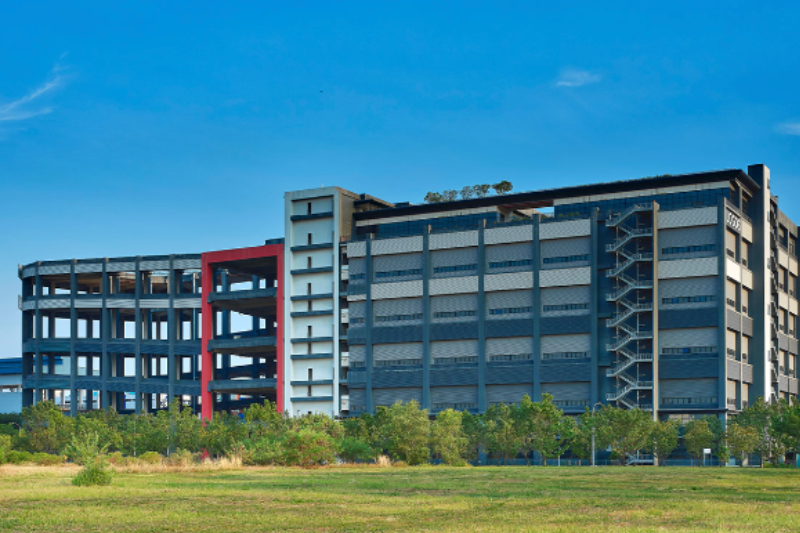
Frasers Logistics & Commercial Trust (FLCT), as its name suggests, focuses on logistics and commercial properties.
The REIT’s portfolio comprises 113 properties worth S$6.9 billion. FLCT’s largest exposure is Australia (45.6% of property value), followed by Germany (26.2%), Singapore (12.5%), the United Kingdom (10.2%), and the Netherlands (5.5%).
FLCT’s sponsor is Frasers Property (SGX: TQ5).
FLCT’s revenue was up 5.6% year-on-year to S$471.5 million in FY2025, on the back of contributions from 2 Tuas South Link 1 and four German logistics properties that were acquired in FY2024.
But higher finance costs resulted in a 12.1% year-on-year drop in distributable income to S$224.7 million. As a result, FLCT’s DPU declined 12.5% to S$0.0595 in FY2025.
FLCT has a good portfolio occupancy rate of 95.1% and a healthy WALE of 4.8 years.
Its gearing ratio of 35.7% is materially lower than the regulatory limit of 45%, and it has a high interest coverage ratio of 4.3.
The cost of debt was an acceptable 3.1%, and 70.4% of the REIT’s borrowings are on fixed interest rates.
The REIT’s trailing DPU and current unit price gives it a distribution yield of 6.3%, which is much higher than the STI’s dividend yield of around 4%.
However, FLCT’s DPU has been declining for four straight years, from S$0.0768 in FY2021 to S$0.0595 in FY2025.
This said, there are signs of possible future growth.
The REIT’s overall portfolio rental reversion rate was nearly 30% in FY2025, and 83.1% of its portfolio leases come with inflation-linked indexation or fixed escalations.
FLCT also has a relatively diversified portfolio. Its top 10 tenants represent 26.3% of portfolio GRI with no single tenant contributing more than 5%.
Some of the key risks for FLCT include soft leasing demand, tenant exits, or falling occupancy and currency or overseas market exposure (because of its heavy concentration toward non-Singapore assets).
ParkwayLife REIT (SGX: C2PU)
ParkwayLife REIT (PLife REIT) focuses on healthcare-related properties.
Currently, PLife REIT has three hospitals & medical centres in Singapore, 60 nursing homes in Japan, and 11 nursing homes in France.
Although PLife REIT has only three properties in Singapore (Gleneagles Hospital, Parkway East Hospital, and Mount Elizabeth Hospital.), they actually account for 65% of the REIT’s total portfolio value of S$2.46 billion; Japan and France account for 28% and 7%, respectively.
PLife REIT saw revenue growth of 8.2% year-on-year to S$117.3 million in 9M 2025. The higher topline came mostly from the acquisitions of the nursing homes in Japan and France last year.
Meanwhile, PLife REIT’s distributable income and DPU were up 10.4% and 2.3% year-on-year to S$75.4 million and S$0.1156, respectively.
The growth can be attributed to the aforementioned acquisitions in Japan and France in 2024, as well as Singapore hospitals with step-up lease arrangements.
PLife REIT’s gearing ratio remained healthy at just 35.8% and it had an excellent interest coverage ratio of 8.9. Its cost of debt also remained low at just 1.57%, and about 86% of its interest rate exposure is hedged.
Based on PLife REIT’s trailing DPU and current unit price, it has a distribution yield 3.7%, which is lower than the STI’s yield of around 4%.
But PLife REIT has grown its DPU in every year (excluding distributions from one-off divestment gains) since its IPO in 2007; the total increase in the REIT’s DPU from 2007 to 2014 is an impressive 136%.
There is tenant-concentration risk for PLife REIT, as Parkway Hospitals Singapore Pte. Ltd alone contributes to 60% of the REIT’s gross revenue.
But PLife REIT has a long-term master lease with Parkway Hospital Singapore where it charges a base rent as well as a variable rent based on 3.8% of the hospital’s total revenue.
Also, PLife REIT is on a triple-net lease arrangement with the hospital whereby the REIT does not have to bear property taxes and insurance and operating expenses.
It’s worth noting too that PLife REIT has a long WALE of 14.7 years.
Some of the key risks to look out for the REIT, besides tenant concentration, would be currency or overseas market exposure for its non-Singapore assets.
What This Means for Investors
With interest rates possibly heading lower, REITs that are reliable can help to anchor an investor’s income portfolio in the long term.
Apart from just looking at the DPU, investors should also focus on the longevity of the distributions and that means also weighing factors such as the quality of the REIT’s properties, prudent leverage, and capable management.
Income isn’t about the amount alone. It’s about consistency.
Get Smart: Stable monthly income starts from quality REITs
The best investors don’t chase the highest yields — they collect the most dependable ones.
Owning the right mix of quality REITs can turn market volatility into a steady stream of financial peace of mind.
The world’s gotten unpredictable, but some Singapore companies have quietly kept thriving. You’ve probably seen them in your daily life. And yes, they’ve kept paying dividends through it all. Meet 5 resilient stocks built to navigate global storms. Get the free report here and see how they’ve done it.
Follow us on Facebook, Instagram and Telegram for the latest investing news and analyses!
Disclosure: Zheng Long owns units in Frasers Centrepoint Trust.