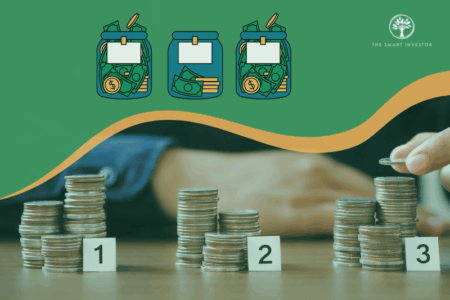
In Singapore, we value having a ‘rainy-day fund’, to weather any storm.
The same financial prudence applies to investing.
While the familiar blue-chips of the Straits Times Index (SGX: ^STI) offer comfort, experienced investors look beyond the main index to the small-cap space – companies with market capitalisations below S$1 billion.
This market segment hosts a select group of cash-rich companies whose fortress balance sheets act as the ultimate rainy-day fund.
This financial strength enables them to reward shareholders with steady dividends, even during challenging economic seasons.
We dive into three financially strong small-cap companies that are maintaining high cash reserves while actively returning passive income to shareholders.
QAF Limited (SGX: Q01)
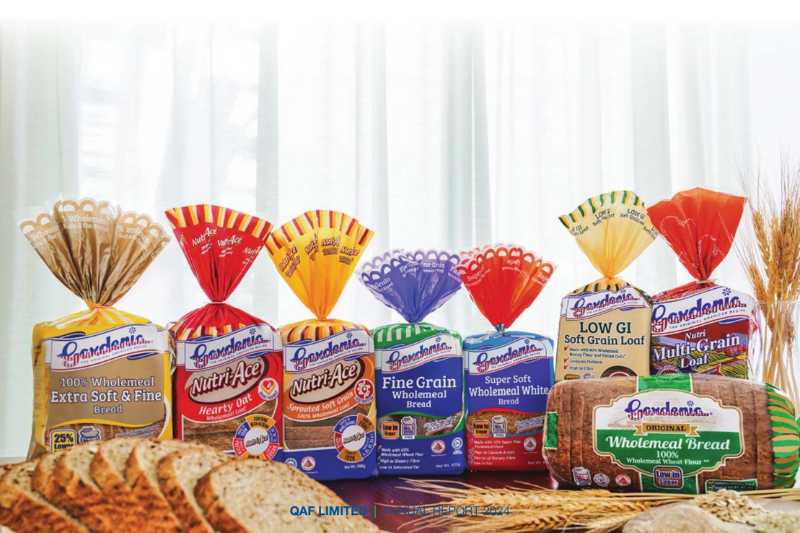
QAF Limited is a bread-and-butter dividend play in every sense, focused on food manufacturing and distribution across Southeast Asia and Australia.
While the company may not win awards for earnings growth right now – its profit attributable to owners plunged 69% to S$3.9 million for the first half of 2025 (1H2025) – it has something dividend investors truly care about: a fortress balance sheet.
QAF sits on substantial liquidity, reporting net cash of S$162.4 million as of June 30, 2025, which includes S$188.6 million in cash against minimal total debt of S$6.9 million.
The sharp profit drop was driven by external factors like Australian dollar movements causing S$3.0 million in foreign currency translation losses, coupled with rising operating costs and a non-cash impairment on its Malaysian joint venture.
Despite these headwinds, management demonstrated confidence by keeping the interim dividend unchanged at S$0.01 per share.
Crucially, free cash flow improved 13% to S$11.5 million thanks to lower capital expenditure.
Management expects near-term pressure from high costs and weak consumer demand, but they plan to leverage that huge cash cushion to focus on product mix adjustments and operational efficiencies to maintain stability.
SBS Transit (SGX: S61)
For retirees seeking steady passive income, SBS Transit offers exposure to essential public services.
The group runs Singapore’s Northeast and Downtown rail lines alongside numerous bus packages.
The operational environment is challenging, however: the third quarter 2025 (3Q2025) revenue slipped 2.4% to S$386.5 million, causing net profit to drop 20.6% to S$14.5 million.
The revenue decline was mainly due to the loss of the Jurong West bus package in September 2024.
Despite this, the transport operator’s financial position should catch the eyes of income investors.
The group held a substantial S$349.2 million in cash and short-term deposits as at September 2025, providing a huge liquidity buffer.
While higher rail fares and advertising income partially offset the revenue headwinds, the sharper profit decline was amplified by a drop in interest income.
Looking ahead, the loss of the Tampines bus package, effective July 2026, will put further pressure on bus operations.
Still, the business remains anchored by rail operations and essential public transport services, and the management’s ability to reduce costs from lower fuel and electricity helped mitigate some of the operational setbacks.
Valuetronics Holdings Limited (SGX: BN2)
Valuetronics isn’t a household name, but this integrated electronics manufacturer is busy pivoting its business toward higher-value segments.
For the first half of FY2026, the company proved its ability to protect margins by focusing on its Industrial and Commercial Electronics (ICE) division.
Although overall revenue fell 3.0%, the higher-margin ICE division actually grew 5.7% to HK$706.7 million, driven by new customers in network-access-solutions and high-performance computing cooling products.
This strategic shift caused gross margin to expand healthily from 16.8% to 18.8%.
This favorable product mix meant net profit rose 2.7% to HK$93.0 million despite lower top-line sales.
The company is betting big on its future, aiming to complete the phase-out of low-margin traditional consumer products by end-FY2026.
Management showed confidence by declaring a total interim and special dividend of HK$0.08 per share.
Growth is expected to continue in the ICE segment, particularly with network-access-solutions, and the Vietnam facility remains strategically important for North American orders.
Barring unforeseen macro shocks, the Group expects to remain profitable for the full fiscal year.
Get Smart: Follow the Cash, Not Just the Yield
Reliable passive income is not confined to the Straits Times Index.
For investors willing to look beyond the largest companies, financially strong small-cap dividend stocks like QAF, SBS Transit, and Valuetronics demonstrate that resilience and dividend sustainability can coexist with attractive yields.
The lesson is simple: don’t just chase yield. Follow the cash.
Cash-rich balance sheets give these companies the flexibility to maintain or increase dividend payouts even when earnings stumble or operational headwinds emerge.
This disciplined approach to capital management – holding a strong cash cushion while continuing to reward shareholders – is a key trait for securing long-term passive income for retirement.
A new S$5 billion initiative is changing the landscape for Singapore investors. We dug into 5 local companies that could benefit most — names you probably already know. The best part? They’re paying dividends while you wait. See the full findings inside our latest FREE report here.
Follow us on Facebook, Instagram and Telegram for the latest investing news and analyses!
Disclosure: Calvina Lee does not own any of the shares mentioned. Chin Hui Leong contributed to the article and does not own any of the shares mentioned.