When hunting for income, high-dividend stocks are particularly attractive.
However, while a high yield stands out, it’s not always a sign of good health.
Often, it’s a distress signal.
Some of the most generous payers pull the plug during downturns, while others cut unexpectedly.
Here is what separates stable dividend payers from “dividend traps”.
The Dividend Trap: Why High Yield Can Be Misleading
Yields hitting double digits often signal stress, not strength.
A classic example is Lippo Malls Indonesia Retail Trust (SGX: D5IU), or LMIRT.
Between February 2020 and January 2021, the REIT’s trailing yield spiked from 10% to 36% as its share price collapsed, plunging from S$0.23 to S$0.06.
The REIT’s dividends have been suspended since its last payout of S$0.0004 per unit in 2023.
For investors, one important question to ask is whether the dividend is funded by sustainable cash flow.
For this, we look at three factors:
Factor #1: Free Cash Flow Coverage
Dividends are paid from cash, not accounting profits.
To evaluate safety, look at the relationship between:
- Operating Cash Flow (OCF): Cash from core business.
- Capital Expenditure (CapEx): Cash spent on maintaining or growing assets.
- Free Cash Flow (FCF): Remainder after subtracting CapEx from OCF, and is used to fund dividends.
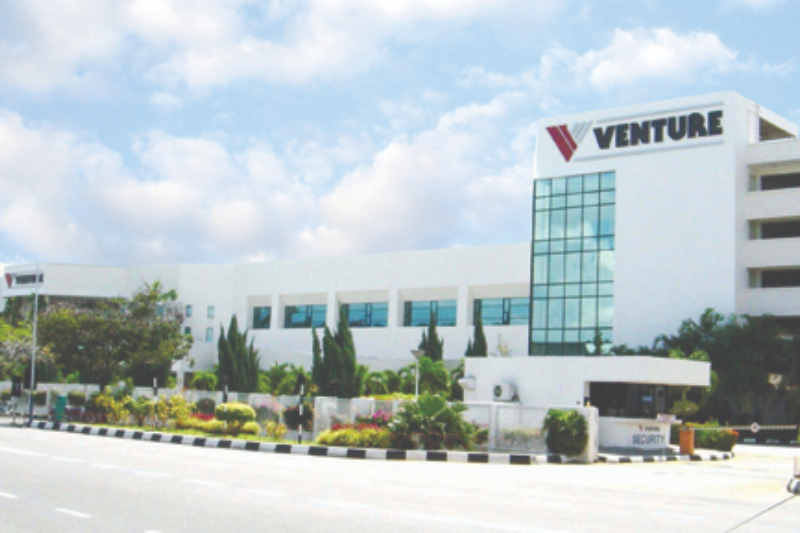
Healthy businesses like Venture Corporation (SGX: V03) generate enough FCF to comfortably cover dividends.
Ending FY2025 with S$1.28 billion in net cash and zero debt, Venture demonstrates how balance sheet resilience protects its shareholders.
Factor #2: Balance Sheet Strength
A company’s balance sheet strength can let you know how well it can manage market volatility.
Debt magnifies risk.
A company with high gearing (total debt to assets) – typically over 50% – is more likely to slash dividends or turn to dilutive rights issues during a credit crunch.
Watch the interest coverage ratio (ICR).
An ICR below 1.0 means the business isn’t even earning enough to pay its interest expense.
Conservative investors look for an ICR of at least 3.0 to 4.0.
HRNetGroup (SGX: CHZ) is a model of strength – with zero debt and a deep cash moat of approximately S$336 million (including cash, T-Bills, and gold), it can maintain payouts even if recruitment activity dips temporarily.
Factor #3: Business Model Resilience
Defensive industries – such as healthcare or consumer staples – provide the most stable payouts.
Sheng Siong Group (SGX: OV8) thrived during the pandemic because groceries are essential.
Its FY2020 dividend surged 83% to S$0.065 as revenue peaked (from FY2019’s S$0.0355).
Conversely, cyclical industries like Singapore Airlines (SGX: C6L), or SIA, are more vulnerable.
Despite being a blue chip, SIA suspended dividends during the pandemic because its business model is hypersensitive to global travel demand and fuel costs.
Warning Signs Before a Dividend Cut
There are several warning signs before a dividend cut that investors should look out for.
Rising Payout Ratio: If a company pays out 100%+ of its earnings or FCF while cash flow is declining, the dividend is being funded by debt or cash reserves.
Management “Reviews”: When leadership “reviews the dividend policy to reflect current market conditions,” it is often code for an impending cut.
Earnings Volatility: Sudden spikes in operating costs or narrowing margins make stable payouts mathematically impossible.
How Investors Can Protect Their Income
Maintain a balanced and diversified portfolio.
Mix growth stocks, defensive staples, and real estate investment trusts (REITs) to minimise concentration risks.
Look out for unusually high dividend yields as they can be a warning sign of falling share prices.
Rather than yields, focus on quality and stable payers like Singapore Exchange Limited (SGX: S68), which has consistently paid dividends since its listing.
High debt levels are the number one enemy of the dividend investor during high-interest-rate cycles.
Get Smart: Sustainable Dividends Come From Strong Fundamentals
A high yield is a snapshot; a sustainable dividend is a movie.
High yields are sometimes a sign of business weakness rather than strength.
Sustainable dividends come from robust FCF, strong balance sheets, and durable business models.
Rather than chasing headline yields, long-term income investors focus on these business fundamentals to build a portfolio that pays you consistently, regardless of market weather.
One Singapore bank has quietly become one of the strongest income engines in the market. Its dividends have grown at 16.6% a year while others were pulling back. That level of consistency can change a retirement plan entirely. Our FREE 2026 Dividend Game Plan explains why this bank keeps lifting payouts and why many long-term investors rely on it for stable income. Download your free copy today.
Follow us on Facebook, Instagram and Telegram for the latest investing news and analyses!
Disclosure: Wenting A. does not own any of the stocks mentioned.