There are numerous similarities between Singapore and Malaysia, if you look carefully.
As neighbours, we are more alike than we might care to admit.
For instance, our language does not differ too much, whether we are in Malaysia or Singapore.
Most people speak English layered with a unique blend of Malay, Mandarin, Tamil, or various dialects.
The same goes for the language of business.
Telecommunication companies (telcos) on both sides of the Causeway operate under the same heavy capital requirements.
Therefore, there are not many of them in any one country.
In Singapore, the three biggest telcos are Singtel (SGX: Z74), StarHub (SGX: CC3), and M1, which is pending regulatory approval for a landmark merger with SIMBA Telecom.
Malaysia’s landscape has consolidated, headlined by the merged giant CelcomDigi Berhad (KLSE: 6947), alongside Maxis Berhad (KLSE: 6012), Telekom Malaysia (KLSE: 4863), and Axiata Group Bhd (KLSE: 6888).
As network infrastructure does not come cheap, these players hold a reasonable amount of debt, just like their Singapore counterparts.
Feasting On Your Favourite Brands
Malaysians and Singaporeans greet each other the same way — by asking if you have eaten.
In particular, street food can be a favoured topic of discussion whichever side of the Causeway you are on.
The choices for Malaysian street food are seemingly endless, ranging from duck rice at a wet market in the wee hours of the morning to a fiery plate of Maggi goreng from a mamak stall by the roadside.
It is the power of the “Maggi” brand name that is the most interesting.
Malaysian households have long referred to instant noodles simply as “Maggi mee”.
As an investor, you want to sit up and take notice when a brand name replaces the name of an entire category, the same way Scotch Tape from 3M (NYSE: MMM) has done for adhesive tapes or Google of Alphabet (NASDAQ: GOOGL) has for online searches.
Familiar Names In The Malaysia Stock Market
While Maggi instant noodles can be found on the kitchen shelves of Singaporean homes, you can’t invest in the maker of Maggi, Nestle, on the Singapore stock market.
But in Malaysia, you can buy shares of Nestlé Malaysia (KLSE: 4707).
Interestingly, the Swiss food manufacturer has been in Malaysia for more than 100 years.
Today, Nestlé’s Malaysian base is its main hub for halal products shipped to over 50 countries.
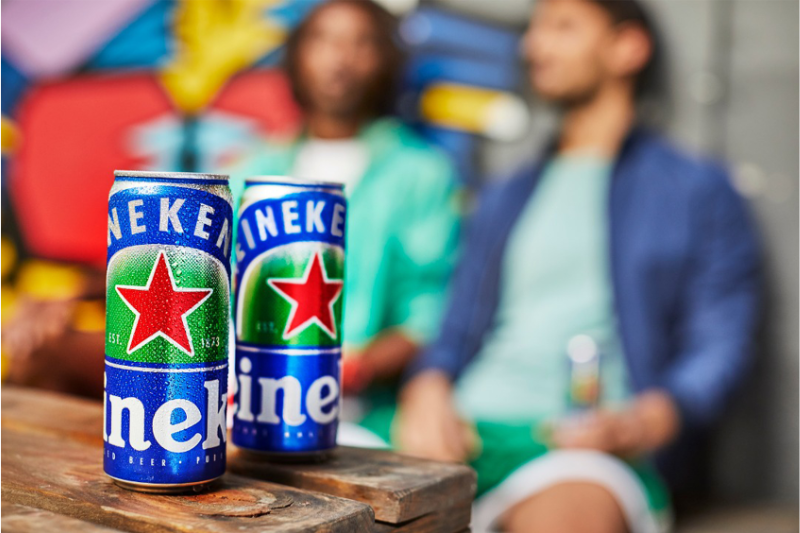
Another Chinese New Year favourite, Tiger Beer, is a commonality between the two countries.
However, only in the Malaysian stock market can you invest in Heineken Malaysia Bhd (KLSE: 3255), which holds the rights to the popular local brand.
Heineken took control of Tiger Beer after acquiring Asia Pacific Breweries in 2012.
Familiar Hopes
Every Chinese New Year, Singapore Pools runs its annual S$12 million Hong Bao draw.
For a few dollars, you can “buy some hope”.
But seriously, your chances of winning the grand prize are around one in 14 million.
The maths does not change just because you have crossed the Causeway.
Perhaps you would prefer to bet on the house rather than a Toto ticket.
But you would be out of luck in Singapore; you can’t buy shares of Singapore Pools, which is owned by the Tote Board.
In Malaysia, however, you have Sports Toto Berhad (KLSE: 1562).
With over 600 outlets spread across Malaysia, the group also has a presence in the Philippines and the United Kingdom.
Familiar Ambitions
The Penang International Airport expansion is currently underway and is expected to significantly boost capacity by 2028.
Interestingly, Singapore’s Changi Airport is also moving ahead with the massive Terminal 5 project, which is slated to be operational by the mid-2030s.
If regional travel continues its recovery, the long-term prospects for aviation hubs remain bright.
In Singapore, you can’t invest in the government-owned Changi Airport Group (CAG).
But in Malaysia, there’s Malaysia Airports Holdings Bhd (KLSE: 5014).
Understandably, investing in foreign countries might not be everyone’s cup of tea — or should we say, everyone’s cup of foamy teh tarik.
But if you are willing to look outside the window, you may be surprised to find winning stocks just across the Causeway.
Don’t let market uncertainty hijack your financial dreams. While headlines scream gloom, 5 Singapore companies have been quietly building wealth and paying reliable dividends. You’re probably overlooking them. Discover these resilient giants and their secrets to sustained income, even through global storms. Click here to download your free report now and secure your financial future!
Follow us on Facebook, Instagram and Telegram for the latest investing news and analyses!