Temasek’s portfolio spans continents, but three of its largest listed positions sit close to home on the Singapore Exchange.
As at 31 March 2026, the investment company held stakes in DBS Group Holdings Ltd (SGX: D05), Singapore Telecommunications Limited (SGX: Z74), and Singapore Technologies Engineering Ltd (SGX: S63) worth roughly S$104.7 billion combined.
All three have reported since.
Each tells a different story about where earnings are coming from.
A note on timing before we begin. DBS and ST Engineering reported first-quarter numbers for 2026.
Singtel’s results cover its full financial year ended 31 March 2026.
The periods do not line up, and readers should not compare growth rates across the three as though they do.
Where is DBS finding growth when rates fall?
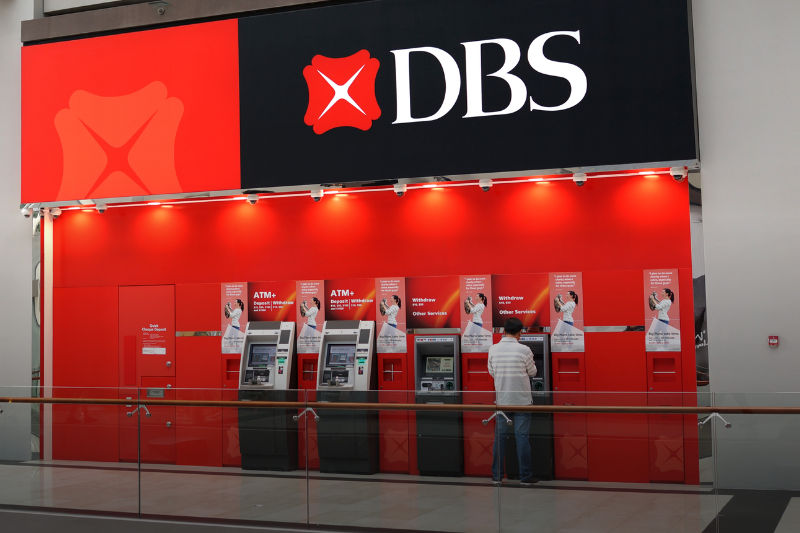
Temasek holds 28% of DBS.
Against the bank’s market capitalisation of S$161.8 billion, that stake is worth around S$45.3 billion — the largest of the three.
DBS delivered record total income of S$5.95 billion in the first quarter of 2026 (1Q2026), up 1% year on year (YoY).
That headline masks a split beneath it.
Net interest income (NII) fell 5% YoY to S$3.49 billion.
The bank’s net interest margin (NIM) narrowed 23 basis points to 1.89% as SORA and SOFR rates declined.
Customer loans grew 4% YoY to S$453.2 billion, or 6% in constant-currency terms, led by corporate lending.
The non-performing loan (NPL) ratio improved to 1.0% from 1.1%.
Non-interest income did the heavy lifting; it rose 10% YoY to S$2.45 billion.
Wealth management fees hit a record S$907 million, while treasury customer sales reached a record S$592 million.
Net fee and commission income jumped 16% to S$1.48 billion.
Costs rose too.
Expenses climbed 4% on higher staff costs, pushing profit before allowances down 1% to S$3.65 billion.
Net profit attributable to shareholders edged up 1% YoY to S$2.93 billion.
The board declared a first-quarter dividend of S$0.81 per share, which comprises an ordinary dividend of S$0.66 and a Capital Return dividend of S$0.15.
Together they are up 8% from the S$0.75 paid for the first quarter of 2025 (1Q2025).
Investors should treat the two components separately: the Capital Return dividend is a distinct payment, not part of the ordinary distribution.
Shares trade ex-dividend on 11 May 2026, with payment on or about 20 May 2026.
Can Singtel’s overseas units keep carrying the group?
Temasek’s 52% stake in Singtel is worth roughly S$42.2 billion against a market capitalisation of S$81.3 billion.
Group revenue for FY2026 held stable YoY at S$14.3 billion.
A 2% depreciation in the Australian dollar obscured underlying growth.
Operating profit rose 8.9% to S$1.5 billion, while underlying net profit climbed 12% to S$2.8 billion.
Two divisions drove the result.
NCS lifted operating profit 34% YoY to S$340 million on demand for IT services, digital resilience and AI work, securing a record S$3.8 billion in bookings.
Optus lifted operating profit 23% YoY to A$550 million on mobile price increases and network sharing revenue.
The home market went the other way.
Singtel Singapore’s operating profit fell 4.6% to S$795 million as mobile competition intensified and travel eSIMs pressured roaming revenue.
Meanwhile, associates’ post-tax contributions grew 10% YoY, led by Airtel and AIS.
Management declared a total ordinary dividend of S$0.185 per share for FY2026, up 9% YoY.
This splits into a core dividend of S$0.134 and a value realisation dividend of S$0.051, of which the value realisation component is funded by asset sales rather than operating earnings.
Singtel sold a 0.8% stake in Airtel for S$1.5 billion during the year and repurchased S$106 million of shares under its S$2.0 billion buyback programme.
Net debt gearing improved to 23.3%.
What does ST Engineering’s order book tell us?
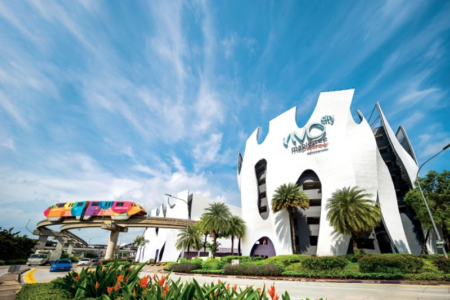
Temasek’s 51% stake in ST Engineering is worth around S$17.2 billion against a market capitalisation of S$33.8 billion.
Group revenue climbed 11% YoY to S$3.3 billion in 1Q2026.
Excluding LeeBoy, divested in September 2025, rebased revenue grew 15% YoY.
All three segments grew.
Defence & Public Security revenue rose 13% on a rebased basis to S$1.4 billion, helped by international defence contract wins.
Commercial Aerospace revenue jumped 15% YoY to S$1.3 billion on engine MRO work and nacelle deliveries.
Urban Solutions & Satcom revenue surged 18% to S$525 million, with Satcom growing more than 30%.
Here, the disclosure thins.
ST Engineering said net profit growth outpaced rebased revenue growth.
It did not publish profit or cash flow figures, as first-quarter business updates do not require them.
Investors assessing dividend coverage will need to wait for the interim report.
The group declared a first-quarter interim dividend of S$0.04 per share.
For FY2025 it paid S$0.23 per share in total, which included a special dividend of S$0.05.
The special component should not be read as a permanent feature of the payout.
New contracts worth S$4.8 billion were secured in the quarter.
The order book stood at S$34.5 billion as at 31 March 2026, with S$8.0 billion expected to be delivered over the remainder of the year.
As at 31 December 2025, ST Engineering held S$576 million in cash and cash equivalents.
Get Smart: Read the dividend, not just the total
Each of these three companies pays a dividend built from more than one part.
DBS separates an ordinary dividend from a Capital Return dividend.
Singtel separates a core dividend from a value realisation dividend funded by asset sales.
ST Engineering’s FY2025 total included a special dividend that may not repeat.
Free cash flow is the lifeblood of dividends.
An investor who counts only the headline figure risks mistaking a one-off for a commitment.
The ordinary component is what the business generates.
The rest depends on decisions management may or may not make again.
Imagine owning businesses that continued paying shareholders even when markets were falling. That’s the appeal of dividend investing done well. Our FREE report reveals 6 SGX companies that paid dividends every single year for two decades, through the Global Financial Crisis, COVID-19, and 2022’s rate shock. Start building the kind of income stream that could fund a more comfortable retirement. Get your free report here.
Follow us on Facebook, Instagram and Telegram for the latest investing news and analyses!
Disclosure: Calvina L. owns shares of DBS.