The Straits Times Index closed at an all-time high of 5,801.96 on 4 September 2026 – up about 35% over the past year.
Have I already missed it?
A record share price doesn’t automatically mean a stock is expensive – sometimes it just means the business improved enough to justify it.
The real test is what’s behind the price: are earnings growth, cash flow, and competitive position keeping pace?
DBS, Sheng Siong, and SGX all pass that test.
The question worth asking isn’t whether they’ve gone up too much, but whether they’re still worth owning today.
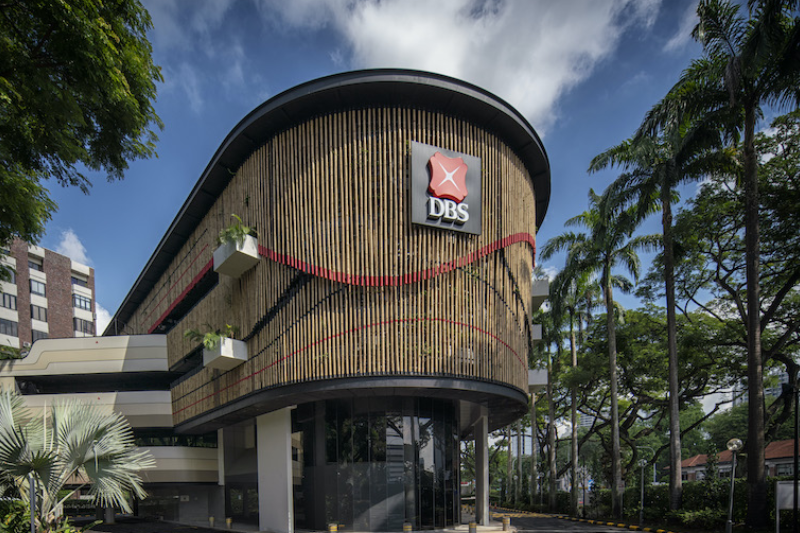
DBS Group Holdings Ltd (SGX: D05)
DBS is Singapore’s largest bank, with a footprint across 19 markets including Greater China, Southeast Asia, and South Asia.
In the second quarter of 2026 (2Q2026), total income crossed S$6 billion for the first time in a single quarter – up 6% year on year (YoY) to a record S$6.09 billion – and net profit hit a record S$3.08 billion, up 9%.
Despite net interest income falling by 2% as rates came down, fee income didn’t just plug the gap; it drove the quarter, with wealth management fees, treasury customer sales, and markets trading all posting double-digit growth.
The wealth segment assets under management (AUM) crossed the half-trillion mark for the first time, and DBS wants to take that further with a target of over S$1 trillion in retail and wealth assets by 2030, backed by 600 new frontline advisers and platform engineers by the end of 2028.
The balance sheet can support that ambition: Common Equity Tier 1 (CET1) ratio stood at 16.6%, comfortably above regulatory minimums, and the second-quarter dividend came to S$0.81 – S$0.66 ordinary plus a S$0.15 capital return – up from S$0.75 a year ago. [3]
The real risk is whether fee income and wealth management keep growing fast enough to offset further rate cuts.
Sheng Siong Group Ltd (SGX: OV8)
Sheng Siong is a familiar supermarket name among Singaporeans, and people need to visit the supermarket whether the economy is booming or not.
1HFY2026 revenue rose 11.9% YoY to S$855.4 million, on the back of sixteen new stores and comparable-store sales growing at 3.3%, while net profit climbed 11.9% to S$81.0 million. [5]
Gross margin improved to 31.8% from 30.8%, even as staff costs rose to meet Progressive Wage Model requirements.
The balance sheet is clean with S$402.3 million in cash, zero debt, and an interim dividend raised to S$0.0375 from S$0.032 a year ago.
One HDB tender is awaiting results and two more tenders are expected over the next six to twelve months, and a new S$520 million distribution centre in Sungei Kadut is designed to support more than 120 stores by 2029.
The company’s shares are already up more than 50% over the past year, so much of the good news may already be reflected in the price – a factor worth watching alongside rising competition and operating costs.
Singapore Exchange Limited (SGX: S68), or SGX
For Singapore’s only stock exchange operator, FY2026 was its best year yet.
Net revenue rose 13.9% to S$1.48 billion, and adjusted net profit jumped 24.6% to S$759.5 million – both records.
Cash equities did the heavy lifting, with trading and clearing revenue up 36.3% as securities daily average value climbed to S$1.8 billion, but derivatives and FX weren’t far behind, posting record or near-record volumes of their own.
FY2026’s total dividend came to S$0.57, up 52% from S$0.375, though S$0.125 of that was a one-off payout from capital recycling gains, not a new baseline.
The dividend continues to grow as SGX has committed to raising its quarterly dividend by 0.25 cents every quarter through FY2028.
SGX’s revenue is correlated with market sentiment, so a quieter trading environment or slowdown in listings momentum would take some shine off these results.
Why Buying Quality Matters More Than Waiting for the Perfect Dip
Waiting for a crash is a reasonable-sounding plan that rarely works.
Markets can stay expensive for years, often long past the point where investors expected a pullback.
Every quarter spent on the sidelines is also a quarter of dividends and earnings growth missed from a quality company – that’s the real cost of waiting.
How Investors Can Approach a High Market
Spreading purchases over time is the simplest way to stop guessing at the perfect entry point – buy on a schedule, in smaller amounts, and let time do the averaging for you.
The index itself is also less useful than it looks.
The STI is just an average of 30 companies, and averages hide a lot – some constituents are already priced for perfection, while others, like the three above, are still growing into their valuations.
The more overlooked habit is reinvesting dividends rather than spending them.
Compounding needs time to work, and every dividend that goes straight back into more shares builds ownership faster than most investors realise.
Common Mistakes Investors Make
Assuming a record high means a crash is coming is one trap; waiting forever for the “right” entry point is the same trap, just slower.
Past share price says nothing about what a stock is worth today, and chasing something purely because it’s already surged is how investors buy the top.
Quality doesn’t excuse ignoring valuation either – even a great business can be a bad investment at the wrong price.
And putting everything into one sector, however convinced you are of its story, is still putting all your eggs in one basket.
Get Smart: Great Businesses Can Still Compound at Highs
A record STI isn’t a reason to sit this one out.
What matters is the same thing it’s always been: finding companies with earnings that hold up, dividends that grow, and reasonable valuations.
That’s still true even at a record high – owning good businesses at a fair price, and staying with them, is what actually compounds wealth over time.
You’ve probably shopped at their malls, banked with them, or bought their products this month. These 6 SGX companies have paid dividends for 20 straight years, GFC and COVID included. Our FREE report shows you which ones, and what has kept their dividends going for 20 years and more. Grab your copy here.
Follow us on Facebook, Instagram, Telegram and YouTube for the latest investing news and analyses!
Disclosure: SweeS T. owns shares of DBS and SGX.