The Singapore-Johor Bahru (JB) Rapid Transit System (RTS) Link is almost here.
The cross-border rail line is set to open in early 2027, and suburban mall owners have reason to pay attention.
A study commissioned by the Singapore Business Federation, the Restaurant Association of Singapore and the Singapore Retailers Association expects Singapore residents to spend S$1.05 billion more in JB each year once the RTS opens.
JB visitors, for their part, are expected to spend S$756 million more in Singapore.
Net it out, and around S$290 million a year flows out of Singapore.
That’s roughly 0.4% of the country’s 2025 retail and food-and-beverage (F&B) sales.
For a suburban mall landlord like Frasers Centrepoint Trust (SGX: J69U), or FCT, that’s an impact worth watching.
Which of FCT’s malls sit in the firing line?
Here’s the thing: the outflow will be uneven.
The west faces the largest net outflow at S$104 million.
The north-east is a close second at S$103 million.
The north comes in at S$82 million, and the east at just S$25 million.
FCT’s malls in the north and north-east could feel the impact.
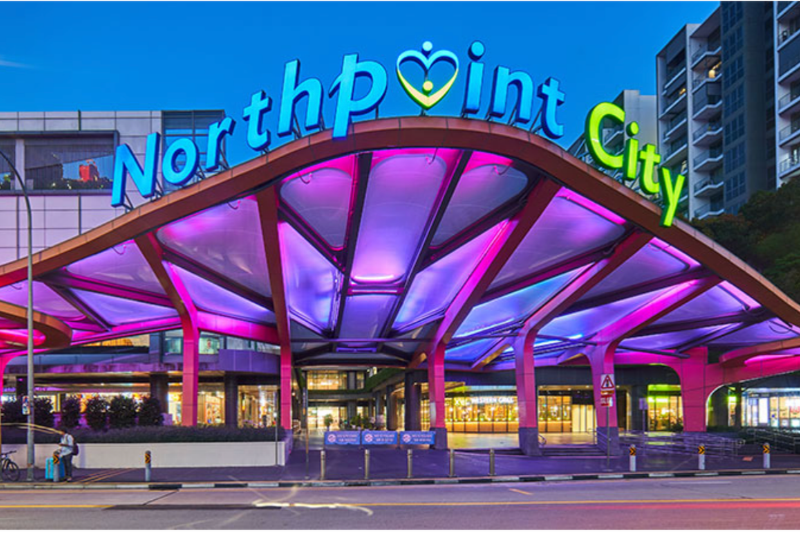
Causeway Point and Northpoint City sit in the north and make up a little over 40% of FCT’s portfolio valuation.
NEX, Hougang Mall and Waterway Point sit in the north-east, the region facing the second-largest outflow.
How did FCT fare in its latest half-year?
Gross revenue and net property income (NPI) each rose by more than 20% year on year in the first half of the fiscal year ending 30 September 2026 (1H FY2026).
However, distribution per unit (DPU) grew just 1.4%.
Frasers Centrepoint Trust: 1H FY2026 vs 1H FY2025
(S$ million, except DPU)
| 1H FY2026 | 1H FY2025 | Change (year on year) | |
| Gross revenue | 221.9 | 184.4 | +20.3% |
| Net property income | 160.8 | 133.7 | +20.2% |
| Distributable income | 125.0 | 110.1 | +13.6% |
| DPU (S$) | 0.06136 | 0.06054 | +1.4% |
Much of the gap comes down to a larger unit count.
FCT paid for its Northpoint City South Wing acquisition, completed in May 2025, partly by issuing new units.
The weighted average unit count rose from around 1.82 billion to about 2.04 billion.
More units mean income gets spread more thinly.
Are FCT’s tenants feeling the strain already?
In 3Q FY2026, shopper traffic rose 2.4% year on year.
Tenant sales grew just 0.2%, down from 4.4% growth a year ago.
The manager put this down to tenancy churn.
FCT signed 69 new-to-portfolio tenancies in the first nine months of FY2026, up from 59 a year earlier. New tenants need time to fit out their stores and win over regulars.
The refresh may be necessary with the RTS on the horizon.
How is FCT refreshing its north-east malls?
Both of FCT’s asset enhancement initiatives (AEIs) are in the north-east.
At Hougang Mall, over 98% of the AEI space is committed, and more than 40% of the incoming tenants are new to the mall.
Over at NEX, Phase 1 of the AEI at the former Isetan space has secured 87% pre-commitment, and 73% of the committed tenants are new-to-mall brands.
FCT holds a 50% effective interest in NEX.
Causeway Point could be next.
Metro has signalled it will close its department store there when the lease expires.
The change looks overdue.
Metro takes up 3% of FCT’s retail net lettable area (NLA) but contributes just 1.6% of gross rental income.
We could see FCT carve up the space for several tenants.
Where does FCT’s next leg of growth come from?
FCT plans to sell White Sands for S$467 million, an 8.4% premium to valuation.
Net proceeds of S$454.1 million will repay debt, and gearing should fall from 40% to 36.5%.
The trade-off is a 1.9% pro-forma dip in DPU.
FCT is giving up some rental income for more room to borrow.
Some of that room will go to Bayshore Drive.
FCT will take half of the commercial component, which carries a total development cost of around S$613 million at a 5% yield on cost.
The site connects directly to Bedok South MRT station, and 10,000 new homes are coming to the area.
This is new territory.
Until now, FCT has grown by buying and enhancing malls, not building them.
The capital won’t earn a return until FY2031, so patience is key.
Keep an eye on interest costs too.
Fixed-rate debt fell to 65.7% of borrowings in 3Q FY2026 from 76.2% a year ago.
With more floating-rate debt on the books, a rise in rates would now hit DPU harder.
Get Smart: Watch the gap between footfall and spending
Once the RTS opens, shopper traffic will tell you only half the story.
Track tenant sales against traffic at FCT’s north and north-east malls over the quarters that follow.
If shoppers keep coming but spend less, the drain is biting.
If tenant sales pick up as the new tenants settle in, the refresh is doing its job.
Then ask yourself one last question.
Is that recovery showing up in DPU, or only in headline revenue?
The answer could define FCT’s long-term future.
You’ve probably shopped at their malls, banked with them, or bought their products this month. These 6 SGX companies have paid dividends for 20 straight years, GFC and COVID included. Our FREE report shows you which ones, and what has kept their dividends going for 20 years and more. Grab your copy here.
Follow us on Facebook, Instagram, Telegram and YouTube for the latest investing news and analyses!
Disclosure: Chin Hui Leong owns units of FCT.