Investors in Singapore real estate investment trusts (REITs) have had a rough year thus far.
As at 5 November 2026, the CSOP iEdge S-REIT Leaders Index ETF (SGX: SRT) is down 11% year-to-date (YTD) against a 13.7% gain for the broader Straits Times Index (SGX: ^STI)
So, are REITs worth a second look?
Maybe, but a rebound won’t lift them all equally.
The ones with solid balance sheets, dependable rent and an upcoming catalyst should move first.
In this article, we spotlight three REITs that fit that description in different ways, which could stand to benefit once sentiment for the industry turns around.
How the Three REITs Compare
| Metric | Parkway Life REIT | Keppel DC REIT | Sasseur REIT |
|---|---|---|---|
| Trailing distribution yield | 4.1% | 5.2% | 10.6% |
| Distribution per unit (DPU) growth | +14.6% (1H2026) | +11.7% (9M2026) | +10.2% (1H2026) |
| Occupancy | 100% (Singapore, France); 94.3% (Japan) | 93.0% | 97.2% |
| Rental reversion | Positive | Positive | Undisclosed |
| Gearing | 33.8% | 36.2% (38.8% pro forma) | 25.6% |
| Interest coverage | 8.2x | 6.5x | 5.6x |
Ranked by how ready they look for a recovery, Parkway Life REIT (SGX: C2PU) comes first, followed by Keppel DC REIT (SGX: AJBU), then Sasseur REIT (SGX: CRPU).
Parkway Life REIT, or PLife REIT – As safe as it gets
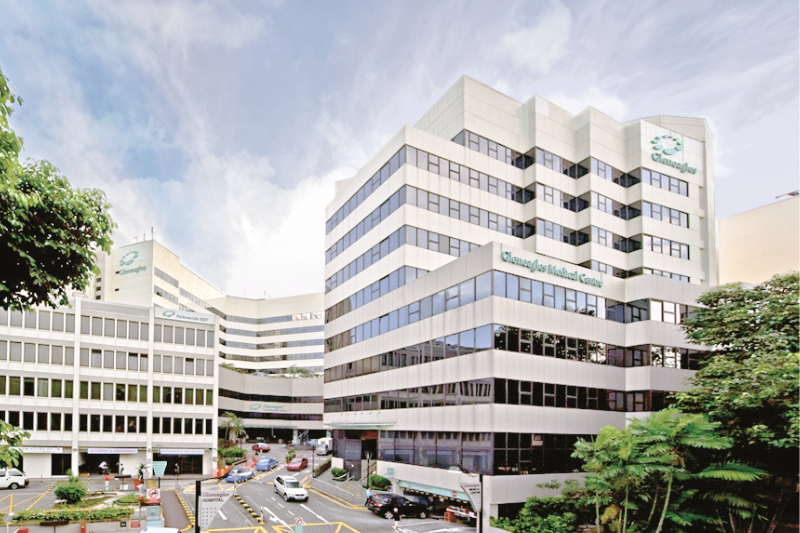
PLife REIT owns Singapore hospitals, alongside nursing homes in Japan and France.
Its balance sheet is the strongest here; leverage is low at 33.8%.
Meanwhile, interest is covered over 8.2x with an all-in borrowing cost of just 1.67%, and about 96% of its rate exposure is hedged.
Its weighted average debt maturity will extend to 3.6 years once a maturing loan is refinanced.
The recurring rental income it earns is about as locked in as REIT income gets.
Leases average 14.6 years and most come with built-in annual rental escalations.
These features helped lift DPU 14.6% to S$0.0877 in 1H2026 (ended 30 June 2026), adding to steady growth since its 2007 listing.
Occupancy is 100% in both Singapore and France, while Japan trails at 94.3% after a tenant exited five nursing homes, which weighed on revenue.
Looking forward, the main catalysts for PLife REIT come from continued rent increases across its properties and the potential expansion into more European markets or the UK, which management is studying.
The key risk would be higher interest rates, which could increase financing costs and put some downward pressure on unit prices.
Regardless, given the strength of its balance sheet, PLife REIT could be the first to benefit when sentiment turns.
Keppel DC REIT, or KDCREIT – Riding the Data Centre Boom
KDCREIT owns data centres in Asia Pacific and Europe, where demand is still running hot.
Its rents show it.
Rental renewals in 9M2026 (ended 30 September 2026) were signed at about 14% higher rates, pushing DPU up 11.7% to S$0.08571.
Occupancy improved slightly to 93.0%.
Cardiff continues to be unoccupied, so a new tenant there would lift income.
Leases average 6.5 years by space, and gearing of 36.2% (38.8% after its latest Tokyo purchase) leaves room for more acquisitions.
The catch is concentration.
Internet companies account for 70.2% of rental income, and the REIT’s single largest tenant alone accounts for more than 40%.
A slowdown in rental growth could also pressure DPU growth moving forward.
Management is also studying power upgrades and redevelopment at older sites, which could add income but would mean more capital spending.
The upside? Continued momentum in rental growth, higher occupancy rates and more accretive acquisitions.
KDCREIT doesn’t really need a sector rally to grow, because rising rents can lift its earnings largely on their own; nevertheless, a sector rally could see KDCREIT be among the first beneficiaries.
Sasseur REIT – Cheap, but There’s a Reason
Sasseur REIT owns four outlet malls in China.
At about S$0.61 as of 4 November 2026, it offers a yield of about 10.7% and trades below its NAV of S$0.82 per unit.
Debt isn’t why it’s cheap.
Gearing sits at just 25.6%, borrowing costs have fallen to a low of 3.7%, and its average debt maturity is decent at 4.8 years, with no refinancing requirement until 2030.
The discount is about China.
Sasseur’s rent comes from an agreement with its outlet operator that combines a fixed amount, rising 3% a year, with a share of sales.
Tenant sales have held up, reaching a record RMB 2.3 billion in 1H2026 (ended 30 June 2026), up 7.4%, and DPU rose 10.2% to S$0.03366.
Leases with the brands inside its malls are short, though, averaging 1.5 years by space.
Its income is also in RMB, so a weaker RMB reduces both its distributions and NAV in Singapore-dollar terms.
A slowdown in Chinese spending would hit both rent and property values, which could mean lower payouts.
A consumer-targeted stimulus by the government and lower rates, on the other hand, could narrow the gap to NAV.
The cheapest of the three, Sasseur has the most potential upside if you’re willing to underwrite the China risk; its 10.7% yield is the incentive for investors.
What Could Delay a REIT Recovery?
A rebound isn’t guaranteed.
If interest rates stay high, refinancing will keep eating into distributions.
Weaker tenant demand or negative rental reversions would hurt income, and more DPU cuts across the sector would keep investors wary.
Lower property values would also push gearing up.
Investors may also keep favouring banks and growth stocks, which have done much better this year.
A steep fall in a REIT’s unit price doesn’t automatically mean a recovery will follow.
Get Smart: Look for the REITs With a Catalyst
A REIT recovery, when it comes, probably won’t be even.
Parkway Life looks the steadiest candidate, while KDCREIT has rental growth on its side, and Sasseur REIT has the most room to rise if its discount narrows.
Rather than buying whatever has fallen furthest, ask what could actually push a REIT’s income and valuation higher.
The ones with a clear answer deserve a closer look.
One of these six companies is the only one legally allowed to operate in Singapore. It has increased its dividend for 16 consecutive years. Discover which one it is in our free report here.
Follow us on Facebook, Instagram, Telegram and YouTube for the latest investing news and analyses!
Disclosure: Wilson.H does not own shares or units in any of the stocks mentioned.