With the ease of investing both locally and abroad, especially in recent years, Singaporeans can easily choose between staying close to home with the Straits Times Index (SGX: ^STI) or going global with the S&P 500 index.
Both indices offer very different exposures, so let’s take a closer look to see which market offers a better mix of growth, income, and valuation for Singapore investors.
What Exactly Are You Buying?
The STI tracks 30 of Singapore’s largest listed companies.
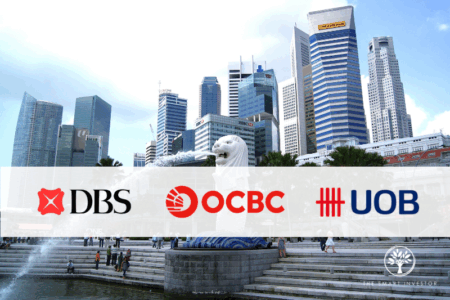
Heavily weighted toward banking, local giants DBS Group (SGX: D05), OCBC (SGX: O39), and UOB (SGX: U11) account for around 59% of the index.
Buying an STI exchange-traded fund (ETF) like SPDR STI ETF (SGX: ES3) gives you exposure to all 30 companies, with reliable dividend income as the main draw.
In contrast, the market-cap-weighted S&P 500 tracks 500 leading US megacaps, such as NVIDIA Corporation (NASDAQ: NVDA), Apple Inc. (NASDAQ: AAPL), and Microsoft Corporation (NASDAQ: MSFT) – the trio making up about 21% of the S&P 500.
ETFs like Vanguard S&P 500 ETF (ARCA: VOO) offer access to technology, healthcare, and scalable global sectors absent from the SGX.
The STI vs The S&P 500: The Growth Debate
US markets are home to high-growth, secular themes like artificial intelligence (AI) and global consumer tech.
For instance, NVIDIA, one of the biggest winners from AI-driven demand, has returned 12.7% year-to-date and 854.6% over the past five years.
However, the Singapore market should not be overlooked.
Singapore’s financial sector delivers steady earnings and payout growth, demonstrated by DBS Group’s record S$3.08 billion net profit in 2Q2026, up 9% year-on-year (YoY).
Yield vs. Growth: The Real Return Picture
For pure yield, the STI wins – its heavy bank weighting drives a 3.07% dividend yield for the SPDR STI ETF, compared to around 1.1% for the S&P 500.
However, low dividend yield doesn’t mean low return.
US firms favor tax-efficient share buybacks, which boost earnings per share (EPS) and drive capital gains.
Historically, the S&P 500’s 10-year return sits at around 15.3% versus the STI’s 12%, though the STI surged 40% in 2026 (outpacing the S&P 500’s 20%).
Ultimately, long-term total returns matter more than starting yield.
Diversification: The S&P 500’s Biggest Advantage?
Singapore investors already have significant exposure to the local economy, and investing solely in Singapore-listed stocks can create concentration risk.
Owning the S&P 500 adds global exposure, giving investors access to industries less represented in the Singapore market.
This is, however, not to be confused with owning global companies, as the S&P 500 is still a US large-cap index.
But remember, S&P 500 investments trade in USD, whereas STI investments are in SGD.
If the Singapore dollar strengthens, exchange rate movements can erode your USD gains when converted back.
Valuation: Which Market Offers Better Value?
As of 15 September 2026, SPDR STI ETF’s price-to-earnings (P/E) ratio is 17.3x, and the price-to-book (P/B) ratio stands at 1.8x.
In contrast, Vanguard S&P 500 ETF has a P/E ratio of 25.1x, and a P/B of 5.2x.
The S&P 500 typically commands a higher valuation, as it reflects exposure to companies with faster earnings growth and greater scalability.
The better question is not simply which market has the lower valuation, but whether the price paid today is reasonable relative to the future earnings investors expect to receive.
What Happens When Interest Rates Change?
A rise in interest rates will affect the STI and the S&P 500 very differently.
Higher rates can initially benefit banks by supporting net interest margins (NIMs), but the actual effect depends on loan demand and the broader economic environment.
Higher rates will increase financing costs for REITs, potentially reducing distributions and valuations, making dividend stocks less attractive relative to higher risk-free yields.
Because banks carry more than half the weight of the STI, the massive gains in bank stocks during a rate hike usually heavily outweigh the losses felt by the other sectors.
For the S&P 500, higher rates generally put downward pressure on growth-stock valuations, as higher borrowing costs and elevated discount rates reduce the present value of future corporate earnings.
Where Should Different Investors Put Their Next Dollar?
For investors who seek dividend income, the STI, with its higher payouts, will be more appealing.
For those who look for long-term growth, especially younger investors with longer investment horizons, the S&P 500’s growth-focused holdings will be more suitable.
However, choosing solely based on which index did better recently is a grave mistake, as past performance does not guarantee strong future returns.
Investing does not have to be an either-or.
A portfolio comprising Singapore stocks for income and the S&P 500 for growth and diversification can also work for Singapore investors.
Singapore investors need to consider the SGD/USD exchange rate, ETFs’ expense ratios, and dividend withholding tax implications when creating a portfolio best suited to them.
Get Smart: Your Next Dollar Doesn’t Have to Choose Sides
You gain exposure to established Singapore names and higher dividend income with the STI, while the S&P 500 offers broader sector exposure and greater access to global growth companies.
The right answer is ultimately determined by your objectives, risk tolerance, and investment horizon.
Instead of “which one will be better?”, ask “what’s missing from my portfolio today?”
You don’t have to choose either-or when a combination might be more suitable for your long-term wealth creation.
A market dip can either hurt your returns… or accelerate them.
The difference comes down to one thing: how you deploy your cash. We break it down step by step in this FREE report. Get your copy for free now.
Follow us on Facebook, Instagram, Telegram and YouTube for the latest investing news and analyses!
Disclosure: Wenting A. owns shares of Apple.