Markets don’t move in predictable, neat lines.
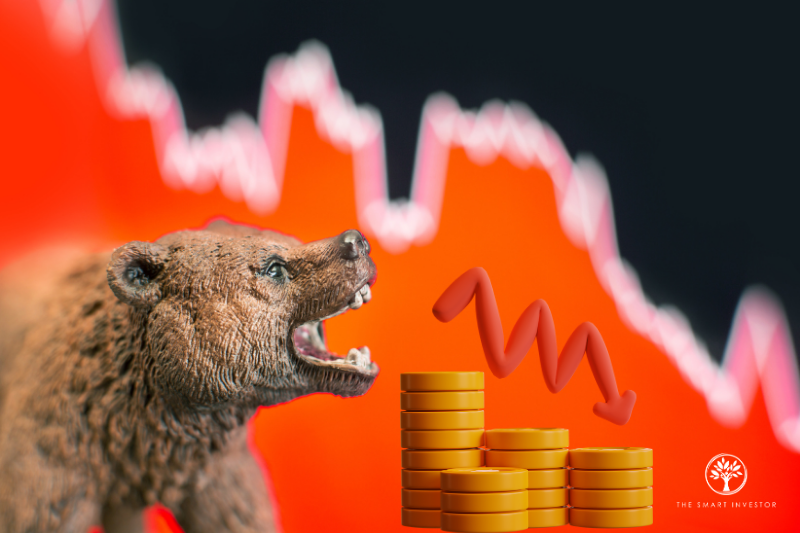
Bear markets, characterised by a 20% or more decline, trigger fears.
Confidence shrivels, headlines scream “crisis”, and investors panic as they sell first and ask questions later.
Bear markets tend to hurt more than bull markets feel good as humans experience losses more intensely than gains, and a 20% drawdown can be emotionally devastating.
Negative headlines and worst-case forecasts dominate attention, reinforcing fear and urgency.
While the instinct to sell everything immediately feels logical, history suggests that this is often a costly mistake.
Let’s explore if selling in a bear market makes sense, and what investors can do instead during these periods of decline.
The Case for Selling Everything (And Why It’s Tempting)
When markets are in a freefall, investors instinctively want to protect their capital from further losses.
Fear makes them believe that the stock, even if it is a quality holding, will fall further, and a rebound would take forever.
Many also believe that selling will help them avoid the emotional stress of constantly monitoring the market.
Some also sell because they believe that they can buy back lower.
However, this is a flawed belief as market bottoms are only obvious in hindsight.
Investors tend to wait for confirmation that it is “safe” again to buy, but fear, uncertainty, and constantly shifting narratives make it emotionally difficult to re-enter.
As a result, many investors end up selling low and buying back higher.
Why Selling Everything Is Usually a Bad Idea
Selling everything carries a significant opportunity cost.
Investors forgo dividends and the power of compounding while sitting on the sidelines, waiting for markets to recover.
Very often, the most powerful days of market rebound take place near market bottoms, where pessimism is maximised, and market participation is at a minimum.
Historical evidence shows that markets recover over time, even after severe crashes caused by recessions, financial crises, or global shocks.
For example, when the US tariffs were announced on 2 April 2025, United Overseas Bank (SGX: U11) shares fell from S$37.57 to S$30.99 within a week.
Nevertheless, it recovered to S$37.23 by 23 July 2025, and is trading at an all-time high of about $39.50 per share just 6 months later.
During a market downturn, it is easier to identify when the “right” time to exit is than when to re-enter, as fear lingers even when prices start rising.
Market rebounds are not smooth and predictable, and selling everything in a panic can be a costly mistake.
What You Should Do Instead
During times of market volatility, companies with dependable cash flow and strong balance sheets tend to perform better.
Stay invested in quality businesses, especially those that have a history of reliable dividend payouts, such as blue chips like Singapore Exchange Limited (SGX: S68) and DBS Group Holdings (SGX: D05).
Bear markets can create an opportunity to rebalance your portfolio, creating buying opportunities to acquire more assets that are currently under more favourable valuations.
Rather than stressing over short-term price movements, focus on long-term income from quality companies
When Selling Does Make Sense
Bear markets can sometimes expose weak businesses that fly under the radar during good times.
The fall in prices might signal that business fundamentals have permanently deteriorated, including the loss of competitive advantages, or long-term earnings power has been impaired beyond recovery.
Selling is also a rational decision if you spot leverage or liquidity risks that can threaten a company’s survival.
In these cases, price declines are reflecting real, lasting damage rather than temporary fear.
Selling would also make sense if the portfolio risk no longer matches your investment horizon.
For example, if you are approaching a major life goal, you may need to reduce exposure to volatile assets and do not have time to wait for conditions to improve.
The key is distinguishing rational decisions from emotional reactions.
Rational selling is driven by factors like fundamental changes and balance sheet risk, while emotional selling is driven by fear and short-term price movements.
In bear markets, this difference often determines whether selling protects long-term outcomes or permanently locks in avoidable losses.
Practical Bear Market Playbook
Having a cash buffer ahead of time provides financial security, allowing investors to meet expenses without being forced to sell assets during bear markets at depressed prices.
Cash also gives you the flexibility to buy when valuations become attractive.
This becomes an opportunity to review asset allocation and rebalance calmly.
Investors can trim assets that have grown too large and buy in those that have fallen below target weights, all while staying aligned with long-term goals.
Dollar-cost averaging (DCA) helps remove emotion from decision-making.
By investing regularly, investors can take advantage of lower prices without needing to predict market bottoms.
During bear markets, discipline matters as much as strategy.
Avoid watching prices obsessively, as it can amplify stress and encourage impulsive decisions.
Bear markets test patience, and investors who stay calm and systematic are often the best positioned for the eventual recovery.
Get Smart: Focus On Long-Term Goals Even During Bear Markets
Bear markets test discipline more than intelligence.
By making short-term emotional decisions that conflict with long-term goals during these periods, investors abandon sound strategies and cut short compounding power.
Wealth is built by staying invested for the long-term, even when it feels challenging.
The world’s gotten unpredictable, but some Singapore companies have quietly kept thriving. You’ve probably seen them in your daily life. And yes, they’ve kept paying dividends through it all. Meet 5 resilient stocks built to navigate global storms. Get the free report here and see how they’ve done it.
Follow us on Facebook, Instagram and Telegram for the latest investing news and analyses!
Disclosure: Wenting does not own any of the stocks mentioned.