











Latest Articles

Three SGX dividend stocks offer yields above the CPF Special Account rate, but investors should assess whether their higher payouts can be sustained.

MLT just posted its first year-on-year DPU rise since 3Q FY2024. With a 6.8% yield, can the REIT’s distribution hold up?

Three iEdge Singapore Next 50 stocks delivered total returns of 50.9% to 125% in 2026, but what drove their market-beating performance?

Wilmar International has faced challenges despite its position as one of Asia’s largest agribusiness groups. Could improving margins, stronger earnings, and an attractive valuation set the stage for a recovery?

Even the most rational mind can succumb to fraud.

The STI is 7% below its 52-week high, putting three Temasek-linked S-REITs in focus as investors assess whether their underlying distributions remain resilient.
Popular
These five Singapore blue-chip stocks stand out for their established businesses and reliable dividends, offering income investors potential shelter when markets turn volatile.

Keppel DC REIT and CapitaLand Integrated Commercial Trust offer investors exposure to very different property sectors, but which REIT is the better buy?
Bank shares have pulled back from their highs. But a pullback and a bargain are two very different things.

Three Singapore REITs report this week, but investors should look beyond DPU to assess their earnings, property performance and distribution outlook.
Stocks

Sea Limited has staged an earnings turnaround after years of losses and restructuring. Can the Southeast Asian tech giant turn that progress into a lasting stock recovery?
The STI has pulled back from its 52-week high, but DBS, ST Engineering and SGX continue to outperform, driven by strong underlying businesses.
Three SGX dividend stocks offer yields above the CPF Special Account rate, but investors should assess whether their higher payouts can be sustained.
MLT just posted its first year-on-year DPU rise since 3Q FY2024. With a 6.8% yield, can the REIT’s distribution hold up?
Getting Started
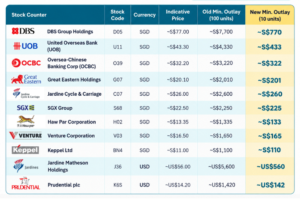
SGX is reducing board lots from 100 shares to 10 for 11 securities, making eight Singapore stocks more accessible to investors from 5 October 2026.

Investors stand to gain from businesses with reliable cash flow, high returns on equity and regular dividends.

Starting your investing journey can feel overwhelming, but many costly mistakes are avoidable. Here are 10 lessons every Singapore investor should understand before putting their money to work.

Trust isn’t earned by the name on the door — it’s earned by what the family will give up to protect it.