Crude oil prices soared above US$100 for the first time in years earlier this month, driven by war in the Middle East and supply disruptions.
In the past, this would likely have boosted the share price of Singaporean blue-chip Keppel Corporation (SGX: BN4), which was a major player in the offshore and marine (O&M) industry.
However, after major restructuring over the past few years, O&M is now a legacy business for Keppel, which is focused on other business segments.
So is Keppel worth buying if one expects the price of oil to stay elevated? What other factors should investors consider?
How Keppel’s Business Has Evolved
Going as far back as the mid-2010s, Keppel’s overall results were correlated with oil prices.
The price of oil started 2014 around US$100 per barrel and fell to US$54 by the end of 2016; it was even lower than US$30 near the start of 2016.
In 2015, Keppel’s O&M business unit made up 61% of total revenue, and 32% of net profit.
In 2016, Keppel’s overall revenue was down by 34% while net profit fell by 49%.
Even as recently as 2020, Keppel’s overall results were still heavily linked to the movement of oil prices.
During the initial phase of the COVID-19 pandemic in 2020, oil prices plunged.
As a result, Keppel’s total revenue slipped by 13% in 2020 while net profit turned negative.
Keppel has since made a strategic decision to move away from the oil business.
In recent years, most of its O&M assets were merged with those of Sembcorp Marine, with the combined entity later known as Seatrium (SGX: S51).
In exchange, Keppel received shares in Seatrium and distributed most of these to its shareholders.
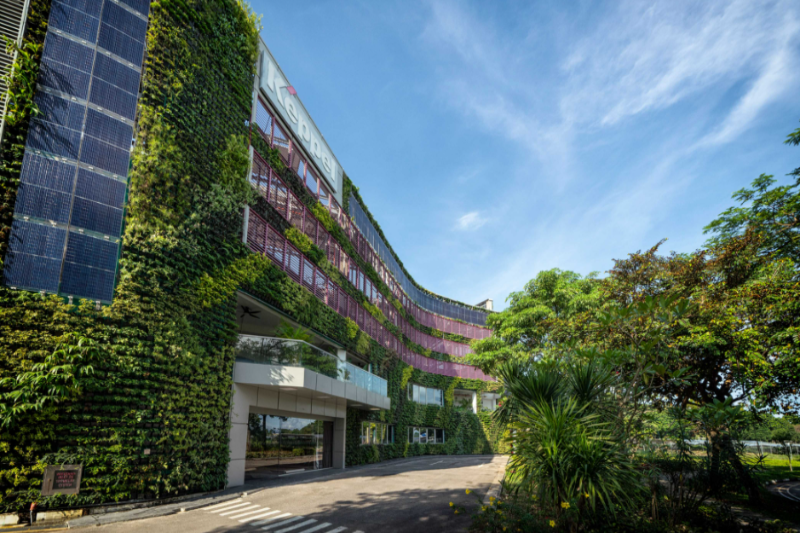
Now, the company has positioned itself as “New Keppel”, a global asset manager and operator that has three main business segments: infrastructure, real estate, and connectivity.
Potential Benefits of Higher Oil Prices
Even after its restructuring, oil market dynamics might still influence Keppel’s business, although in a much smaller way than before.
First, Keppel still owns around S$4.8 billion of legacy O&M assets, which are classified under the “non-core portfolio for divestment” segment.
The legacy O&M assets include its remaining shares in Seatrium, legacy rigs that were not part of the Seatrium transaction, shares in a couple of other oil & gas companies (Floatel and KrisEnergy), and associated cash and receivables.
Second, Keppel also retains some exposure to oil prices as its infrastructure business invests in a portfolio ranging from energy, to environment and digital infrastructure assets.
However, the extent of exposure is debatable, since much of the energy portfolio is linked to the renewables, clean energy, and decarbonisation value chains, and not to oil and gas.
Keppel: A Financial Snapshot
The reality is that Keppel Corp has been doing just fine with reduced exposure to the volatile oil industry.
Its current share price is at S$12.30, up 82% over the past year.
This has been supported by the performance of its non-legacy business.
Although 2025 revenue was just 3% higher than in 2024, net profit from New Keppel was 39% higher, at S$1.1 billion.
Of New Keppel’s S$1.1 billion in net profit, the infrastructure business accounted for the biggest share, at S$803 million (73%), while real estate came in at S$273 million.
The connectivity business made up the rest at S$175 million (the corporate activities division, meanwhile, lost S$151 million).
Return on equity for New Keppel was 18.7% in 2025, but this fell to 7.4% if the non-core portfolio and discontinued operations are included.
Investors in Keppel also benefited from dividends.
In 2025, the company paid out ordinary cash dividends of S$0.34 per share, amounting to 56% of New Keppel’s net profit for the year.
The company also rewarded shareholders with an additional S$0.02 per share in special cash dividends, and distributed one unit of Keppel REIT (SGX: K71U) for every nine Keppel shares held.
In sum, this worked out to a total dividend of S$0.47 per share in 2025, up 38% from 2024.
At the current price, this works out to a distribution yield of 3.8%.
Key Growth Drivers Beyond Oil
Ultimately, one of the main factors that will drive Keppel’s share price will be its ability to reach its S$200 billion in funds under management (FUM) target by 2030.
Keppel’s FUM reached S$95 billion by end 2025, which means that the company’s FUM would need to achieve a compound annual growth rate of around 16% between 2026 and 2030, assuming purely organic growth.
Of course, Keppel can also increase its FUM through acquisitions.
In 2024, it bought a 50% stake in Aermont Capital, a European real estate firm.
Subject to regulatory approvals, it expects to acquire the remaining 50% in 2028.
Currently, Keppel is actively raising capital for various funds including Aermont’s Fund VI, Data Centre Fund III, and Private Credit Fund III.
In addition, Keppel expects increasing digitalisation and the AI wave to increase energy needs, providing another growth lever.
It is these segments, and not the price of oil, that will serve as the primary drivers of the company’s future growth.
Risks Investors Should Consider
There are emerging risks in private credit, and the AI growth story, that could affect the performance of Keppel’s funds, along with the amounts it can raise from institutions.
As mentioned above, Keppel’s stock has already risen by 82%.
It is currently trading at a P/E ratio of around 21.1.
This is expensive compared to the Singapore market, as represented by the SPDR Straits Times Index ETF (SGX: ES3), which has a P/E ratio of 15.
That said, analysts are sanguine on Keppel’s ability to grow its earnings, with some expecting growth of around 15% in 2026, a sign that Keppel should be able to grow into its premium valuation.
Get Smart: Look Past the Oil Price
Oil prices above US$100 may revive interest in energy-linked stocks, but Keppel today is a very different animal than it was in the past.
Investors should evaluate the company based on its long-term earnings potential, which will increasingly be driven by its asset-light fund management strategy, and its ability to benefit from trends such as the energy transition, and less by oil price movements.
When the market is unpredictable, where can you park your money with confidence? Our latest FREE report reveals 5 Singapore dividend-payers built to withstand global storms. Get it now and see what’s still worth holding.
Follow us on Facebook, Instagram and Telegram for the latest investing news and analyses!
Disclosure: Silas H. does not own shares in Keppel Corp.