Earnings season has a way of surprising investors.
A headline number drops, the share price moves, and the story looks settled.
But the figure at the top of a results release rarely tells the whole story.
Three Singapore blue chips are due to report or update the market in July 2026.
Each one carries a gap between its headline number and what is happening underneath.
For dividend investors, that gap is where the real watching begins.
Here are three stocks on our radar, and what to look out for when they report.
Seatrium: can the momentum hold?
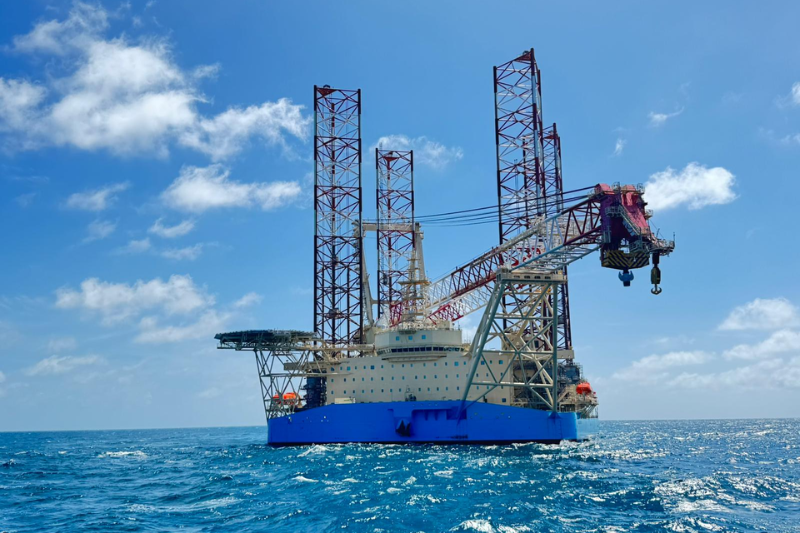
Seatrium Limited (SGX: 5E2) goes into its next update with the clearest run of form.
For the full year ended 31 December 2025, revenue rose 24.3% year on year (YoY) to S$11.5 billion.
Profit attributable to owners more than doubled to S$323.6 million, up from S$156.8 million a year ago.
The improvement came from stronger project execution, lower overheads and a larger share of profit from associates.
The dividend followed. Seatrium proposed a final dividend of S$0.03 per share, double the S$0.015 declared a year earlier.
One thing to watch is whether the cash can keep pace.
Free cash flow turned positive at S$19.7 million, a swing from negative S$4.3 million the year before.
That is progress, but it is a thin cushion against a doubled payout.
Free cash flow is the lifeblood of dividends, and investors will want to see the trend hold rather than wobble.
The pipeline gives reason for optimism.
Management is pursuing over S$32 billion in deals across oil and gas, offshore wind and conversion projects over the next 24 months.
The order book stands at S$17.8 billion.
The question for the next release is conversion: how much of that pipeline turns firm, and whether the higher-value work lifts margins as planned.
Keppel: testing the asset-light pivot
Keppel Ltd (SGX: BN4) is partway through reshaping itself into an asset-light global asset manager and operator.
Its first-quarter update in 2026 (1Q2026) was a voluntary one, so the group did not disclose revenue, profit or free cash flow figures.
What it did share points to steady progress.
Asset management fees rose 13% YoY to S$108 million, with growth across all three segments.
The group added S$0.4 billion of new funds under management in the quarter, with a further S$2 billion of commitments expected to be finalised in the coming months.
Net profit dipped slightly YoY, as stronger Infrastructure and Connectivity earnings were offset by weaker Real Estate, which had benefitted from valuation and divestment gains the year before.
Recurring income inched higher.
The group also returned to a free cash inflow position, reversing an outflow a year earlier.
Keppel did not declare a dividend for the first quarter, in keeping with its practice of paying only at the half and full year.
That makes the half-year update the one to watch.
It will be the first dividend declaration of the year, and the first real read on whether the recurring income base is firming up.
The other marker is monetisation.
Management is targeting S$2–3 billion of non-core asset sales in 2026, with S$385 million announced year-to-date.
Progress against that target will signal how the pivot is tracking.
Singapore Airlines: strong engines, rising headwinds
Singapore Airlines Ltd (SGX: C6L), or SIA, presents the widest gap between headline and substance.
For the fiscal year ended 31 March 2026 (FY2025/2026), net profit plunged 57.4% YoY to S$1.2 billion.
The number looks alarming on its own, but it is not the full picture.
Revenue hit a record S$20.5 billion, up 5.0% YoY, as SIA and Scoot carried a record 42.4 million passengers.
Operating profit climbed 39.0% to S$2.4 billion, helped by lower net fuel costs.
The profit drop came largely from the absence of a S$1.1 billion one-off gain on the Vistara disposal booked a year ago, compounded by S$828.5 million in share of losses from Air India.
The dividend eased.
The group declared total payouts of S$0.37 per share for the year, down from S$0.40.
Two headwinds deserve attention in the next release.
Air India remains a drag, and management flagged jet fuel as a key risk.
Fuel prices have more than doubled since the Middle East conflict began, and SIA’s lagged pricing means the full impact is expected to land in FY2026/2027.
Fare increases have not fully offset the rise.
Operating momentum is strong, but the road ahead may be more turbulent than the record passenger count suggests.
Get Smart: watch the gap, not the headline
All three companies share a lesson.
The headline figure can flatter or frighten, and neither extreme is the whole truth. Seatrium’s doubled profit needs cash flow to back it.
Keppel’s quiet update hides a pivot still being proven.
Singapore Airlines’ record revenue sits beneath a profit drop and a fuel bill yet to bite.
When these results land in July, look past the top line.
The watchpoints are in the detail.
One Singapore bank has quietly become one of the strongest income engines in the market. Its dividends have grown at 16.6% a year while others were pulling back. That level of consistency can change a retirement plan entirely. Our FREE 2026 Dividend Game Plan explains why this bank keeps lifting payouts and why many long-term investors rely on it for stable income. Download your free copy today.
Follow us on Facebook, Instagram and Telegram for the latest investing news and analyses!
Disclosure: The Smart Investor does not own shares of any company mentioned.