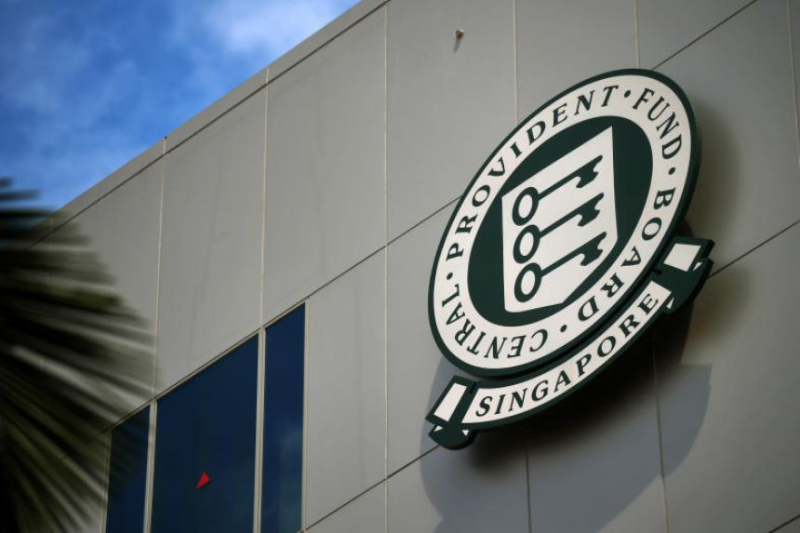
The Central Provident Fund (CPF) is a compulsory savings scheme for Singaporeans and Permanent Residents.
We contribute to it every month. We check the balances occasionally. But if we’re honest, many of us don’t spend much time thinking about how our CPF savings are actually working for us.
For most people, CPF money is left alone. It sits in the Ordinary Account earning 2.5%, or in the Special Account earning 4%.
These rates are stable and predictable, and for many, that feels comforting.
But they are not the only options available.
What often gets overlooked is that CPF savings don’t have to stay completely idle.
There are legitimate ways to make this money work harder, as long as you understand the risks and stay disciplined.
One such option is the CPF Investment Scheme (CPFIS).
Through CPFIS, members can invest part of their CPF savings in approved products. These range from lower-risk instruments like government bonds and fixed income funds, to higher-risk options such as unit trusts, ETFs, and individual stocks listed on the Singapore Exchange.
Better Returns Over the Long Term
At 2.5% in the Ordinary Account and 4% in the Special Account, it is understandable why some investors explore alternatives in search of higher long-term outcomes.
Over long periods, equities have delivered returns that are meaningfully higher than CPF interest rates. When dividends are reinvested, the Straits Times Index (SGX: ^STI) has delivered mid-to-high single-digit annual total returns over extended timeframes, although results vary across different market cycles.
That number refers to total return. In other words, it combines dividends received and changes in share prices.
To illustrate the income component alone, consider DBS Group Holdings (SGX: D05).
For FY2025, DBS paid total dividends of S$3.06 per share. Over the past month, its shares have traded between S$57.60 and S$58.63, which works out to a dividend yield of about 5.2% to 5.3%.
That already beats CPF’s 2.5% Ordinary Account interest and even the 4% Special Account rate, before factoring in any share price appreciation or the effect of reinvesting those dividends.
Of course, dividends are not guaranteed, and share prices move up and down.
But this example shows how a high-quality Singapore blue chip can generate income that competes with CPF interest rates. When dividends are reinvested, compounding further strengthens long-term returns, with capital growth adding another layer of potential upside over time.
Why Stocks Deserve Consideration
At a 4% return, CPF Special Account savings would take roughly 18 years to double.
In contrast, long-term equity total returns of around 7% to 8% a year, while never guaranteed, have historically allowed capital to double in about nine to ten years.
Over a working lifetime, that difference in compounding can meaningfully change retirement outcomes.
For investors with many years before retirement, this gap is worth thinking about.
Stocks are not risk-free. Prices fluctuate, and periods of losses are inevitable. However, ownership of productive businesses has historically been one of the most effective ways to grow wealth over long timeframes.
Using CPF money to invest in stocks allows investors to participate in this long-term growth while still benefiting from CPF’s structured and disciplined framework.
That said, this approach is not suitable for everyone. It requires patience, a tolerance for volatility, and a clear understanding that higher returns come with higher risk.
Get Smart: Making CPF Work Harder
CPF exists to support your retirement.
Leaving all your savings in low-yield accounts may feel comfortable, but it also comes with opportunity cost, especially over decades.
For investors who are willing to learn, stay disciplined, and think long term, using CPF savings to invest in stocks can be a sensible way to improve retirement outcomes.
However, remember that stocks are just one component of the CPFIS, and they carry inherent market risks.
Balancing the stability of CPF’s guaranteed returns with the growth potential of equities is the key to building a resilient and prosperous nest egg.
Many Singapore stocks fall behind inflation, which means your money quietly loses strength over time. Dividend stocks have a very different track record. Some continued delivering 6% to 13% every year across the toughest market conditions.
In this FREE report, discover 5 crisis-tested dividend stocks that kept rewarding investors while the market struggled. Download your dividend investing guide now.
Follow us on Facebook, Instagram and Telegram for the latest investing news and analyses!
Disclosure: Felicia T. owns shares of DBS.