Hongkong Land (SGX: H78), or HKL, hit a 52-week high of S$9.12 on 4 February 2026, marking a significant turnaround after a challenging period for property stocks.
This spectacular rally sparks a familiar dilemma for investors: is it time to lock in gains?
But momentum alone rarely sheds any light on whether selling makes sense.
We look at whether HKL’s rally is supported by improving fundamentals – or if this is a peak worth trimming into.
Business Overview
HKL is the largest landlord in Hong Kong’s prime business district, focusing on ultra-premium mixed-use commercial real estate.
As a core subsidiary of Jardine Matheson Holdings (SGX: J36), HKL enjoys operational synergies within an ecosystem of market-leading Asian businesses.
Its “best-in-class” portfolio is anchored by flagship assets in Hong Kong and Singapore, which consistently attracts blue-chip tenants, with roughly half of its portfolio leased to the banking and financial sectors.
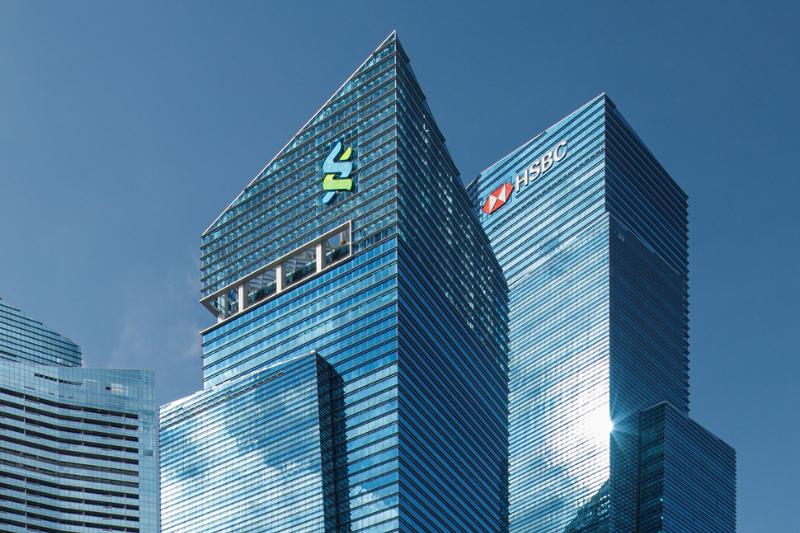
Notable high-value tenants in Singapore include HSBC, Goldman Sachs, and ByteDance, while those in Hong Kong include HKEX and J.P. Morgan.
Why the Stock is at a 52-Week High
In the first half of 2025 (1H2025), revenue dropped 22.7% to US$751.2 million year on year (YoY) due to sluggish sales in its Hong Kong and Chinese mainland portfolio, partially offset by strong performances in the Singapore market.
However, its 1H2025 net profit staged a remarkable recovery to US$221 million, from a US$833 million loss, and even raised its Net Asset Value (NAV) per share for the first time since 2018 by 0.4% from 31 Dec 2024 (US$13.57) to US$13.62 (at 30 June 2025), due to a stabilising valuation in its Hong Kong Central portfolio.
While this profit turnaround suggests the downturn of the Hong Kong market might have bottomed, the rising demand isn’t broad-based but driven by its ultra-premium properties.
Its balance sheet remains strong, with a marginal net debt reduction by 3.9% to US$4.9 billion, a net gearing ratio of 17%, and strong credit ratings.
Amid mixed results, HKL’s interim dividend of US$0.06 per share in 1H2025 remains unchanged YoY.
At the current US$8.74 per share, HKL offers a yield of 2.63%, and price/book (P/B) ratio of 0.64 – a historical high.
Reasons for Holding
HKL made significant progress towards an evolved business model under its strategic Vision 2035, having secured 70% of its 2027 capital target to ramp up investment capacity for new growth opportunities.
This strategic vision focused on its ultra-premium integrated commercial properties (UPICPs) in Asian gateway cities.
Indeed, with its Hong Kong Central portfolio valuation stabilised for the first time since 2019, it signals the potential of the UPICPs segment.
To sweeten the deal, the upcoming Singapore Central Private Real Estate Fund (SCPREF) is expected to contribute an additional stream of high-quality recurring fees.
HKL aims to double its dividend per share (DPS) by 2035 as part of its “Strategic Vision 2035”.
To support this transition, the group has upsized its current share buyback programme by an additional US$300 million, bringing the total amount allocated to US$650 million (since 2024), and signaled that up to 20% of its US$10 billion capital recycling proceeds could be used for further share repurchases.
Despite its challenges in some markets, investors should be reminded of the resilience of its Singapore portfolio, which significantly contributes to HKL, thereby cushioning these headwinds.
Reasons for Selling
The management highlights the short-term headwinds of lower Hong Kong office contributions, and the temporary impact of the LANDMARK renovation is expected to drag down its full-year performance.
Furthermore, its Chinese “Build-to-sell” Market remains below expectations despite government stimulus, with prospects of its recovery remaining unclear.
The Group’s largest-ever single investment in Westbund Central development in Shanghai, to be completed progressively through 2030, presents a long-term execution risk amid persistent geopolitical and economic uncertainties.
What Long-Term Investors Should Watch Closely
While having a diversified portfolio, HKL’s consistently performing assets are largely centred on its Singapore properties, presenting a material concentration risk.
Furthermore, HKL expects the performance of its Hong Kong and Chinese markets to worsen in the short term before potentially rebounding.
While HKL’s recent performance is notable, the combination of sectoral challenges and the stock’s current valuation may lead some to consider whether the risk-to-reward ratio has shifted in favor of other assets.
Still, the structural transformation towards a more capital-light model with an emphasis on high-income yielding UPICPs may prove to be rewarding in the long run.
Patient investors who choose to hold on could reap the benefits of its Strategic Vision 2035.
Get Smart: A Bet on a Greater China Recovery
HKL’s long-term recovery and growth will largely revolve around the recovery of its properties in “Greater China”.
For investors who believe in its eventual recovery, the long-term benefits may be rewarding.
Others may view this peak as a timely juncture to lock in profits, thereby freeing up liquidity for a more diversified deployment across the broader market.
The world’s gotten unpredictable, but some Singapore companies have quietly kept thriving. You’ve probably seen them in your daily life. And yes, they’ve kept paying dividends through it all. Meet 5 resilient stocks built to navigate global storms. Get the free report here and see how they’ve done it.
Follow us on Facebook, Instagram and Telegram for the latest investing news and analyses!
Disclosure: Larry L. does not own shares in any of the companies mentioned.