Singapore’s Straits Times Index (SGX: STI) has risen 16.7% as of last Friday.
But here’s the thing: it’s not the banks doing the heavy lifting.
Let me explain the STI’s weight problem.
This isn’t really an index of 30 equal companies.
DBS Group (SGX: D05), Oversea-Chinese Banking Corporation (SGX: O39), and United Overseas Bank (SGX: U11) control over 50% of the index weight.
Toss in Singapore Telecommunications (SGX: Z74) at 7.5%, and the quartet dominate nearly 60% of the index.
Pulling its weight
Now, here’s where it gets uncomfortable.
OCBC and UOB both reported declining net interest income in the first half of 2025.
Their response? Cut dividends.
OCBC shares have barely budged year-to-date (YTD).
UOB shares, on the other hand, have slipped by 5% over the same period.
In contrast, DBS shares are up by over 21% YTD.
But here’s the rub: at 2.2 times book value, DBS is priced at a premium.
A lot rests on its ability to maintain or grow dividends.
Then, there’s Singtel.
The good news is shares are up almost 40% YTD, buoyed by its Singtel28 transformation plan.
However, the telco’s Australian subsidiary Optus just suffered two network outages in two weeks, knocking out emergency phone lines.
The challenge? Optus generates half of Singtel’s revenue.
This isn’t a speed bump — it’s a potential roadblock to the telco’s transformation plans.
If you are keeping score, nearly 60% of your index is stuck in neutral.
Which raises the obvious question: if the heavyweights aren’t carrying the load, who is?
The 16.7% Solution
Ironically, the answer could come from the same number as the STI’s YTD gain: 16.7%
Real estate, which includes real estate investment trusts (REITs) and property developers, contribute 16.7% of the index, but are positioned to do the heavy lifting.
In particular, after two years of getting hammered by rising rates, REITs are finally catching a break.
Already, CapitaLand Integrated Commercial Trust (SGX: C38U), Frasers Centrepoint Trust (SGX: J69U), and STI newcomer Keppel DC REIT (SGX: AJBU) have raised their distributions this year.
Then, last Friday, Mapletree Pan Asia Commercial Trust (SGX: N2IU) delivered its first distribution per unit increase (DPU) in six quarters, reversing a downtrend.
This is real money in your pocket.
The secret? Patience.
Interest rate cuts won’t instantly boost REIT profits.
The real gains kick in when REITs refinance their existing debt at lower rates.
That takes quarters, not weeks.
The Bold Dividend Players
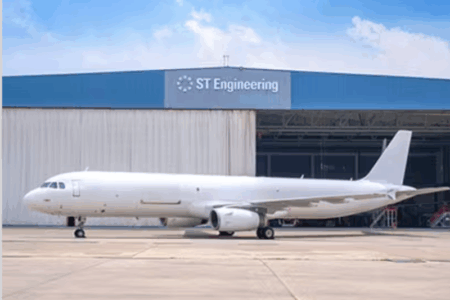
Don’t overlook Singapore Exchange (SGX: S68) and Singapore Technologies Engineering (SGX: S63), which account for 3.4% and 3.2% of the STI respectively.
What makes them different? They’re making bold projections.
SGX is targeting annual dividends of S$0.525 by FY2028, up from S$0.375 in FY2025.
That’s a 40% increase over three years.
ST Engineering has forecast a 6% year-on-year dividend increase for 2025, followed by incremental increases equal to one-third of profit gains from 2026 onwards.
These aren’t hopes.
They’re public declarations.
Get Smart: Dividends while you wait
The math is simple.
Sixty percent of the STI is fighting gravity at the moment.
But the rest of the index is doing the heavy lifting.
While banks bleed from rate cuts and Singtel deals with Optus, REITs are refinancing, SGX is raising dividends 40%, and ST Engineering is sharing profit gains.
Even if share prices go nowhere for months, you’re collecting dividends.
And yes, that includes the banks.
The real victory is not trying to guess where the STI is headed next — it’s coming from the stocks that pay you to wait.
Wish you could overhear how experienced investors think? That’s what Get Smart feels like. Reading calm, thoughtful commentary from people who study the markets closely and care about growing wealth sensibly. Click here to subscribe to our weekly newsletter for free now!
Follow us on Facebook, Instagram and Telegram for the latest investing news and analyses!
Disclosure: Chin Hui Leong owns shares of CapitaLand Ascendas REIT, CICT, DBS, OCBC, SGX, and UOB.