There is a strange problem that comes with owning a successful investment.
The better it does, the harder it can become to buy more.
That may be how some investors feel about Singapore’s three big banks these few weeks.
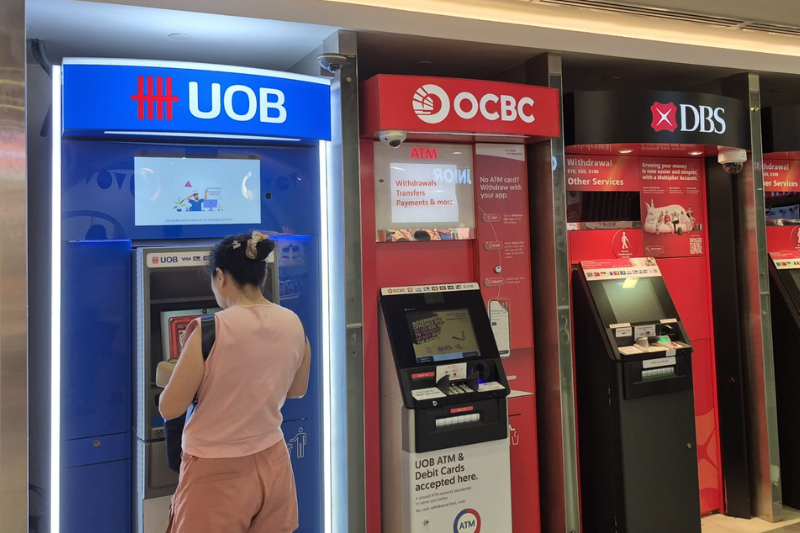
DBS Group Holdings Ltd (SGX: D05), Oversea-Chinese Banking Corporation Limited (SGX: O39) and United Overseas Bank Limited (SGX: U11) have enjoyed a remarkable run.
Their businesses are performing well. Profits remain strong. Dividends are rising.
And their share prices have climbed to, or close to, record levels.
So here’s the uncomfortable question:
If everything looks this good, should you still be buying?
When good news becomes the reason to buy
It is easy to see why investors are attracted to the banks.
DBS recently reported record quarterly profit of S$3.1 billion and lifted its quarterly payout to S$0.81 per share, including its capital return dividend.
OCBC posted record first-half profit of S$4.2 billion and increased its interim dividend by 15%.
UOB’s first-half profit rose too, while its interim dividend increased to S$0.88 per share.
At the same time, their share prices have surged.
As I write this on 11 August, DBS is trading at around S$77, OCBC above S$31 and UOB around S$43. UOB, for example, reached an all-time high of S$45.15 as recently as July.
Put everything together and it creates a very compelling story:
Record profits.
Higher dividends.
Rising share prices.
What’s not to like?
Plenty – if those are the only reasons you are buying.
You are not buying yesterday’s profits
One of the easiest investing mistakes to make is to take what has just happened and assume it will continue.
But when we buy a share today, we are not buying the profits the company has already earned.
We are buying a claim on the profits it will earn in the future.
And there is already a reminder of that buried inside the banks’ latest results.
Net interest income, which is the income banks generate from the spread between what they earn on loans and pay on deposits, has come under pressure across all three banks as interest rates have fallen.
At DBS, net interest margin fell from 2.05% a year ago to 1.87%. Yet strong wealth management and other non-interest income helped the bank deliver record profit.
OCBC has similarly benefited from strong fees, trading and insurance income.
UOB’s results were more subdued, even though profit and dividends still increased.
In other words, the headline numbers may look universally good, but what is happening underneath them is different.
That matters when you are deciding what to pay.
A great company can still be a poor investment
This is a distinction investors sometimes forget.
Imagine a wonderful business earning S$1 a year.
At S$10 a share, you are paying 10 times those earnings.
At S$20, you are paying 20 times.
At S$30, you are paying 30 times.
The business hasn’t suddenly become worse.
But your starting price has changed.
And the higher the price you pay, the more growth you may need in the years ahead to justify it.
That doesn’t mean DBS, OCBC, or UOB are necessarily expensive today.
Nor does it mean you should sell simply because their share prices have reached new highs.
It means the question has changed.
Instead of asking:
“Are the banks doing well?”
Ask:
“At today’s price, what am I expecting them to deliver from here?”
Those are very different questions.
All-time highs are not a sell signal either
There is another trap waiting on the opposite side.
Some investors see an all-time high and immediately decide they have missed their chance.
They wait for the share price to fall.
Then they wait some more.
And if the business continues growing, the “cheap” price they are waiting for may never arrive.
A share price being at an all-time high tells us where it has been.
It does not tell us where the business is going.
So I wouldn’t blindly buy Singapore’s banks simply because profits and dividends are hitting records.
But I wouldn’t blindly avoid them because their share prices are hitting records either.
Look forward, not backwards
The latest results from DBS, OCBC and UOB tell us something important.
Singapore’s banks remain highly profitable businesses.
But the way they are generating those profits is already evolving.
Interest margins have come down, but loan books are growing.
Wealth management and fee income are becoming increasingly important.
And each bank is responding differently.
And as investors, that is where your attention should be.
Not on whether the stock has already risen 20%, 30% or 50%.
Not on whether somebody else bought it much cheaper.
And certainly not on the fear that you might miss the next leg up.
The questions you need to ask yourself can be straightforward:
What can this business reasonably earn in the years ahead? Does today’s share price still give me an attractive return if I am right?
If the answer is yes, an all-time high need not scare you away.
If the answer is no, a record dividend shouldn’t tempt you in.
That is the difference between buying a great company…
…and making a great investment.
Wish you could overhear how experienced investors think? That’s what Get Smart feels like. Reading calm, thoughtful commentary from people who study the markets closely and care about growing wealth sensibly. Click here to subscribe to our weekly newsletter for free now!
Follow us on Facebook, Instagram, Telegram and YouTube for the latest investing news and analyses!
Disclosure: Joanna Sng owns shares of all the companies mentioned.