In a bold move to revitalise the Singapore equity landscape, the Singapore government has rolled out the multi-billion-dollar Equity Market Development Programme (EQDP).
The EQDP aims to strengthen the local asset management and research ecosystem, and increase investor interest in Singapore’s equities market.
For dividend-focused investors, the key question is whether this stimulus will translate into bigger payouts.
In this article, we will unpack what the EQDP is all about, and how it impacts listed companies, dividend policies, and long-term investor outcomes.
What the Equity Stimulus Is About
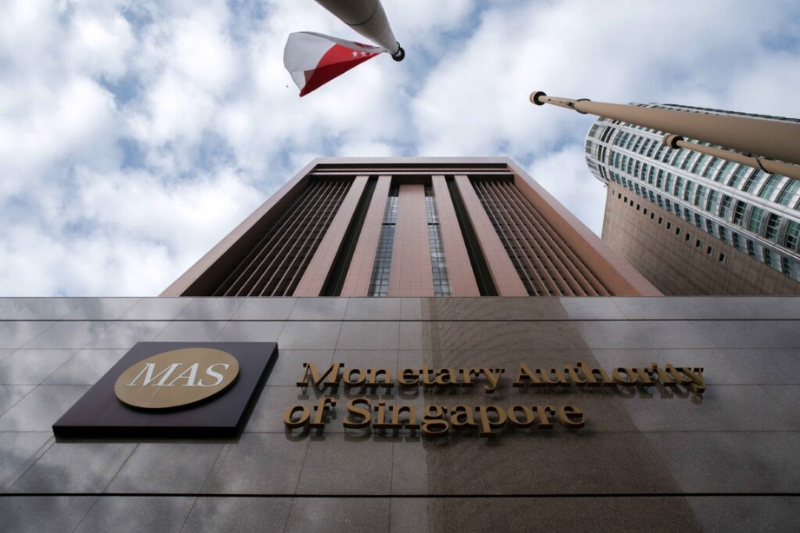
The EQDP is a S$5 billion programme spearheaded by the Monetary Authority of Singapore (MAS) and the Financial Sector Development Fund (FSDF).
It is one of a series of measures announced in February 2025 by the Equities Market Review Group to strengthen the competitiveness of the local equities market.
Under this programme, MAS will invest in strategies managed by Singapore-based asset managers that have a strong focus on Singapore-listed equities.
Eligible strategies must invest substantially in Singapore public equities, with a preference for those emphasizing small- and mid-caps allocations.
It seeks to broaden investor participation beyond the large-caps.
MAS set aside S$1.1 billion from EQDP for the first batch of three appointed asset managers, Avanda Investment Management, Fullerton Fund Management, and JPMorgan Asset Management.
A second batch of six asset managers was appointed in late 2025, bringing the total EQDP allocation to S$3.95 billion across nine managers.
These asset managers have committed to meeting developmental outcomes to grow investment and research capabilities in Singapore.
EQDP signals coordinated policy intent across multiple agencies that touch the capital markets, rather than a single cash-only fix.
How it Could Impact Corporate Dividends
EQDP aims to deepen market liquidity, attract investors, and support the growth of local companies, but has a lesser direct impact on dividends.
Stronger investor demand can lift share prices, especially for the small- and mid-cap companies, raising their valuation.
Higher valuations could lower dividend yields temporarily, even if total returns improve.
Companies that benefited from the stimulus may opt to reinvest capital, pay down debt, or buy back shares, rather than immediately raise dividend payout.
However, if the EQDP succeeds in stimulating overall business growth, the ripple effect matters.
As companies grow, their profits increase, and dividends usually follow profits, not policy.
For example, Sembcorp Industries Ltd (SGX: U96) reported net profit of over S$1 billion for 2024, a 7% year-on-year (YoY) increase compared to S$942 million in 2023.
That translates to an earnings per share (EPS) of around S$0.57.
From its profits, the conglomerate paid out a total of S$0.23 per share dividend for 2024, up approximately 77% from 2023’s S$0.13.
Over the long term, stronger profitability could translate to more sustainable dividends.
For income investors, the key is to distinguish between yield compression due to price appreciation, which is a green flag, and dividend cuts due to weak fundamentals, which signal problems in the company.
Sectors That Could Benefit Most
The EQDP is structured to broaden interest beyond large caps and to support dedicated Singapore equity strategies.
Government initiatives often favour strategic sectors like technology, financials, infrastructure, and green energy.
Investors should assess potential beneficiaries of the EQDP to determine alignment with their objectives and consider them for long-term portfolio growth.
A likely beneficiary of the EQDP is CSE Global Limited (SGX: 544), a global technologies company with an international presence, and listed on the Singapore Exchange since 1999.
The Group’s net profit for 1H2025 increased by 8.5% to S$16.3 million from S$15 million in 1H2024.
However, as at 30 June 2025, CSE’s order book stood at S$573.8 million, down 17.1% from 1H2024’s S$692.3 million.
CSE Global has maintained consistent dividends, paying out S$0.0275 per share annually from 2020 to 2024, despite the COVID-19 pandemic.
That said, its 2025 dividend dropped 16.7% to S$0.0229, with a trailing dividend yield of 2.4%.
Singapore Exchange (SGX: S68) is also a likely beneficiary of the programme.
With an influx of capital from the EQDP, higher trading liquidity is expected to increase trading volumes, benefiting the trading operator.
SGX Group reported its highest revenue and net profit since listing for the fiscal year ending 30 June 2025 (FY2025), with strong broad-based growth across equities, currencies and commodities.
Net revenue increased 11.7% to approximately S$1.3 billion, while FY2025 adjusted net profit increased 15.9% YoY to S$609.5 million.
SGX’s FY2025 total dividends come up to S$0.375 per share, up from FY2024’s S$0.345, with a trailing dividend yield of 2.2%.
Another potential EQDP beneficiary is ESR-REIT (SGX: 9A4U), which holds a diversified portfolio of logistics and industrial properties across the Asia-Pacific.
ESR’s third quarter results in 2025 (3Q2025) showed a 22.7% YoY increase in gross revenue to S$334.5 million, along with a 6.8% increase in distributable income to S$134.6 million.
A mid-cap REIT, ESR’s dividend yield of 7.9% is likely to attract investment flow under the programme.
Singapore’s largest bank, DBS Group Holdings (SGX: D05), could also benefit indirectly from the programme due to the higher inflows into Singapore and stronger market confidence.
The EQDP aims to boost overall market liquidity and activity, which would increase non-interest income from capital market activities, a key earning source for the bank.
As DBS has a strong wealth management division, it is well-positioned to capture the upside from this improved market activity.
Already a strong dividend player, DBS declared an ordinary dividend of S$2.22 per share for 2024, a record high.
For 2025, DBS has introduced a quarterly Capital Return dividend of S$0.15 per share on top of its ordinary dividends, which could bring the total payout to around S$3.00, breaking the previous year’s record.
DBS Group’s record of steady dividend payout and a trailing dividend yield of 5.1% makes it a popular choice for dividend investors.
While chosen fund managers have a mandate to broaden participation in Singapore equities with a focus on small- and mid-sized companies, investors should be aware that not all beneficiaries will immediately share the rewards through higher dividends.
The Catch: Stimulus Doesn’t Guarantee Payouts
The EQDP can change market structure, increasing liquidity, analyst coverage, and investor breadth, but it cannot compel corporate boards to raise recurring dividends.
Companies with growth opportunities will most likely choose to retain cash for reinvestment.
The higher market demand may make financing easier and cheaper, and companies could prefer reinvesting or pursuing acquisitions during this time instead of raising dividends.
Some companies might also choose to reduce their debt to create a stronger balance sheet, strengthening their foundation for the long term.
Others could do buybacks, returning the value through potential capital appreciation of the remaining shares.
Furthermore, government funding might come with conditions that can restrict short-term cash returns.
When grants fund growth projects, the payout, if any, typically only shows up after the projects generate recurring cash flow, which could be several years later.
Retail investors would need to manage their expectations as not every initiative translates into a direct income boost.
What This Means for Retail Investors
With the government committing to inject S$5 billion into the market, it could lift market sentiments and valuations for the companies that receive the attention.
Investors can expect better liquidity, more Singapore-centric funds and better coverage of small- and mid-cap companies
However, dividend gains will likely be gradual, with companies using the capital from the stimulus to first reinvest or pay back debts, rather than giving them out as dividends.
Investors should focus on companies with a proven dividend track record and clear cash flow visibility.
Quality dividend stocks will still depend on strong business fundamentals to power their dividends, not government aid.
Get Smart: Dividends Come From Profits, Not Policy
Government support can improve market confidence and create a rising tide for equities.
The EQDP can help revive the domestic equity ecosystem, broaden investor participation, and support small- and mid-cap companies.
However, dividends are derived from profits, not policies.
Investors should focus on businesses that can grow earnings and sustain payouts long after the stimulus fades.
Imagine receiving steady rent increases for more than two decades. It sounds unusual, but one healthcare REIT already has rental escalations locked in until around 2042. Income visibility like this is hard to find today. We break down how this REIT built such dependable cash flow in our FREE dividend report and how it could strengthen a retirement portfolio. Get the free report here.
Follow us on Facebook, Instagram and Telegram for the latest investing news and analyses!
Disclosure: Wenting does not own any of the above-mentioned stocks.