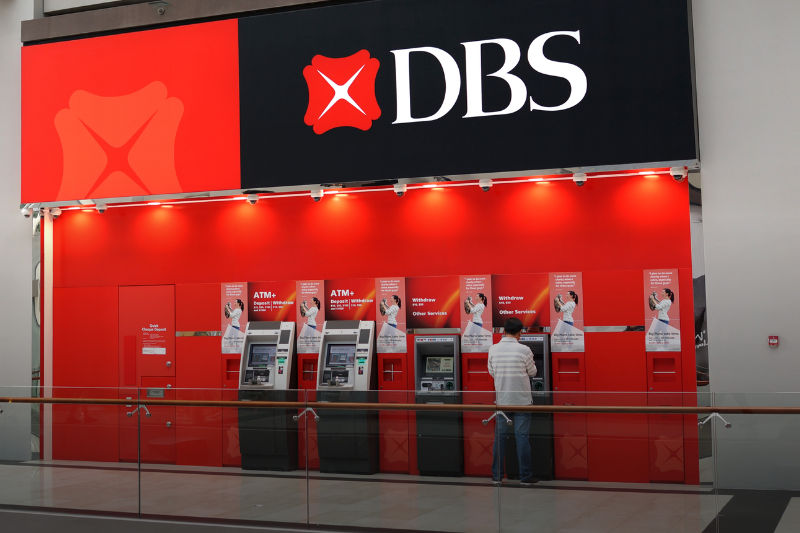
One of the most popular local stocks, DBS Group Holdings Limited (SGX: D05), or DBS, is known for its generous dividends and steady growth over the long term.
With the share price near record highs, investors may wonder if it’s too expensive to buy right now.
After all, even a wonderful business bought at an inflated price could lead to poor returns.
With that in mind, let’s walk through a practical, step-by-step framework to help estimate a fair price range to start accumulating DBS shares.
Why Entry Price Still Matters for Blue-Chip Stocks
While investors generally buy solid blue-chip companies like DBS and hold them for life, this does not mean you can purchase shares at any valuation.
Why is buying shares at a reasonable valuation important?
Well, the price you buy at directly affects the dividend yield you lock in at that point in time.
At too high a valuation, the income yield you receive will be lower (assuming dividends do not rise as fast as the share price).
The valuation at which you buy a stock also has a large impact on your long-term total returns; generally, buying at a lower valuation leads to increased returns.
A lower valuation can also offer some downside protection when the market corrects.
Step 1: Understand DBS’s Earnings Power
The first step in determining a fair range for buying DBS shares is understanding the business.
As a bank, DBS’s bread and butter comes from earning net interest income (NII).
The important thing here is that NII depends heavily on net interest margins (NIM) and interest rates; a higher interest rate environment typically leads to a higher NIM, resulting in increased NII for DBS.
Investors should definitely monitor this key metric of NIM.
Alongside NII, the bank relies on its fee-generating businesses, including wealth management, cards and transaction services, to generate its top line and bottom line.
Given the outsized contribution of wealth management (more than half of its 2025 third quarter fee business), investors would do well to monitor the progress of this wealth management segment.
Crucially, banking is a cyclical business when there are times it earns abnormally high profits.
Usually, this happens during the peak of the economic cycle – relying on a valuation performed using peak earnings is a sure way to come up with a premium price which does not account for earnings slipping as the economy softens.
In this case, investors should look at normalised earnings instead of assuming the high earnings DBS has posted will continue indefinitely.
Step 2: Use Valuation Benchmarks
Since it’s hard to figure out normalised earnings for a bank, we can use another valuation method to determine if shares are trading at a fair valuation.
The price-to-book (P/B) ratio is often used to value banks.
Simply put, this metric reflects how much investors are willing to pay for the net assets of the company.
Commonly used for asset-intensive businesses, the P/B ratio has long been used to determine if a bank is expensive.
DBS currently has a P/B ratio of around 2.5 times.
This level appears to be rich compared to its historical five-year trading range, where its ratio has averaged at around 1.44 times.
However, don’t get hung up on a single P/B figure to value DBS.
It’s more practical to use a range to see if it’s actually cheap or expensive.
Step 3: Factor in Dividend Yield
As mentioned earlier, your entry price determines the yield-on-cost you obtain from owning shares.
Buying at a current price of S$58.65 per share against the projected total dividend of S$3.06 per share in 2025, DBS offers a dividend yield of roughly 5.2%.
If DBS sells off to S$50 per share, and you buy it at that price, this dividend yield increases to 6.1%.
Conversely, if shares continue appreciating to S$64, the dividend yield you get when you purchase at that price declines to 4.8%.
Especially for investors focused on income, setting a target minimum yield (say 5.5% or roughly S$55 per share) could be a part of planning your buy points for the bank.
Step 4: Build Your Ideal Entry Price Range
When you combine a fair P/B range and a desired dividend yield, you arrive at a range of prices where you can consider purchasing shares of DBS.
Rather than fixating on an exact number like S$50, having a range of entry prices offers more flexibility.
Markets rarely hit the exact figure you’re looking for.
On a personal note, I have lost track of the number of times the market came within a whisker of my exact buy price, only to reverse higher, causing me to miss my entry.
Having the flexibility of an entry-price range ensures you actually purchase shares of the bank when they seem fair, allowing you to enjoy both a reliable income stream and potential capital appreciation.
Step 5: Managing Timing and Execution
Consider spreading out your buys or using dollar-cost averaging to avoid the risk of bad timing.
Don’t let loud headlines or market swings spook you into ditching your plan.
Similarly, do not purchase more shares simply due to news causing a temporary price spike.
What’s important is that you stick to your plan as long as the business remains fundamentally sound.
Common Mistakes Investors Make When Buying DBS
You might be familiar with some of these mistakes, such as not purchasing shares as the price is not “perfect”, resulting in years of missed dividend income.
As highlighted above, relying on valuations based on peak earnings and buying at these premium valuations tends to turn out poorly.
Being lax on valuation and blindly buying DBS because it is a wonderful business can be costly.
Finally, ignoring fundamentals and focusing solely on share price movement is also a mistake.
Get Smart: Should You Buy?
While DBS is a wonderful business, it does not mean you can buy shares at any price.
Balancing earnings, valuation and dividend yield to come up with an entry price range can help investors purchase shares with reasonable assurance while maintaining valuation discipline.
How do rich Singaporeans invest when volatility hits?
They turn to companies with cash, history, and discipline. This free report highlights 5 blue chips that deserve your attention. Get your copy here and see who made the list.
Follow us on Facebook, Instagram and Telegram for the latest investing news and analyses!
Disclosure: Wilson.H does not own shares in any of the companies mentioned.