Singapore’s dividend conversation usually revolves around blue chips: the three local banks, Singapore Telecommunications Ltd (SGX: Z74), and the major REITs.
However, some of the most consistent dividend growth on the Singapore Exchange (SGX: S68) can be found further down the market cap spectrum.
Three small-cap companies raised their interim payouts by at least 10% in the first half of 2026: VICOM (SGX: WJP), Credit Bureau Asia (SGX: TCU), and HRnet Group (SGX: CHZ).
Crucially, none of the three carry any bank borrowings, and all three generated positive free cash flow to fund their higher distributions.
Can VICOM keep raising its payout?
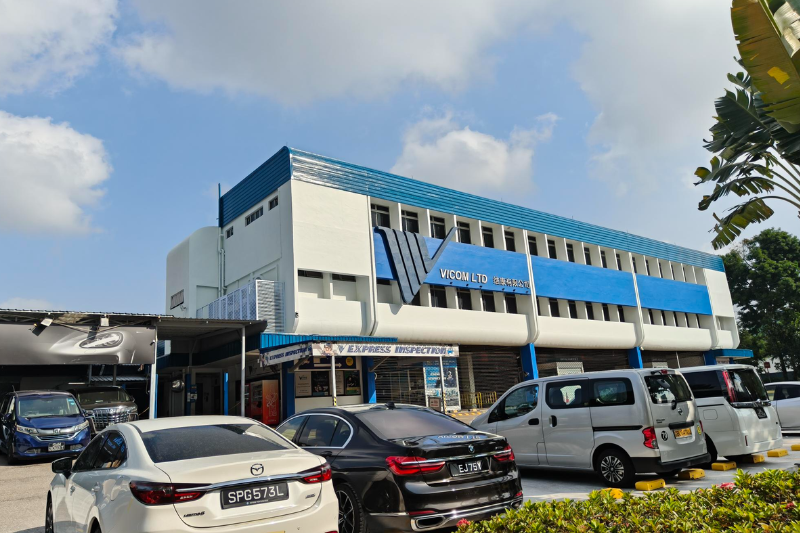
VICOM, the vehicle testing and inspection unit of ComfortDelGro Corporation (SGX: C52), raised its interim dividend by 27.4% to S$0.0395 per share.
Operational performance provided clear support for the increase.
First-half revenue rose 6.4% year on year (YoY) to S$74.3 million, while net profit attributable to shareholders surged 28% to S$19.9 million.
Earnings per share expanded to S$0.0561, up from S$0.0439 in 1H2025.
Cash generation improved substantially.
Free cash flow more than doubled to S$14.7 million from S$6.0 million a year prior, as operating cash flow jumped 65.1% to S$31.8 million – well ahead of capital expenditure requirements (S$17.2 million).
Margin performance was aided by a 44.2% YoY drop in subcontractor fees associated with the ERP 2.0 On-Board Unit rollout, which offset higher staff expenses and trimmed total operating costs by 1.2% to S$50.3 million.
Note that because the installation project is scheduled to conclude by December 2026, this specific cost tailwind may not extend into future periods.
As of 30 June 2026, VICOM held S$53.0 million in cash reserves with zero bank debt, leaving lease liabilities of S$33.3 million as its only interest-bearing obligations.
Management anticipates a softer second half, noting that while electronics and precision engineering demand remains steady, oil and gas inspection activity faces ongoing Middle East geopolitical uncertainties.
Is CBA rewarding shareholders in more ways than one?
Credit Bureau Asia (CBA) – which provides credit scoring and risk analytics across Singapore, Malaysia, Cambodia, and Myanmar – declared an interim dividend of S$0.022 per share, up 10% from S$0.020 a year ago.
Group revenue for 1H2026 rose 2.7% YoY to S$31.0 million.
The Financial Institution (FI) data segment expanded 4.3% to S$14.6 million on higher demand for scoring products and portfolio monitoring, while Non-FI data revenue edged up 1.3% to S$16.4 million.
Net profit attributable to shareholders rose 1.5% to S$5.5 million, with overall group profit growing 3.6% to S$13.3 million (a notable share of which accrued to minority joint venture partners).
Free cash flow grew 4.6% YoY to S$13.3 million, fully covering the higher distribution.
Separately, the company executed a capital reduction exercise on 26 June 2026, returning S$0.090 per share (approximately S$20.7 million) in excess cash to shareholders – a one-off capital return distinct from its regular recurring dividend.
Even following that distribution, CBA maintained a healthy liquid balance sheet with S$49.6 million in cash and S$2.2 million in financial assets as of 30 June 2026.
The group operates debt-free outside of S$4.7 million in lease liabilities, with management maintaining a cautiously optimistic outlook for FY2026.
Does HRnet’s cash position support a bigger dividend?
Pan-Asian recruitment and staffing agency HRnet Group raised its interim payout by 10% YoY to S$0.022 per share.
Top-line revenue for 1H2026 came in at S$292.2 million, down 1.1% in SGD terms but relatively flat on a constant-currency basis.
Operational volumes held firm, with contractor headcount expanding 6.9% to 17,253 and permanent placements growing to 2,311.
Operating profit advanced 9.4% to S$20.1 million as gross margins expanded to 21.3% from 20.7% and operating expenses fell 1.9%.
However, non-operating items created a bottom-line drag.
Other income fell 65.5% to S$5.4 million due to reduced government subsidies, fair value investment adjustments, and lower interest income.
Free cash flow moderated to S$17.4 million from S$26.5 million a year prior – making it the one cash metric among the three firms that contracted during the period.
Despite near-term cash flow compression, HRnet’s balance sheet strength remains a key differentiator.
The group held S$332.1 million in cash, treasury bills, and gold as of 30 June 2026 with no bank borrowings.
This cash reserve provides a deep liquidity cushion to support ongoing dividend distributions through broader hiring market cycles, even as listed recruitment peers face industry-wide headwinds.
Get Smart: The question behind every dividend hike
A 10%+ dividend hike is an encouraging signal, but the critical follow-up question is always whether the company’s balance sheet can support it over time.
Investors can apply a simple two-step check:
- Is free cash flow expanding alongside the dividend, or is the higher payout drawing down existing reserves?
- Does the balance sheet carry net cash with zero bank debt?
Companies with zero bank borrowings and positive free cash flow maintain far greater flexibility to preserve their dividend payouts when industry conditions turn quiet.
Apply that test to any small-cap stock promising a bigger payout.
What if you could collect a steady income from Singapore companies for decades to come? We found one in a near-duopoly with 70%+ market share that’s practically printing money. Our FREE small-cap report uncovers this “hidden monopoly” advantage (plus 4 other dividend powerhouses) that will keep paying no matter what the market does. Click here to grab your copy now.
Follow us on Facebook, Instagram, Telegram and YouTube for the latest investing news and analyses!
Disclosure: Calvina L. owns shares of SGX. Chin Hui Leong contributed to this article and owns shares of SGX, VICOM, CBA, and HRnet.