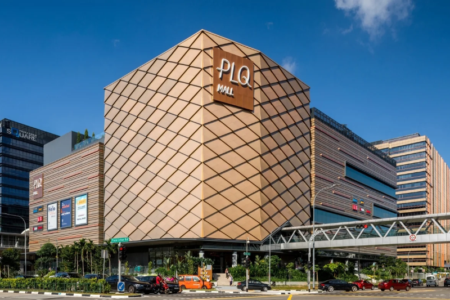
Malls in Singapore have been nearly completely shut down, with just essential services such as supermarkets and food and beverage outlets allowed to operate.
The tough “circuit breaker” measures were introduced by the government on 7 April to curb the spread of the disease has led to sharply lower footfall in malls
Even commercial real estate has not been spared, with more people working from home and numerous cancelled trips, respectively.
Retail REITs have been in the spotlight recently due to deep cuts made to their distribution per unit (DPU), in light of tenant support measures announced to keep tenants afloat.
We take a look at two prominent REITs — Frasers Centrepoint Trust (SGX: J69U), or FCT, and Mapletree Commercial Trust (SGX: N2IU), or MCT, to see which makes the better investment candidate.
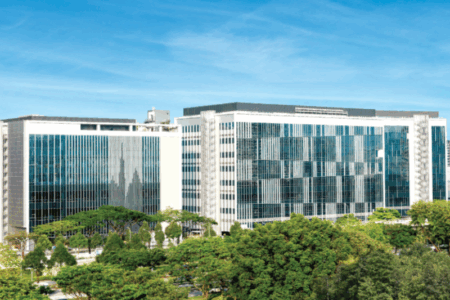
To recap, FCT owns seven malls located mainly in residential townships, while MCT owns five properties, one of which is used for retail purposes (VivoCity), while the rest are commercial properties.
Financials and DPU

MCT reported a higher year on year rise in gross revenue and net property income (NPI), mainly due to the acquisition of commercial property MBC II. This acquisition drove a year on year increase of 8.8% and 8.7% in revenue and NPI for MCT, respectively.
Even if we strip out the MBC II acquisition, year on year revenue will still be up 4% and NPI up 3.9%, respectively.
Interestingly, however, FCT enjoyed a 25% year on year boost in distributable income compared to MCT’s 10.5% increase. This increase was driven mainly by dividends of S$10.8 million received from associates and joint ventures (PGIM Real Estate AsiaRetail Fund Limited and Sapphire Star Trust).
FCT ended up retaining 50% of its distributable income for tenant support and relief measures, and its DPU fell by 48.7% year on year.
MCT, on the other hand, retained close to 60% of its distributable income and only distributed the remaining 40%, resulting in a steeper 60% year on year fall in DPU.
Investors should note that with the relaxation of rules regarding REITs, there is no immediate requirement to pay out 90% of annual distributable income to be eligible for tax exemption.
Operating metrics

MCT’s committed occupancy rate was a tad higher than FCT, while rental reversion for both REITs was around the same level at 5% to 5.2%.
Note that for MCT, the bulk of rental reversion came from the retail portion, with reversion at 6.7%. The office and business park division registered just a small increase of 0.7% in fixed rents
The weighted average lease expiry (WALE) for MCT was higher than FCT, at 2.6 years versus 1.8 years. The office and business park segment’s WALE was 2.9 years and boosted the WALE for MCT as a group.
Gearing and cost of debt

MCT and FCT had similar levels of gearing at quarter-end, both 33.3%. However, FCT had a much higher interest coverage ratio, at 6.4 times versus MCT’s 4.3 times. FCT also enjoyed a lower cost of debt at 2.44%, a full half a percentage point lower than MCT’s 2.94%.
Get Smart: Commercial properties act as a buffer for now
All in, after comparing the above traits for both REITs, we prefer MCT.
MCT has a wider breadth of property types, including retail, business park and commercial. This diversification helps to take some heat off retail, which is suffering right now with no relief in sight.
Also, MCT had just concluded the acquisition of Mapletree Business City II, further diversifying the portfolio.
In terms of occupancy rate and WALE, MCT also has better numbers than FCT.
Although MCT loses out to FCT when it comes to the cost of debt and interest coverage, gearing is not an immediate concern for both REITs due to the relaxation of the gearing limit for REITs from 45% to 50%.
As interest rates are expected to stay low for an extended period, there is also little danger of either REIT seeing a spike in the cost of debt.
With share prices battered to multi-year lows, many attractive investment opportunities have emerged. In a special FREE report, we show you 3 stocks that we think will be suitable for our portfolio. Simply click here to scoop up your FREE copy… before the next stock market rally.
Click here to like and follow us on Facebook and here for our Telegram group.
Disclaimer: Royston Yang does not own shares in any of the companies mentioned.