The Straits Times Index (SGX: ^STI) closed above the 5,700 mark for the first time in late July 2026.
It’s a remarkable rise, with the index sweeping past milestone after milestone in the space of a few weeks.
But it also makes investors uneasy.
The higher the number climbs, the thinner the air feels.
Then the bank results came in last week.
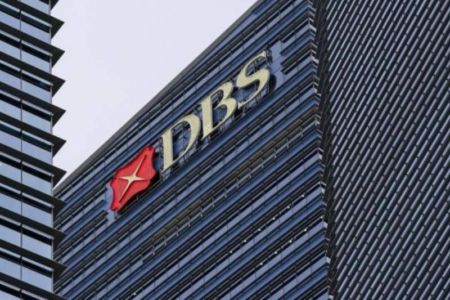
DBS Group (SGX: D05) crossed S$6 billion in quarterly income for the first time, delivering a record net profit of nearly S$3.1 billion.
Singapore’s biggest bank declared S$0.81 in dividends per share, up from S$0.75 a year ago.
DBS’s payout includes an ordinary dividend of S$0.66 and a capital return dividend of S$0.15.
Not to be outdone, Oversea-Chinese Banking Corporation (SGX: O39), or OCBC, posted a record quarterly profit of over S$2.2 billion, up 22 per cent, while raising its interim dividend by 14.6 per cent.
United Overseas Bank (SGX: U11), or UOB, reported a double-digit increase in second-quarter net profit and lifted its interim dividend to S$0.88 from S$0.85.
Here’s the thing — together, the trio make up almost 58 per cent of the STI as of last Friday (7 August 2026).
That’s enough to move the needle.
But beware: when the market is singing your praises, that’s exactly when you should keep your feet on the ground.
Know What You Want
When the index is setting records and the companies inside it are raising dividends, there’s a nagging voice in your head.
You feel like you have to do something.
It is a strange sort of pressure.
Nothing has gone wrong. Nobody is telling you to sell.
Yet the good news itself becomes a prod — prices are climbing, payouts are rising, and standing still starts to feel like a mistake.
And so the pressing question forms: What should I buy next?
But that’s the wrong question, in my view.
The better one should be: What do I actually need?
The two sound similar. They are not.
“What should I buy next” starts with the market telling you what to buy.
“What do I need” starts with your portfolio’s needs and then looks at what the market offers.
Ask the first question this month and you already know where it leads.
The banks’ dividends went up.
So, the “obvious” answer is to buy more of what has been working.
Now, ask the second one.
If you own a fund that tracks the STI, close to 58 per cent of that money already sits in three banks.
To put it in numbers: nearly S$58 of every S$100 you invest in the index goes to DBS, OCBC or UOB.
And if you hold the three banks directly on top of that — as plenty of Singapore investors do — your real exposure is higher still.
In this case, buying more banks does not diversify anything.
It deepens your bet on one sector, after a year that has treated it kindly.
To be sure, it may still be the right move for you.
But it should be a decision you have made, not one the headlines made for you.
So before you act, work out what your portfolio is missing rather than what the market is celebrating.
Keep that question in front of you.
It will serve you long after this rally fades.
Keep the Right Expectations
Once you know what you want, keeping the right expectations is the next step.
So what does that look like in practice?
Take two Singapore businesses.
Both may be worth owning — but each offers something different.
CapitaLand Integrated Commercial Trust (SGX: C38U) has raised its distribution per unit every year since the pandemic.
That’s five years running — through lockdowns, through the sharpest run of interest rate increases in four decades, through last year’s tariff chaos.
Nothing spectacular. But reliable, turning up every single year.
So, ask CICT for 30 per cent growth and you will be disappointed.
That is not a flaw in the REIT — you are simply using the wrong yardstick.
iFAST Corporation (SGX: AIY) offers a totally different proposition.
The fintech’s dividend yield pales in comparison with CICT. But look at it another way.
iFAST’s dividends have increased from S$0.048 in 2021 to S$0.084 in 2025.
And for this year, the fast-growing firm expects to pay out at least S$0.12 per share.
If you bought shares at the beginning of 2020 at around S$1.04 apiece, that expected payout would give you a yield on cost of over 11.5 per cent.
Again, it’s two businesses playing two different roles.
Here is the part that matters: this was never a choice between them.
You are not picking one. You are deciding how much of each.
Understand what different businesses offer, and size them in the way that fits your needs.
Have a Long-Term Plan
Yet all of this collapses if you treat investing as one decision, made today.
Here’s the final thought.
When you narrow investing down to a decision you must make today, you have implicitly agreed to be judged on a single point in time.
Your success or failure rests on one entry price, at one moment.
Set it up that way and there are only two outcomes.
Either the stock rises after you buy or it falls.
That’s because the stock price is always there.
Always updating. Always ready to tell you whether you were clever or foolish.
But look at what you have set up for yourself.
Of course, the stock will disappoint you if you judge yourself on one purchase at one point in time.
No one can predict what the market will do in the short run.
Worse, the verdict arrives every day — and it has nothing to say about the business you actually bought.
So take the decision apart.
You do not have to buy your full position this week.
Start small.
Follow the business for a few quarters. Add as your understanding grows.
Spread the same money across the next two years and no single price gets to decide whether you were right.
That is not indecision.
It is the difference between betting on a price and investing in a business.
Get Smart: The market is not grading you
The index closed above 5,700 in late July.
It may be higher by the time you read this, or lower.
Neither tells you a thing about whether your portfolio is built the way you need it to be.
So know what you want.
Expect only what each business can actually deliver.
And give yourself years, not days, to be proven right.
Do that, and the market’s praise stops feeling like a verdict on you. Because it never was.
If the market falls further, will you be ready… or fully invested?
This is where most investors get it wrong. Our FREE report shows how to stay prepared for what comes next. Get it free here.
Follow us on Facebook, Instagram and Telegram for the latest investing news and analyses!
Disclosure: Chin Hui Leong owns shares of CICT, DBS, iFAST, OCBC, and UOB.