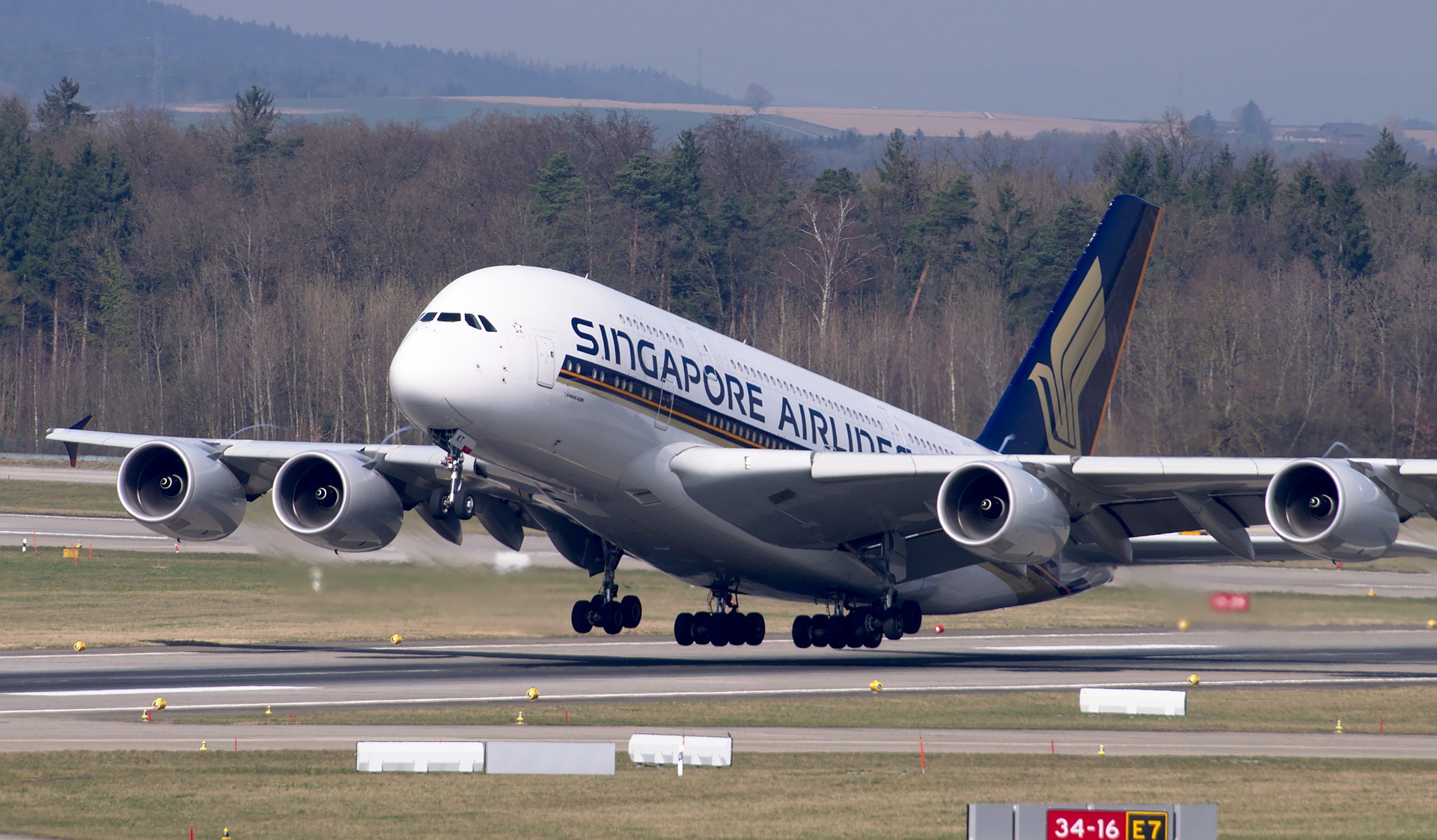
Few companies have enjoyed as dramatic a turnaround as Singapore Airlines Limited (SGX: C6L), or SIA.
From grounding most of its fleet during COVID-19 to posting record financials and handing shareholders special dividends, the national carrier has exceeded expectations, with the share price following suit, trading at S$7.70 as of 31 August 2026, near the upper bound of its yearly range.
The question worth asking isn’t how far it has come; it’s what could derail the next stage of recovery.
Then, on 28 July 2026 (1QFY2026/2027), came a reality check.
Despite a record top line, SIA’s bottom lines left much to be desired: operating profit slipped 73.8% year on year (YoY) and the group swung to a net loss, weighed down by fuel costs and a wider share of losses from Air India.
Why Singapore Airlines Has Recovered So Strongly
Demand is not the problem.
In 1QFY2026/2027, SIA and Scoot carried a record 10.9 million passengers, up 6.3% YoY, while filling 87.1% of seats – slightly below last year’s 87.6%, as capacity growth of 5.9% ran ahead of traffic growth of 5.3%.
Passenger yields actually rose 12% – indicating strong pricing power.
Cargo saw similar strength, with revenue up 33.5% YoY, contributing to a 19.3% YoY rise in group revenue to a record S$5.7 billion.
SIA’s reputation as one of the top-ranked airlines in the world, alongside Changi Airport’s status as a premier regional hub, certainly helped to support revenue generation.
The group’s balance sheet remains a fortress: S$9.1 billion of cash against S$10.74 billion of debt, plus S$1.4 billion in long-term deposits and S$3.2 billion of undrawn credit.
The quarter still generated roughly S$0.8 billion of free cash flow – S$1.36 billion from operations, less S$0.55 billion of capital expenditure.
Risk #1: Rising Fuel Prices
Jet fuel is SIA’s single biggest cost, and the Middle East conflict sent prices surging.
Fuel cost before hedging more than doubled to S$2.6 billion.
Hedging helped – SIA booked a S$376 million hedging gain.
However, hedging only softens the blow; it doesn’t stop it.
Net fuel cost rose 78.5% YoY to S$2.3 billion, which contributed to a 73.8% YoY slump in operating profit to S$106 million, cutting operating margin to under 2%.
Can higher fares cushion this blow? Only partly.
The national carrier raised fares and cargo rates, which improved yields, but management has stated that these measures do not fully offset the spike in fuel prices.
Risk #2: Slowing Travel Demand
While demand remains steady thus far, it won’t always be this way.
A global slowdown, weaker consumer spending, or fresh geopolitical shocks would pull passengers back.
Airlines carry very high fixed costs, so small changes in passenger numbers swing profits sharply: the parent airline’s passenger breakeven load factor jumped to 87.9%, meaning SIA now needs planes almost 88% full just to break even on passenger flying.
When the breakeven load factor rises above the actual load factor, losses follow quickly.
Risk #3: Increased Competition
Add in increased competition from regional rivals like Cathay Pacific Airways (HKG: 0293) and low-cost carriers like AirAsia Group (KLSE: 5238), and the pressure lands on SIA’s fares, market share and, eventually, profit margins.
SIA’s premium positioning offers some insulation – but the airline competes on the same routes, and price wars don’t spare the flag carrier.
Risk #4: Dividend Expectations
Here’s where income investors can trip up.
SIA’s headline payout has been flattered by special dividends – one-off rewards from bumper profits, not a permanent feature.
Strip out the specials and the picture changes.
The FY2025/2026 ordinary dividend – S$0.05 interim plus a proposed S$0.22 final – totals S$0.27, down from S$0.40 the year before.
Add the S$0.10 of special dividends and the headline payout reaches S$0.37, but that is the part investors cannot count on.
With earnings falling, that payout may not be sustainable – which would push the yield down from its current 4.8%.
Risk #5: Valuation Risk
Much of the good news is already reflected in the price; SIA’s share price has more than doubled from its pandemic lows.
On a last twelve-month (LTM) basis, SIA is trading at a price-to-earnings (P/E) ratio of 19.9x, comfortably exceeding its historical average valuation ratios.
This implies that much of the upside has been priced in by the market, which could lead to disappointing returns moving forward even for a quality business like SIA.
What Could Go Right Instead?
The bull case survives the bad quarter.
Asia’s rising middle class means structurally more flyers each year, and demand is, in SIA’s own words, “robust”.
Cargo is resilient, buoyed by semiconductor and data-centre shipments.
The premium brand protects yields – they rose 12% even in this quarter.
If fuel normalises, earnings power snaps back quickly.
What Long-Term Investors Should Watch
Watch fuel prices first, since they’re a decisive factor; then revenue growth, load factors, yields, cargo demand, margins, and free cash flow.
The breakeven load factor is the one to circle — the gap between it and actual loads is your margin of safety.
This quarter is almost a checklist of how airline investors go wrong.
They see record revenue and assume record profit – this time revenue hit a record and the bottom line still bled.
They buy after a long run of good news and forget to ask what they’re paying, or reach for the dividend without checking whether the earnings behind it hold.
Investors should remember not to treat a cyclical business as though its upswing will last forever.
Get Smart: Great Recoveries Don’t Eliminate Future Risks
Singapore Airlines remains one of the world’s best-run carriers, with a fortress balance sheet and demand at record highs.
None of that stopped it from posting a S$76 million loss the moment fuel costs spiked.
That’s the enduring truth about airlines: they are cyclical businesses at the mercy of fuel, economies, competition and events beyond their control.
The recovery was real – and so are the risks.
Before buying or holding, the question isn’t whether SIA has recovered.
It’s whether today’s price leaves you a margin of safety for the next shock, which, as this quarter shows, can arrive without warning.
What if every stock trade in Singapore puts money in your pocket? One company earns whenever the market moves. Its free cash flow has grown close to 10% a year, and dividends are set to rise 40% over the next three years. Our free 2026 Dividend Playbook reveals this legal monopoly. Download it for free now.
Follow us on Facebook, Instagram and Telegram for the latest investing news and analyses!
Disclosure: Wilson H. does not own shares in any of the companies mentioned.