Temasek holds stakes in some of Singapore’s largest listed companies.
In our previous look at this institutional heavyweight, we examined three stalwarts – DBS Group Holdings Limited (SGX: D05), Singapore Telecommunications Limited (SGX: Z74), and Singapore Technologies Engineering Ltd (SGX: S63) – to see how their recent financial performance shapes their dividend outlooks.
But the Temasek universe runs much deeper.
Today, we are adding the next three corporate titans into the mix.
As we layer in these next three heavyweights, a familiar truth emerges for income investors: headline earnings numbers rarely capture the full story.
Which company made the cleanest case for its dividend?
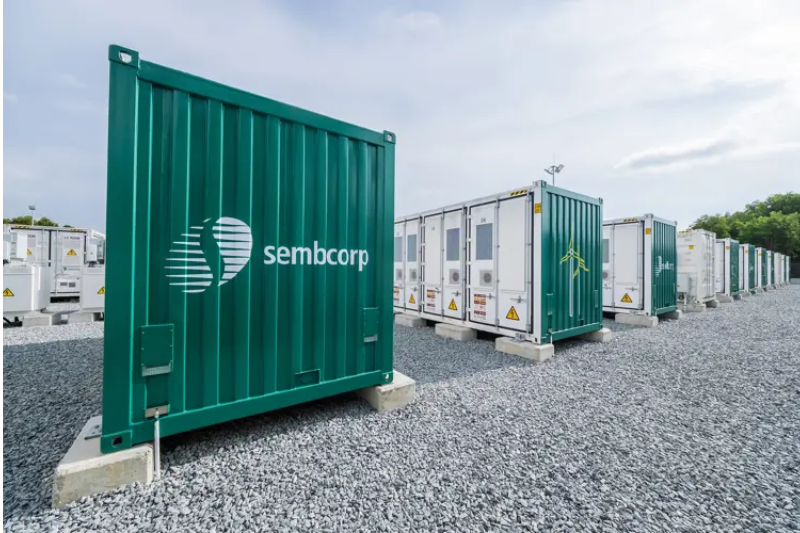
Sembcorp Industries (SGX: U96) is an energy and urban solutions provider that operates across Singapore, India, China, the United Kingdom, Vietnam and the Middle East.
Temasek owns 50%, a stake worth around S$5.9 billion against a market cap of S$11.8 billion as at 31 March 2026.
Revenue fell 10% year on year (YoY) to S$5.8 billion in FY2025.
Lower electricity offtake, softer pool and gas prices in Singapore, weaker plant availability in the UK, and the absence of its divested waste business all weighed on the top line.
Higher contributions from renewables offset part of the drop, helped by new capacity in Singapore, India and the Middle East.
Net profit attributable to owners slipped 3% to S$984 million.
Strip out exceptional items and foreign exchange movements on the deferred payment note, and profit was S$1.0 billion, broadly flat YoY.
The cash tells a better story.
Free cash flow swung to a positive S$208 million from negative S$196 million a year earlier, as capital expenditure eased.
That turnaround gave the group room to raise its ordinary dividend 9% to S$0.25 for FY2025.
The pending Alinta Energy acquisition should broaden the earnings base once it completes, expected by the end of the first half of 2026.
Not everything points one way.
Management expects thinner margins in Gas and Related Services from re-contracting in Singapore, and China renewables contributions may face curtailment and tariff pressure.
Can Seatrium keep doubling its dividend?
Seatrium (SGX: 5E2) provides engineering solutions to the offshore, marine and energy industries across 20 countries.
Temasek owns 36%, a stake worth around S$2.9 billion against a market cap of S$8 billion as at 31 March 2026.
The FY2025 numbers were strong.
Revenue rose 24.3% YoY to S$11.5 billion on strong project execution and production milestones.
Profit attributable to owners more than doubled to S$323.6 million from S$156.8 million.
Higher revenue recognition, overhead savings, a larger share of associate profit and lower net finance costs all helped.
Seatrium proposed a final dividend of S$0.03 per share – doubling the S$0.015 paid a year ago – though no special dividend was declared.
While this dividend growth is real, the cash base supporting it remains thin.
Free cash flow turned positive at just S$19.7 million, up from negative S$4.3 million.
The balance sheet carries net debt, with S$1.8 billion in cash against S$2.5 billion in borrowings, leaving net debt of S$680.0 million.
The group holds S$3.1 billion in cash and undrawn committed credit facilities in aggregate.
Its order book remains substantial at S$17.8 billion, but the real growth story lies in the future.
Over the next 24 months, management is targeting a pipeline of more than S$32 billion in new opportunities, spread across key segments including oil and gas, offshore wind, and conversion projects.
Why did Singapore Airlines (SIA) cut its dividend after record revenue?
Singapore Airlines (SGX: C6L) runs a dual-brand strategy with full-service SIA and low-cost Scoot, plus an engineering arm and a 25% stake in Air India.
Temasek owns 50%, a stake worth around S$10.4 billion against a market cap of S$20.8 billion as at 31 March 2026.
The airline’s shares slipped 1% to S$6.77 after net profit for the fiscal year ending 31 March 2026 fell 57.4% YoY to S$1.2 billion.
However, that headline masks an otherwise strong operating year.
Revenue hit a record S$20.5 billion, up 5.0%, as SIA and Scoot carried a record 42.4 million passengers, pushing the passenger load factor up 1.1 percentage points to 87.7%.
Consequently, operating profit surged 39.0% to S$2.4 billion, buoyed by lower net fuel costs and higher hedging gains.
So why did profit fall?
First, the group booked a S$1.1 billion one-off gain from the Vistara disposal a year ago that did not repeat.
Second, it absorbed S$828.5 million in share of losses from Air India.
Despite these accounting headwinds, the balance sheet remains robust: free cash flow came in at S$2.5 billion, and SIA held S$7.9 billion in cash against S$7.7 billion in borrowings.
The dividend reflects the tempered result.
SIA declared a final ordinary dividend of S$0.22 and a separate final special dividend of S$0.07.
With interim payouts, FY2025/2026 dividends totalled S$0.37, down from S$0.40 a year ago.
Looking ahead, management flagged jet fuel as the key headwind.
Prices have more than doubled since the Middle East conflict began, and because of SIA’s lagged fuel pricing, the full impact is expected to hit in FY2026/2027.
So far, fare increases have not been enough to fully offset this rising cost.
Get Smart: Read past the headline number
While these three companies share a common institutional owner, their individual dividend stories diverge sharply.
Sembcorp raised its payout on the back of positive free cash flow.
Meanwhile, Seatrium doubled its dividend, though the cash behind it remains slim and the balance sheet carries net debt.
In contrast, SIA trimmed its dividend despite record revenue, as its headline profit was distorted by a prior-year one-off gain and losses at Air India.
The lesson for income investors is an old one: a rising profit does not guarantee a rising dividend, and a falling profit does not always point to a weaker business.
Free cash flow remains the lifeblood of dividends.
Follow the cash, read past the headline, and judge each holding on its own merits.
Retirement doesn’t happen overnight. It’s built one decision at a time.
We found 6 SGX companies that have paid dividends every year for more than 20 years, through the Global Financial Crisis, COVID-19, and rising interest rates.
If you’re building long-term income for retirement, this free report is a great place to start. Download your copy today.
Follow us on Facebook, Instagram and Telegram for the latest investing news and analyses!
Disclosure: The Smart Investor does not own any stocks mentioned.