Singapore is home to some genuinely excellent investments.
Our banks are well-capitalised and shareholder-friendly, our REIT market is one of the deepest in Asia, and our blue chips have a long track record of paying reliable dividends.
It’s no surprise then, that many local investors build their portfolios almost entirely around companies they know well.
But here’s the thing: Singapore’s stock market is a small slice of a much bigger pie.
The global economy is enormous, and limiting yourself to one market means leaving a lot of opportunity on the table.
After all, the world is your oyster – so why restrict yourself to just Singapore?
This article looks at why investors should consider looking beyond our shores, and how international exposure can make a portfolio stronger, not weaker.
The Home Bias Problem
“Home bias” is the tendency to invest mostly in your own country, and it’s a pattern seen among investors worldwide, not just in Singapore.
It happens for understandable reasons: familiarity with local companies, easier access to information, and simple comfort and convenience.
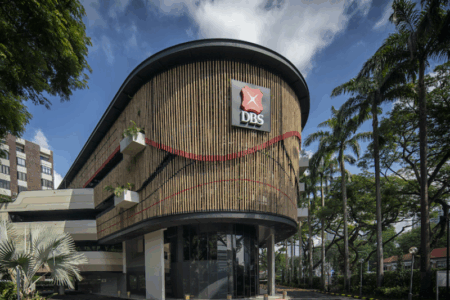
You know DBS Group (SGX: D05) and maybe even use its banking services.
You shop at malls owned by CapitaLand Integrated Commercial Trust (SGX: CICT).
It just feels safer to invest in what you can see.
However, there’s a hidden risk of overexposure.
When your entire portfolio sits in one economy and one market, your financial fortunes become tightly tied to Singapore’s growth, interest rate cycle, and property market – for better or worse.
Singapore’s Strengths — And Its Limitations
To be clear, Singapore does plenty well.
Our banks like DBS, OCBC (SGX: O39), and UOB (SGX: U11) are strong, dividend stocks are attractive, and the REIT market is well-established and mature.
But what Singapore lacks is just as important to recognise.
There are very few large technology companies listed here, limited exposure to some of the biggest global growth trends, and the market itself is simply much smaller than the US or other major economies.
The Benefits of Global Diversification
Going global opens the door to entire industries that are less represented on the SGX – artificial intelligence (AI), cloud computing, and semiconductors, to name a few.
Companies like Microsoft Corp (NASDAQ: MSFT), Alphabet Inc (NASDAQ: GOOGL), and ASML Holding (NASDAQ: ASML) give investors access to themes that simply don’t have a local equivalent.
Beyond access to new industries, diversification also reduces concentration risk by lowering dependence on Singapore’s economy and property market specifically, while opening up more growth opportunities through companies that serve customers across the globe rather than a market of about six million people.
How Different Markets Can Complement Each Other
A useful way to frame this is “Singapore for income, global markets for growth”.
Local stocks like DBS and CICT can anchor a portfolio with steady income, while companies like Microsoft and ASML can contribute to the growth and innovation side of the equation.
The combination works because each half serves very different purposes.
Because Singapore stocks tend to offer income and stability, while global growth stocks bring exposure to innovation and faster-expanding markets, they both work perfectly hand-in-hand.
Ways to Invest Globally
There’s more than one way to get this exposure.
Investors can buy individual overseas stocks directly, owning specific companies they believe in.
Alternatively, ETFs offer broad exposure through global index funds – a simpler, more diversified approach for those who’d rather not pick individual names.
A popular middle ground is the core-and-satellite approach: a core of broad global ETF holdings for diversification, complemented by satellite positions in a handful of high-conviction individual stocks.
For instance, an investor might hold a broad global ETF such as the iShares MSCI World ETF (NYSE: URTH) as the foundation of their portfolio, then add individual positions in a handful of companies like Microsoft or ASML where they have a stronger view.
Common Concerns About Overseas Investing
It’s natural to have reservations.
Currency risk is real because foreign exchange fluctuations can affect returns when converting back to Singapore Dollars (SGD).
Global growth stocks can also be more volatile than local dividend stalwarts.
And not to mention, navigating the vast sea of overseas companies can easily trigger information overload.
However, the solution isn’t to avoid global investing altogether.
Instead, the key is to lean heavily on broad diversification and a disciplined, long-term mindset – both of which naturally smooth out short-term market noise.
What a Balanced Singapore Investor Might Look Like
A sensible starting point might pair a local allocation (Singapore banks, REITs, and dividend-paying blue chips), with a global allocation of broad market ETFs, global technology leaders, and healthcare or consumer franchises.
The key idea here is to build a portfolio that reflects the global economy, and not just the local market.
Common Mistakes Investors Make
A few patterns show up again and again:
- Keeping 100% of investments in Singapore.
- Chasing overseas growth stories without proper diversification.
- Ignoring currency and tax considerations.
- Overcomplicating global investing by trying to track too many individual names at once.
Get Smart: Think Bigger Than One Market
With that said, Singapore still remains a fantastic market for income-focused investors, but it represents only a small portion of the global investment universe.
By combining our local strengths with international opportunities, you definitely can build portfolios that are far more resilient and better diversified.
Ultimately, the goal isn’t to abandon Singapore stocks, but to complement them with exposure to the world’s most innovative and fastest-growing businesses.
The headlines feel worse than the market itself.
So what are experienced investors actually doing right now? Our FREE report reveals how to position your portfolio amid volatility. Download it for free here.
Follow us on Facebook, Instagram and Telegram for the latest investing news and analyses!
Disclosure: Si-fan T. owns shares in DBS and OCBC.