June was a quiet month for the Straits Times Index (SGX: ^STI).
The SPDR STI ETF (SGX: ES3), which tracks the index, returned 1.8%.
Three names did far better.
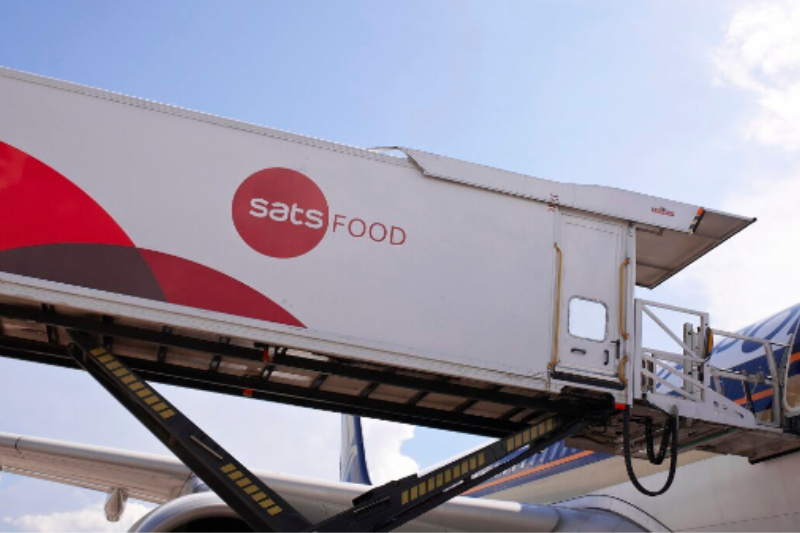
SATS (SGX: S58) led with a total return of 14.7%, and Singapore Airlines (SGX: C6L) followed at 13.1%.
Singapore Exchange (SGX: S68) came in at 9.6%.
All three outran the index by at least 7.8 percentage points, and each did it for a different reason.
Here is what investors were likely responding to.
Why did SATS climb the most?
SATS closed its fiscal year 2026 (FY2026) with a record set of numbers.
Revenue rose 9.0% year on year to S$6.3 billion, while net profit attributable to shareholders climbed 17.0% to S$285.2 million.
Operating margin widened from 8.2% to 8.6%.
The engine was Gateway Services – revenue there grew 10.8% year on year (YoY) to S$5.0 billion.
Cargo volumes hit 9.7 million tonnes, up 7.0%, beating IATA benchmarks for 10 straight quarters.
Food Solutions added 2.9% to S$1.4 billion.
Free cash flow came in at S$685.5 million, up 2.4% YoY.
That gave the group room to raise its total FY2026 dividend by 40% to S$0.07 per share.
A rising payout backed by record cash flow is the kind of signal dividend investors reward.
SATS does carry debt though – it held S$752.5 million in cash against S$2.4 billion in borrowings at 31 March 2026.
The dividend increase suggests management is comfortable servicing that load.
Why did SIA rise despite a profit plunge?
Singapore Airlines reported a 57.4% drop in net profit for the year ending 31 March 2026.
The share price still rose over the month.
The headline hid the real story.
Revenue reached a record S$20.5 billion, up 5.0% YoY.
SIA and Scoot flew a record 42.4 million passengers, with passenger load factor rising to 87.7%.
Operating profit surged 39.0% to S$2.4 billion, helped by lower fuel costs.
So where did the profit go?
Most of the fall came from the absence of a S$1.1 billion one-off gain booked a year earlier on the Vistara disposal.
Air India, in which SIA holds a 25% stake, added S$828.5 million in share of losses.
Neither reflects a weaker core airline.
The balance sheet is in a net cash position – SIA held S$7.9 billion in cash against S$7.7 billion in borrowings.
Free cash flow came in at S$2.5 billion.
The dividend tells a more careful story.
SIA declared a final ordinary dividend of S$0.22 and a final special dividend of S$0.07.
Total payout for the year was S$0.37 per share, down from S$0.40 a year ago.
Investors who bid the shares up were paying for operational strength, not a rising dividend.
Why did SGX join the leaders?
Singapore Exchange runs the country’s only stock market.
That gives it a steady, toll-booth quality, and its first-half numbers showed it working.
Net revenue for the first half of FY2026 rose 7.6% YoY to S$695.4 million.
The Equities – Cash division led, up 16.2% to S$223.9 million as daily traded value climbed 19.5%.
FICC rose 12.5%.
Headline net profit was almost flat, up 0.8% to S$342.7 million – a S$15.0 million goodwill impairment on Scientific Beta and lower non-operating gains held it back.
Strip those out and adjusted net profit rose 11.6%.
SGX lifted its interim dividend, taking first-half payouts to S$0.2175 from S$0.180 a year ago.
Management has committed to raising the quarterly dividend by 0.25 cents each year until the end of FY2028.
Few blue chips offer that kind of dividend visibility.
What did the three have in common?
A flat index tends to reward clarity.
In June, each of these three gave investors something firm to hold onto.
SATS offered dividend growth built on record cash flow.
SIA offered operational momentum that the headline profit disguised.
SGX offered a payout it has all but promised to keep raising.
In a month when the broad market went nowhere, that combination was enough to pull all three clear of the other STI names.
Get Smart: read past the headline
The most striking case here is SIA.
A 57.4% profit drop looks alarming until you see the record revenue and rising operating profit underneath it.
Headlines compress. The story sits in the detail.
Look past the first number, and the reason these three led the pack becomes clear.
If you want to retire with a constant stream of dividends, these 5 stocks might be all you need. We’ve found 5 SG stocks that have kept paying (and growing) through inflation, rate hikes, and recessions. See what they are with our latest free report for SGX dividend investors. Click here to get instant access.
Follow us on Facebook, Instagram and Telegram for the latest investing news and analyses!
Disclosure: The Smart Investor owns shares of SGX.