Dividends are a major draw for Singaporean investors.
Real estate investment trusts (REITs) stand out among the many choices due to their regular distributions.
Furthermore, REITs are mandated to distribute at least 90% of their net profit, providing a source of reliable income.
That said, not all REITs are created equal.
To find REITs that can pay you for life, here are four factors to help narrow your search.
1. An underlying trend
The key to reliable income is sustainability.
Take ParkwayLife REIT (SGX: C2PU).
From its 2007 IPO prospectus, ParkwayLife REIT identified a key demographic shift: a projected fourfold increase in the elderly Asian population aged 65 and above by 2050.
Fast forward 19 years, and this prediction remains remarkably prescient.
According to the Asian Development Bank’s “Aging Well in Asia” report, one in four people in developing Asia and the Pacific will be 60 years or older by 2050, with the elderly population projected to reach 1.2 billion.
Put another way, the share of older persons in the region is expected to nearly double from 13.5% in 2022 to 25.2% by 2050.
This demographic trend is expected to lead to growing demand for healthcare services, particularly nursing homes and hospitals specialising in chronic and long-term care.
2. The right business model
A favourable demographic is a great start, but you also need a robust business model for the investment to work.
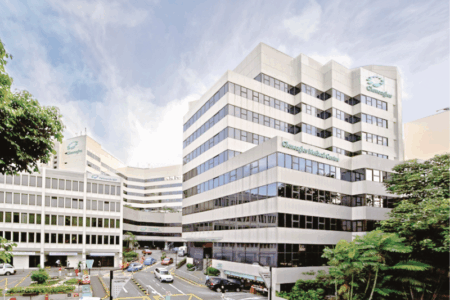
When ParkwayLife REIT debuted in the Singapore stock market, the trust’s initial portfolio comprised three Singapore hospitals, namely Mount Elizabeth Hospital, Gleneagles Hospital, and Parkway East Hospital.
A key distinguishing factor lies in the structure of the REIT’s master lease agreements.
These contracts had a compelling feature: a virtually guaranteed annual rental increase of at least 1%.
This unique provision provided a stable and predictable revenue stream.
More importantly, the favourable terms of the contract are expected to continue well into the future.
ParkwayLife REIT renewed the master lease agreement in 2022, extending the lease for 20.4 years until 31 December 2042, with an option to renew for a further 10 years.
This renewal locked in a guaranteed 2% to 3% rental step-up between 2022 and 2025.
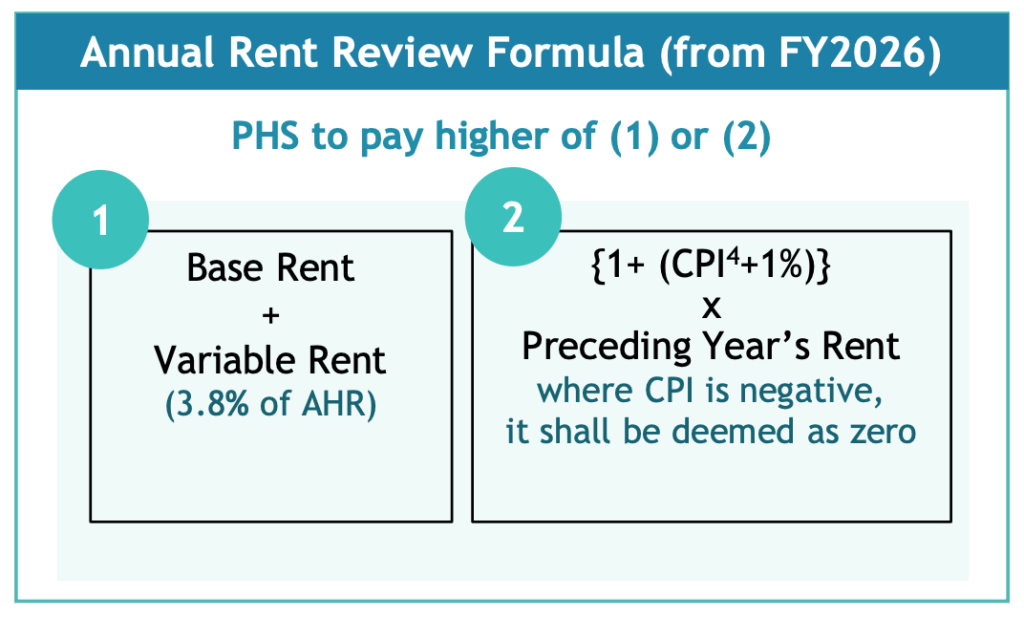
From 2026 onwards, a new Annual Rent Review Formula kicks in:
Source: ParkwayLife REIT’s 2026 first quarter presentation.
Under this new formula, the minimum rent for the three Singapore hospitals is set to rise to S$99.1 million in 2026 — an increase of S$19.3 million or 24.3% from 2025’s actual rent payable.
In other words, the favourable lease structure isn’t just continuing; it’s stepping up materially.
To add to that, the REIT has since expanded its portfolio to include 60 nursing homes in Japan and 11 nursing facilities in France, bringing its total property count to 74 across three geographies.
In essence, its solid Singapore base allowed the REIT to capitalise on global healthcare growth.
3. Track record of DPU growth
The most compelling evidence of a successful income investment strategy is the sound of dividends hitting your bank account.
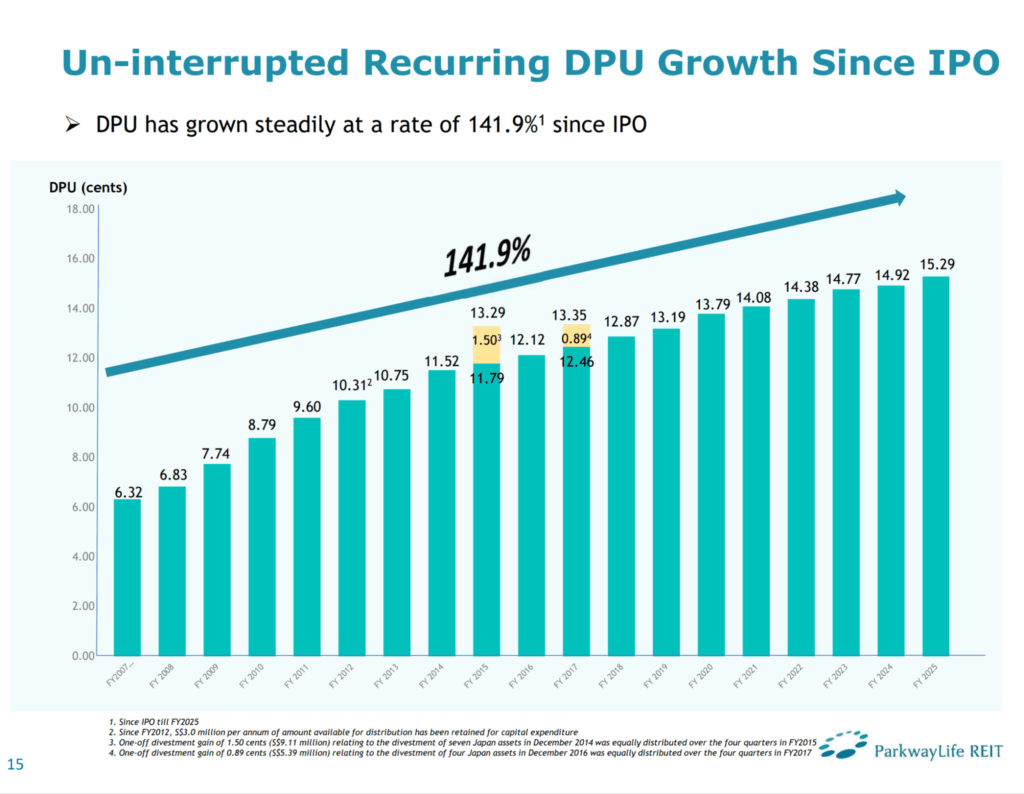
ParkwayLife REIT exemplifies this trait, delivering robust core distribution per unit growth since its public debut.
Source: ParkwayLife REIT’s 2025 earnings presentation
From 2008 to 2025, its distribution per unit (DPU) has more than doubled, achieving an average annual growth rate of approximately 5% per year.
In fact, ParkwayLife REIT has now delivered 18 consecutive years of DPU growth since its 2007 listing — a track record unmatched in Singapore’s REIT sector.
That’s not all.
Remarkably, this consistent growth trajectory persisted through challenging periods, including the Great Financial Crisis and the global pandemic.
This demonstrates the resilience of the REIT’s dividend stream.
Get Smart: The final ingredient is YOU
Wait, weren’t there supposed to be four signs?
Indeed, the final and most crucial ingredient is YOU.
At its core, dividend investing is a straightforward concept.
Start by looking for a sustainable underlying trend.
From there, you focus on businesses with a proven track record of consistent dividend payments.
Ideally, these businesses should also demonstrate a history of dividend growth.
This combination — a compelling underlying trend, a robust business model, and a strong track record — provides a solid foundation.
However, one crucial factor often overlooked is TIME.
In today’s fast-paced trading environment, the key is to resist the urge to constantly buy and sell.
Instead, embrace a long-term perspective.
If you’ve identified a high-quality REIT, the most effective strategy is to keep holding the REIT.
Your patience allows management to execute their strategy, and your investment, in turn, will compound over time.
With a long-term horizon, your dividend portfolio can become a valuable source of sustainable income.
Many Singapore stocks fall behind inflation, which means your money quietly loses strength over time. Dividend stocks have a very different track record. Some continued delivering 6% to 13% every year across the toughest market conditions.
In this FREE report, discover 5 crisis-tested dividend stocks that kept rewarding investors while the market struggled. Download your dividend investing guide now.
Follow us on Facebook, Instagram and Telegram for the latest investing news and analyses!
Disclosure: Chin Hui Leong owns shares of ParkwayLife REIT