Nothing quite hits you like when the first of your offspring starts Primary 6.
Like most Singaporean parents whose children will be taking their Primary School Leaving Examination (PSLE), I lament how time flies, and wonder if I have prepared my child adequately for this educational milestone.
At the same time, I think about how in just another six years or so, my child might be looking forward to another milestone – applying for her undergraduate degree.
The cost of a university degree in Singapore is not getting any cheaper.
For many parents, the prospect of funding a four-year degree can feel like trying to hit a moving target.
However, when you view this financial hurdle through the lens of a long-term investor, the mountain starts to look like a series of manageable steps.
Here is how I’m aiming to build S$85,000 by 2038 and the three Singapore blue-chip stocks I’m buying today to get there.
Breaking Down the S$85,000 Goal
To plan effectively, we must look at the specific milestones ahead.
My eldest child is 12 years old, meaning her university journey is just about six years away.
Meanwhile, my youngest son turns six this year, giving us a longer runway of 15 years before he enters higher education in 2041.
Using a conservative figure of S$12,000 per year for a four-year course and accounting for 4% annual inflation, the total estimated cost for my eldest in 2033 stands at S$63,200, while my youngest will likely face a bill of S$86,400 by 2041.
My target of S$85,000 by 2038 is designed to meet these rising costs head-on by allowing compounding to do the heavy lifting today.
The Strategy: A Balanced Growth and Income Approach
I want to avoid the extremes of speculating on unproven startups or sticking solely to low-yield savings.
Instead, my strategy is to combine local growth compounders with dividend-paying blue chips.
By reinvesting every cent of dividends back into the portfolio, we accelerate the compounding effect, turning a linear savings plan into an exponential growth curve that works even while I sleep.
DBS Group (SGX: D05) – The Dividend Blue Chip
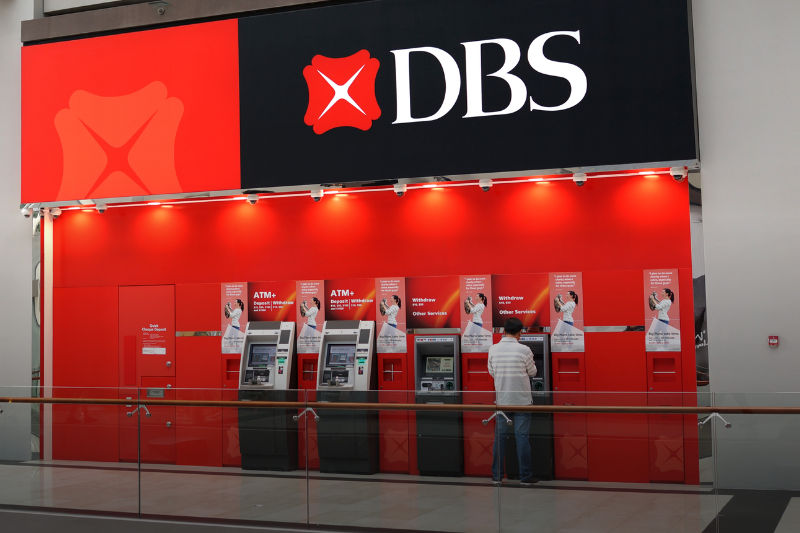
DBS is the anchor of the Singapore market and remains a fortress of stability for any long-term portfolio.
For its full-year ending 31 December 2025 (FY2025), the bank declared total dividends of S$3.06 per share, comprising S$2.46 in ordinary dividends and S$0.60 in capital return dividends, representing a 38% increase year on year (YoY).
This reflects a significant shift in the bank’s strategy: it is no longer just growing its earnings; it is actively returning its massive surplus of capital to shareholders.
For a parent building an education fund, this provides a world-class level of income reliability.
Currently, the dividend yield sits around 5.3%.
While interest rate movements often grab the headlines, the real story for DBS is its booming wealth management franchise, which saw income rise to a record S$5.7 billion in FY2025.
This pivot towards fee-based income ensures that the bank can continue to fund its generous quarterly payouts regardless of which way the interest rate wind blows.
CapitaLand Integrated Commercial Trust (SGX: C38U) – The Defensive Anchor
CapitaLand Integrated Commercial Trust (CICT) is Singapore’s largest REIT by market capitalisation, providing a balanced mix of high-quality retail and office assets, including iconic locations like Plaza Singapura and Raffles City, which benefit from the heavy footfall of Singapore’s urban core.
For its fiscal year ended 31 December 2025 (FY2025), CICT continued to demonstrate resilience through positive rent reversions and high occupancy rates across its dominant retail malls.
This REIT acts as a defensive anchor for the portfolio, offering a reliable distribution yield of approximately 4.8%.
By holding a stake in the infrastructure of Singapore’s consumption and commerce, I am ensuring that the education fund is backed by tangible, income-generating assets.
Key metrics to monitor include the aggregate leverage, which remains healthy at 38.6% as of 31 December 2025, and the interest coverage ratio to ensure that debt obligations are easily met even in a shifting interest rate environment.
iFAST Corporation (SGX: AIY) – The Growth Compounder
iFAST represents the “growth” engine of this trio.
In FY2025, the Group achieved a massive milestone as total revenue crossed S$500 million and net profit jumped 50.1% YoY to S$100 million.
This was driven by the successful expansion of its Hong Kong ePension business and iFAST Global Bank achieving its first full year of profitability.
While its dividend yield is lower at around 1.0%, the growth potential of its “FSM Global” strategy is the real prize.
The Group is targeting a massive S$100 billion in Assets Under Administration (AUA) by 2030, which implies a compound annual growth rate of over 25%.
For a 15-year goal like our education fund, iFAST provides the capital appreciation potential needed to outpace inflation.
It is the portfolio’s “sprinter,” designed to capture the digital transformation of wealth management across Asia and the UK.
Why Starting Early Matters and Common Mistakes To Avoid
Compounding is the eighth wonder of the world for a reason.
When you reinvest dividends over 15 years, you aren’t just earning interest on your principal; you are earning interest on your interest.
This creates a snowball effect where the fund grows much faster in the final years, just as the tuition bills for my youngest son come due in 2041.
Reinvesting these payouts significantly lowers the “out-of-pocket” investment requirement over the long run.
However, many well-meaning parents fall into traps that hinder their progress.
The most damaging is waiting for the “perfect” time to invest; every year on the sidelines is a year of lost compounding that can never be recovered.
Similarly, keeping too much cash amid 4% annual education inflation means your savings are losing purchasing power daily.
A university fund requires boring, reliable stocks rather than speculative bets that could jeopardise the entire principal.
Get Smart: Letting Time and Quality Do the Heavy Lifting
Funding your child’s education is not about finding a lucky stock; it’s about building a consistent, disciplined portfolio over time.
With a mix of iFAST’s growth, DBS’s income, and the stability of CICT, reaching S$85,000 by 2038 is a practical plan.
The earlier you start, the easier the journey becomes for both you and your children.
What if the current “market turmoil” isn’t a crisis… but a setup?
History shows most pullbacks don’t become crashes. The real edge is knowing how to act early. Our FREE report reveals the framework smart investors use. Download it now.
Follow us on Facebook, Instagram and Telegram for the latest investing news and analyses!
Disclosure: Calvina L. owns shares of DBS.