Over the past five years, investors in DBS Group Holdings (SGX: D05), OCBC Bank (SGX: O39), and United Overseas Bank (SGX: U11) have been able to bank on strong gains, with share price appreciation ranging from 41% to 113% (as of 6 March).
Add in dividends, and gains would be even higher.
Investors who stayed on the sidelines may feel like they have missed their opportunity.
However, the beauty of investing is that markets rarely reward just one sector in the long run – there are always opportunities, if you are willing to look.
Why the Bank Rally Happened
Singapore’s bank stocks started gaining steam post-pandemic, as rising inflation forced central banks to raise interest rates.
This increased their net interest margins and net income.
However, interest rates have declined in recent years, leading to a normalisation of – or even negative – earnings growth.
This may lead to investors rotating to other sectors.
We highlight three companies whose shares may rise as a result, forming the next generation of share price growth leaders.
Thai Beverage (SGX: Y92) — Dividend Alternative With Room to Grow
Many investors buy bank stocks to benefit from a stable – and hopefully increasing – dividend.
But this is not something that only banks can offer.
For example, DBS, OCBC, and UOB currently have forward dividend yields of 5.6%, 4.1%, and 4.0% respectively.
Meanwhile, beverage producer Thai Beverage (ThaiBev) is yielding 5.8% on a forward basis.
ThaiBev’s dividend is sustainable.
The company has a policy of paying out “not less than 50% of net profit after deducting all appropriated reserves and investments, subject to cash flow.”
In its financial year ending 30 September 2025 (FY2025), ThaiBev paid out a total dividend of 0.62 THB per share, unchanged from FY2024.
The dividend amounted to a dividend payout ratio of 61%.
ThaiBev’s earnings outlook also augurs well for its dividend, with analysts at DBS expecting FY2026 earnings per share to rise by 9%.
Crucially, over the past year and five years ending 6 March, ThaiBev’s shares have actually declined by 14% and 39% respectively, which provides new investors with more room to enjoy any future run-up on the share price.
This could be triggered by an upward re-rating of its valuation.
DBS notes that ThaiBev’s global peers have rerated from a forward P/E ratio of 13 in early 2026 to around 15 to 16, as of 13 February 2026.
Meanwhile, ThaiBev is trading at a forward P/E ratio of around 10, setting the stage for significant upside potential should the valuation gap with its competitors narrow.
Keppel DC REIT (SGX: AJBU) — Structural Growth Play
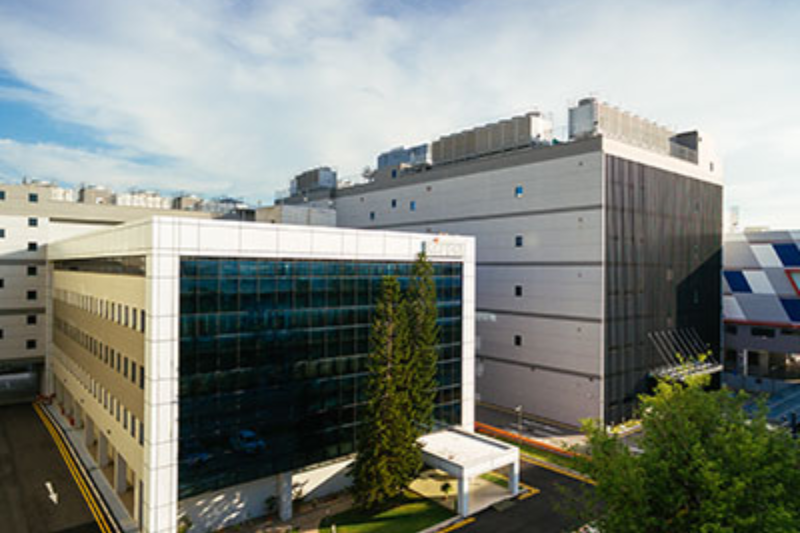
We’re only in the first innings of the AI revolution, which has led to explosive demand for chips, power, and data centre infrastructure. Keppel DC REIT, which owns a portfolio of data centres, could be one of the beneficiaries.
Granted, data centres aren’t exactly unique assets.
In fact, there are two other data centre REITs listed on the Singapore exchange: Digital Core REIT (SGX: DCRU) and NTT DC REIT (SGX: NTDU).
However, Keppel DC REIT has differentiating characteristics.
First, it is the oldest of the three, and at S$5.6 billion, its market capitalisation is far larger than Digital Core REIT’s US$639 million (S$856 million) and NTT DC REIT’s US$989 million (S$1.3 billion).
Second, 85% of Keppel DC REIT’s centres are located in Asia Pacific (with 62% in Singapore), on an assets under management basis.
In contrast, just 17% of NTT DC REIT’s assets are in Singapore, while Digital Core REIT does not have any Singapore assets in its portfolio.
Third, Keppel DC trades in Singapore dollars, unlike the other two which both trade in US dollars.
These factors mean that Singapore-based investors may be more comfortable investing in Keppel DC REIT over the other two players.
In the year to 6 March, Keppel DC REIT’s unit price rose 11.7%, but was 11.9% lower than five years ago.
This gives the REIT’s unit price room to run as its business rides long-term industry tailwinds.
Seatrium (SGX: 5E2) — Cyclical Recovery Candidate
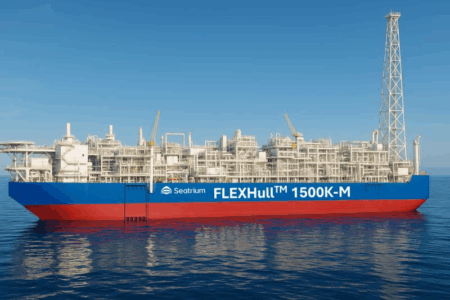
Seatrium, which provides engineering solutions to the global offshore, marine and energy industries, should see its earnings rise significantly in the year ahead, providing investors who put in money now with an uplift in the share price over the longer term.
The company benefits from operating leverage, where increasing revenue results in even greater bottom-line growth.
In FY2025, for example, revenue increased by 24% from S$9.2 billion to S$11.5 billion.
Net profit after tax, however, rose by 106% to S$324 million.
Looking ahead, the company expects to benefit from continued demand for its services from the oil and gas industry.
Seatrium’s management noted that the breakeven for deepwater projects, which is where its clients operate, remains well below prevailing prices, and it expects to see “sustained strong demand” for its services.
The recent spike in oil prices following the conflict in the Middle East should provide a further boost to its income.
The company’s balance sheet is also improving, which should set the stage for a stronger share price.
Free cash flow in FY2025, excluding one-off payments, was S$443 million, compared to S$218 million in FY2024, while the net leverage ratio (defined as net debt divided by EBITDA) came in at 0.8x, improving from 1.1x in 2024.
In the year to 6 March, Seatrium’s share price was 11.0% higher than a year ago, but still 14.7% lower when looking back five years.
Get Smart: Markets Always Offer Another Door
While the premise of this article is on finding stocks that haven’t seen price appreciation, don’t base your decisions only on price movements.
Share prices are ultimately driven by earnings and company fundamentals, so focus on that to find good quality businesses that the market may not yet fully appreciate.
The recent rotation away from tech stocks and into other sectors may present investors with an opportunity to enter sectors that are just beginning to strengthen, and enable them to benefit from a strong appreciation in share prices, just as bank stock investors did five years ago.
When the market is unpredictable, where can you park your money with confidence? Our latest FREE report reveals 5 Singapore dividend-payers built to withstand global storms. Get it now and see what’s still worth holding.
Follow us on Facebook, Instagram and Telegram for the latest investing news and analyses!
Disclosure: Silas H. owns shares in DBS, Keppel DC REIT, and Seatrium.