In the opening weeks of 2026, the Singapore market has witnessed a surge in several prominent blue-chip entities.
For long-term investors, the sight of a portfolio reaching a 52-week high often triggers a psychological conflict: the satisfaction of capital appreciation versus the fear of an imminent reversal.
The core of this dilemma lies in whether the current price reflects a peak in valuation or a plateau from which further growth will materialize.
Today, we examine three Straits Times Index (SGX: ^STI) components – Keppel Ltd (SGX: BN4), ST Engineering (SGX: S63), and CapitaLand Investment (SGX: 9CI) – each of which has recently touched new 52-week highs.
Why 52-Week Highs Trigger the Urge to Sell
The psychological pull to sell at new highs is powerful.
Investors fear giving back hard-won gains, imagining a sudden reversal that wipes out months of appreciation.
This fear often stems from a fixation on past prices rather than future earnings potential.
Media narratives amplify these concerns.
Headlines about market peaks and stretched valuations create urgency, even when the underlying businesses remain sound.
Yet price alone is a poor indicator of whether a stock should be sold.
A stock trading at $10 can be expensive if the business is deteriorating, while one at $100 can be cheap if earnings are accelerating.
What Actually Matters More Than Price
Instead of watching share prices, long-term investors should focus on earnings growth and cash flow durability: Is the company generating more profit than before? Are those profits translating into cash?
Balance sheet strength and capital allocation discipline matter equally.
Companies that deploy capital wisely, whether through reinvestment, acquisitions, or shareholder returns, tend to compound value over time.
Dividend sustainability provides another signal.
Growing payouts backed by rising earnings suggest management confidence in future prospects.
Finally, consider whether the business benefits from long-term industry tailwinds or merely rides short-term sentiment.
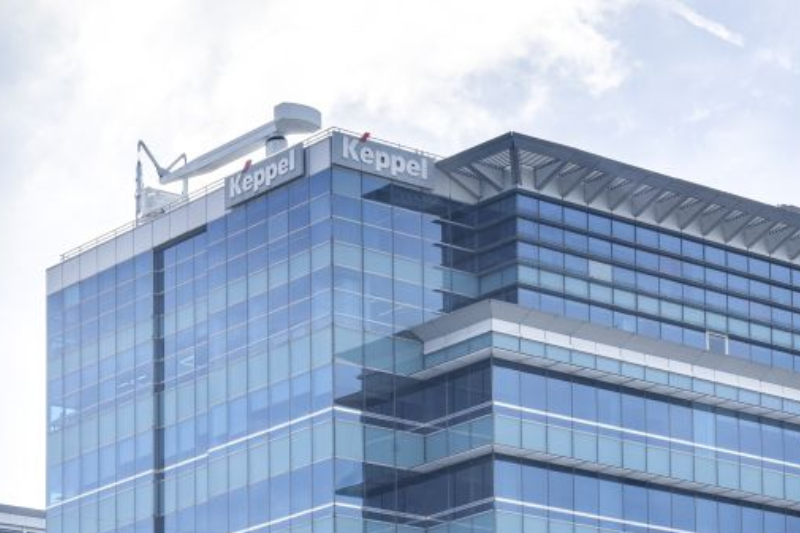
Keppel: The Transformed Conglomerate
Keppel’s ascent to a 52-week high of S$11.06 reflects the market’s growing confidence in its transition from a cyclical conglomerate to a global asset manager.
The “New Keppel” is increasingly valued not on its asset base, but on its ability to generate recurring, high-margin fee income.
The execution of its capital recycling strategy has been prolific.
Since October 2020, Keppel has announced approximately S$14 billion in asset monetisations.
A recent example is the divestment of its stake in 800 Super at an enterprise value of over S$600 million, delivering a mid-teens IRR and 20% EBITDA growth during its three-year holding period.
The S$1.3 billion divestment of M1’s telco business serves as the next major catalyst.
This deal is expected to unlock close to S$1 billion in cash, with management indicating that a portion will be returned to shareholders.
This disciplined approach is translating into industry-leading returns.
Since January 2022, Keppel has returned S$6.6 billion to shareholders, achieving an annualised Total Shareholder Return (TSR) of 38.0% – significantly outperforming the STI’s 14.5% over the same period.
For long-term holders, the focus remains on whether these drivers are structural.
While execution risk in large-scale infrastructure projects and the ongoing monetisation of non-core assets remain key considerations, Keppel’s alignment with global tailwinds in energy transition and digital infrastructure suggests a durable growth trajectory.
ST Engineering: Defensive Growth with Record Backlogs
ST Engineering has recently traded at record levels, driven by a global defense spending upcycle and a robust recovery in commercial aerospace.
The stock’s 52-week high of S$9.69 represents a significant re-rating from its 2025 lows.
The primary pillar of ST Engineering’s valuation is its record-breaking order book, which stood at S$32.6 billion as of 3Q2025, providing revenue visibility extending beyond 2028.
Revenue for the first nine months of 2025 reached S$9.1 billion, up 9% year on year (YoY), with Commercial Aerospace growing 11% to S$3.6 billion and Defence & Public Security rising 9% to S$4.0 billion.
Contract wins totalled S$18.7 billion for 2025, exceeding 2024’s S$12.6 billion by 49%, with Defence & Public Security contributing S$2.5 billion in Q4 alone, reinforcing its position as a primary beneficiary of geopolitical tensions and increasing defence spending globally.
Dividend growth underscores management confidence.
ST Engineering declared an interim dividend of S$0.04 per share for the third quarter and plans to propose a final dividend of S$0.06 plus a special dividend of S$0.05, totalling S$0.23 for 2025.
The group is also implementing a progressive dividend policy from 2026, with incremental dividends tied to earnings growth.
For long-term investors, ST Engineering is a defensive powerhouse with high earnings certainty.
Cost pressures and execution delays in large contracts represent the main risks to monitor.
CapitaLand Investment: Asset-Light Transformation
CapitaLand Investment (CLI) operates as one of Asia’s largest diversified real estate investment managers with S$120 billion in funds under management.
The company manages eight listed REITs and 49 private funds across fee income-related business and real estate investment.
The stock’s recent peak of S$3.10 marks a significant recovery, driven by its fundraising momentum and expansion into thematic real estate like data centers and logistics.
Fee-related revenue rose 7% YoY to S$900 million in the first nine months of 2025 (9M2025), driven by higher event-driven fees and new fund launches.
The lodging business signed approximately 13,500 units across 64 properties, representing 32% more units than the prior year.
The group raised S$3.7 billion in total equity across listed and private funds and monetised S$2.2 billion in assets year to date.
A notable achievement was listing China’s first international-sponsored retail C-REIT in September 2025, raising RMB2.3 billion.
CLI maintains a strong balance sheet with a net debt-to-equity ratio of 0.43x.
While the real estate sector faces interest rate headwinds, CLI’s asset-light model provides a buffer.
At current levels, the stock is a play on the secular growth of private equity real estate in Asia.
When Selling Makes Sense—and When It Doesn’t
Selling at a 52-week high is a rational choice when the valuation becomes detached from the company’s realistic earnings potential.
Divestment is also prudent if a single position grows to a size that creates excessive concentration risk within your portfolio or if fundamental business quality begins to weaken despite the rising share price.
Furthermore, selling makes sense if the capital can be redeployed into an investment with a clearly superior risk-reward profile.
Conversely, holding a stock at record highs is usually the better move when earnings and cash flows continue to compound.
Investors should stay the course if dividends remain sustainable and are supported by rising profits, or if the business continues to benefit from long-term structural industry tailwinds.
Finally, holding remains the correct strategy if the stock still fulfills its intended role as a core component of a diversified portfolio.
Get Smart: Focus on Business Quality, Not Price Tags
A 52-week high is not a sell signal by default, especially for quality blue-chip stocks.
Long-term investors should judge businesses by fundamentals, not recent price movements.
For Keppel, ST Engineering, and CapitaLand Investment, the current record prices are supported by structural transformations, record backlogs, and growing recurring income streams.
The decision to sell should be based on valuation multiples relative to growth and your individual portfolio risk tolerance.
While the urge to “lock in” profits is strong, the greatest cost in long-term investing is often the premature exit from a high-quality compounder.
Imagine a life where steady income flows, no matter the market. Our new free report, “Retire Early with Dividends,” reveals how. We’ve pinpointed 5 dependable Singapore dividend stocks that offer a proven, stress-free path to financial freedom. Stop just dreaming and start building your early retirement plan today. Your free guide awaits here.
Follow us on Facebook, Instagram and Telegram for the latest investing news and analyses!
Disclosure: Calvina Lee does not own any of the stocks mentioned.