Singapore Exchange Limited or SGX (SGX: S68) plans to reduce board lot sizes from 100 units to 10 units for securities with a value above S$10, potentially benefiting a select cohort of blue-chip stocks.
To be clear, it’s not implemented yet.
Still, given SGX’s precedent of reducing lot sizes previously, from 1,000 to 100 units on 19 January 2015, it’s reasonable to assume that the bourse operator will follow through with another reduction.
Here are three Singapore blue-chip stocks priced above S$10 that could benefit from this potential reduction in board lot size.
DBS Group Holdings (SGX: D05) – Retail Investor Darling
At over S$58 per share today, a single lot of DBS shares will set you back almost S$6,000.
Yet, Singapore’s largest bank is already one of the companies with the highest net retail buying in 2025, making it a darling for retail investors.
With a smaller lot size, it could become more accessible.
For the first nine months of 2025 (9M2025), it achieved a record total income of S$17.6 billion, up 5% year-on-year (YoY).
However, its 9M2025 net profit declined by 1% YoY to S$8.7 billion, due to higher expenses and tax bills, partially offset by higher fee income, treasury customer sales, and markets trading income.
For 3Q2025, DBS increased dividends by 38.9% YoY to S$0.75 per share, maintaining its strong upward trend.
Despite wealth management, fees, and market trading income expected to drive growth, countering rate headwinds, DBS expects total income growth to be slightly below 2025 levels.
At around S$58 per share, a 10-unit lot size means retail investors just need to invest a minimum of S$580 for each trade instead of shelling out S$5800, an amount close to the median monthly income of a full-time employee.
Jardine Matheson Holdings (SGX: J36) – SGX’s Highest Priced Conglomerate
If DBS is the highest-priced “bank stock”, at close to US$75 (about S$96), Jardine Matheson is the highest-priced conglomerate on the entire SGX.
For the first half of 2025 (1H2025), Jardine’s revenue marginally declined by 1% YoY, due to underperformance from Astra’s automotive and heavy equipment (HEMCE) divisions.
However, its underlying profit grew 11% in 1H2025 to US$786 million, adjusted for 2024 impairments and at constant currency.
The conglomerate maintained its dividend at US$0.60 per share, unchanged YoY.
However, Jardine Matheson has a long-term record of increasing dividends at a 5.3% CAGR since 2019.
The holding company’s future growth is driven by themes such as urbanisation and the expanding middle-income population across Asia, such as the multi-year transformation of its core Central portfolio in Hong Kong and Shanghai West Bund Central.
Despite already delivering more than 70% returns for shareholders in 2025, with improved profits, and a robust balance sheet, the 193-year-old conglomerate’s interest from retail investors is likely to get better with a reduction in lot size.
Haw Par Corp (SGX: H02) – Highly Priced Healthcare Stock
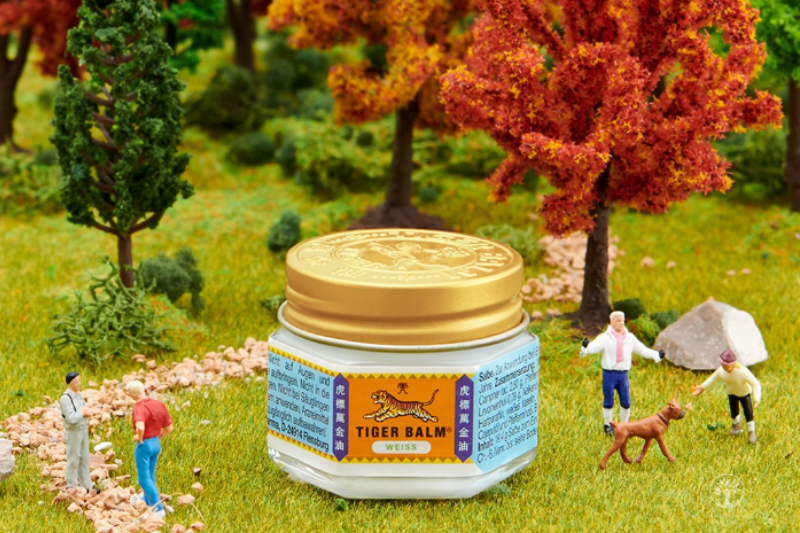
Haw Par offers a unique business mix that encompasses consumer healthcare (Tiger Balm) and other strategic equity investments.
For the first half of 2025 (1H2025), its revenue rose 7% to S$126.3 million, driven by resilient demand for healthcare products.
Net earnings increased 18.2% to over S$144 million due to a surge in dividends received from investments, primarily in blue-chip companies like United Overseas Bank Limited (SGX: U11) and UOL Group Limited (SGX: U14).
Notably, in 1H2025, its dividends and interest income stood at approximately S$116.8 million, almost on par with its core revenue, signifying the importance of this segment.
While Haw Par’s Tiger Balm products remain resilient, the company has stakes in property and leisure, and other strategic investments of major blue-chip companies.
In 1H2025, it maintained an interim dividend of S$0.20 per share, unchanged YoY, translating to a payout ratio of 30.7%.
At approximately S$16.3 per share today, it’s a candidate with a stable dividend payout that could benefit from a reduction in lot size.
What This Means for Investors
The above-mentioned companies benefit from a lot-size reduction, but in different ways.
- DBS is the highest-priced banking stock. Already on the radar screen of retail investors in 2025, it might attract even more price-conscious retail investors.
- As the highest-priced stock in the entire SGX, Jardine stands to benefit from higher retail flow, cost-conscious buyers who were previously priced out by the huge capital outlay.
- Known for its Tiger Balm brand, Haw Par sets itself apart by owning investments that provide passive cash flow, supporting stable dividend payouts for investors.
Through their unique exposure across different sectors and relatively high prices, they form a diversified trio that could benefit from greater retail flow in the market.
Get Smart: Ride the Retail‑Driven SGX Surge
Given the reasonable likelihood of SGX implementing the 100-to-10 lot size transition in early 2026, relatively high-priced stocks are most likely to benefit.
The above three stocks, being priced higher in their respective sectors, are most likely to lead the next maturation phase of the Singapore market.
It almost feels like the government is paying companies to make you wealthier. Singapore’s new S$5 billion market boost could send fresh money into local stocks. We identified 5 companies positioned to benefit, including familiar names with surprising wealth potential. Our free report reveals these hidden opportunities before the money flows in. Download it now before it’s too late.
Follow us on Facebook, Instagram and Telegram for the latest investing news and analyses!
Disclosure: Larry owns shares of DBS and UOB.