2026 has started with the Straits Times Index (SGX: ^STI) touching record highs.
Along with it comes the fear of buying at the top of the market.
This is understandable, given that shares of DBS Group Holdings (SGX: D05), Singtel (SGX: Z74) and ST Engineering (SGX: S63) have all climbed significantly over the past year..
But the real question is: do these companies still have long-term value?
The key is to look at the fundamentals, not just the charts.
DBS Group Holdings (SGX: D05)
In 2025’s third quarter (3Q2025), DBS recorded a net profit of around S$3 billion a slight decline from a year ago.
Net interest margins fell during the quarter, but its loan book picked up the slack by increasing 5% year-to-year from broad-based growth.
Meanwhile, non-interest income improved, as wealth management and cards-related business picked up speed.
Based on its 3Q2025 payout, DBS’s annualised dividend is around S$3 per share, made up of quarterly S$0.60 ordinary dividend payments and a special dividend of S$0.15 a quarter.
At S$57.60, the bank offers a dividend yield of about 5.2%.
Management has suggested the dividends will increase steadily by S$0.24 per year if its return on equity remains within the range of 15% to 17%.
With the variety of its earnings streams in the consumer, institutional and wealth management sectors, DBS is less dependent than before on the rate cycle.
As its net interest margins normalise, the growth in fee income and digital adoption will help offset the decline.
For investors seeking consistent income and capital strength, DBS remains a dependable long-term holding.
Singtel (SGX: Z74)
Singtel has taken longer to convince the sceptics.
However, its recovery story is looking stronger now than it has done for many years.
Underlying net profit for the first half of the fiscal year ending 30 June 2026 (1H’FY2026) rose 14% year-on-year, with Optus and NCS contributing, alongside steady associate dividends from Bharti Airtel and AIS.
Data centres under Nxera and ICT businesses within NCS recorded new growth.
Net debt remains comfortable at 1.3 times EBITDA.
The Board has kept its core dividend payout policy at 70% to 90% of underlying net profit, paying out S$0.082 per share for 1H’FY2026 and providing a yield of around 4.1% based on its current share price of S$4.46.
Singtel’s management has also placed parts of its infrastructure assets up for review, a move that could unlock additional value for shareholders.
With these initiatives, investors are starting to see Singtel less as a traditional telco and more as a growing digital-infrastructure and connectivity platform.
ST Engineering (SGX: S63)
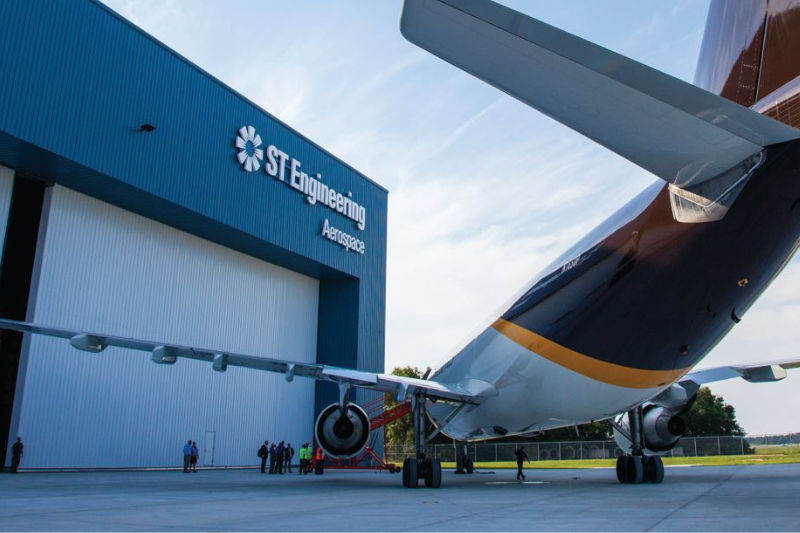
ST Engineering tends to avoid the limelight, but it continues to turn in results that shareholders love to see.
Revenue in 9M2025 was up 9% to S$9.1 billion.
With an order book of about S$32.6 billion, ST Engineering has work lined up for roughly three years.
The conglomerate expects to pay a dividend of S$0.23 per share for 2025, consisting of a S$0.18 ordinary dividend per share and a S$0.05 special dividend per share.
With steady cash generation and moderate gearing, those dividends are well-supported.
ST Engineering is investing in autonomous-mobility and digital-infrastructure systems that are likely to provide additional revenue streams by the end of the decade.
In short, ST Engineering is not enjoying a high rating on hype, but on the fact that it delivers the goods.
Get Smart: Expensive Today, Rewarding Tomorrow
It is a natural reaction not to want to buy when a stock approaches a new high, but good companies seldom remain cheap for long.
DBS, Singtel and ST Engineering have received their high valuations because of consistent profits, good cash flow, and solid dividends to shareholders.
To pay top dollar for quality does not immediately mean overpaying.
History has shown that companies that are well-managed may still continue to earn new highs provided their earnings increase in the future.
When fundamentals are good and dividends are flowing in good amounts, what appears “expensive” could still be a profitable long-term investment.Disclosure: Joseph Gan does not own shares in any of the companies mentioned.
How do rich Singaporeans invest when volatility hits?
They turn to companies with cash, history, and discipline. This free report highlights 5 blue chips that deserve your attention. Get your copy here and see who made the list.
Follow us on Facebook, Instagram and Telegram for the latest investing news and analyses!
Disclosure: Joseph G. does not own shares in any of the companies mentioned.