Passive income is the holy grail for many investors, but looking beyond big-name blue chips can uncover hidden gems.
In the small-cap space (companies under S$1 billion in market cap), dividends are often a byproduct of disciplined management and niche market dominance.
However, not all payouts are created equal.
A high yield means little if the underlying business cannot generate sufficient cash to sustain its payouts.
By focusing on free cash flow (FCF) – the actual cash remaining after a business pays for its operations – we can identify which companies have the firepower to keep rewarding shareholders without straining their balance sheets.
VICOM: The Dividend Anchor
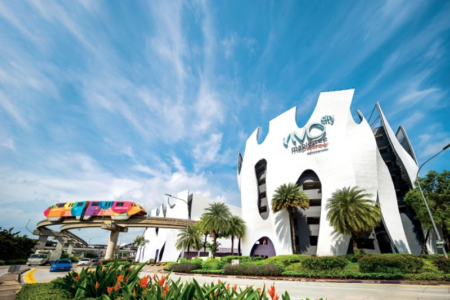
VICOM (SGX: WJP) is a household name for vehicle inspections, but its current momentum is fueled by technology.
In its third quarter of 2025 (3Q2025), revenue surged 36% year on year (YoY) to S$41.6 million, while net profit jumped 45% to S$9.9 million.
This growth was driven by the Electronic Road Pricing (ERP) 2.0 project, with over 78,000 On-Board Units installed during the quarter.
Despite positive operating cash flow of S$9.8 million in 3Q2025, VICOM’s free cash flow turned negative at S$2.5 million due to heavy capital investment of S$12.3 million in its new Jalan Papan facility (expected to be operational by the first half of 2026).
However, looking closer at the balance sheet reveals why it remains a dividend anchor: the group holds S$42.0 million in cash with zero debt.
This net cash position provides ample buffer to sustain dividends even during challenging periods.
At its current share price of S$1.65, VICOM offers a trailing dividend yield of approximately 3.7%.
More importantly, these dividends are fully covered by free cash flow generation.
The combination of mandatory vehicle inspections and new technical testing services provides a defensive moat that few small-caps can match.
UMS Integration: Dividend Potential, But Patience Required
UMS Integration (SGX: 558), a key player in the semiconductor equipment space, is currently navigating a transition phase.
For 3Q2025, revenue dipped 9% YoY to S$59.3 million, largely due to a decline in Semiconductor Integrated System sales.
However, the company proved its resilience by edging net profit up 1% to S$10.5 million, thanks to a superior product mix that boosted gross margins to 58.2%.
Despite the revenue dip, UMS declared an interim dividend of S$0.010 per share, consistent with the previous year.
At a current share price of S$1.45, UMS offers a trailing dividend yield of approximately 3.4%.
UMS is prioritising future growth over immediate liquidity.
Free cash flow turned negative at S$10.9 million in 3Q2025, as UMS invested S$12.6 million in its Penang plant expansion.
Operating cash flow of S$1.7 million was constrained by higher inventories as the company built up stock for its capacity ramp-up
While this might worry some, the group maintains a healthy S$38.2 million cash pile and zero debt.
Geographically, momentum is already shifting, with Malaysia sales surging 71% as shipments to a major new customer commence.
With global semiconductor equipment spending projected to hit US$107 billion in 2025, the dividend potential here is high.
However, investors will need patience as the company completes its capacity expansion.
Once the Penang plant scales up, the conversion of these investments into steady free cash flow will be the key driver for dividend growth in 2026.
Micro-Mechanics: Navigating Cyclical Headwinds
Micro-Mechanics (SGX: 5DD) specializes in precision tools for semiconductor assembly, a niche that requires constant navigation of industry cycles.
In the first quarter of fiscal year 2026 (1QFY2026), the group reported a steady 2.9% rise in revenue to S$16.7 million, with net profit growing 2.7% to S$3.2 million.
While the consumable tools segment hit a 13-quarter high, the Wafer Fabrication Equipment (WFE) segment faced headwinds, declining 15.3% due to material delays and shortages.
Despite these cyclical pressures, the group generated S$4.5 million in operating cash flow.
With disciplined capital management keeping capital expenditure to a minimal S$0.3 million, free cash flow reached S$4.2 million – a 31.4% increase from S$3.2 million in the previous year.
The company’s balance sheet remains a fortress with S$27.2 million in cash and no debt.
While no dividend was declared this quarter – keeping with their tradition of payouts in the second and fourth quarters – the high free cash flow generation provides a significant safety margin.
At S$1.61 per share, Micro-Mechanics offers a trailing dividend yield of approximately 3.7%.
Management remains vigilant regarding trade uncertainties and tariffs, but their “Five-Star Factory” initiative is designed to maintain margins even during downturns.
For 2026, Micro-Mechanics offers a masterclass in how a lean, disciplined business can continue to generate the cash necessary for dividends even when facing industry-wide headwinds.
Get Smart: Cash is King in 2026
When hunting for under-the-radar yield, remember that profits are an accounting entry, but cash is what pays the bills.
VICOM and UMS are currently deploying capital to build future earnings power, which may temporarily mask their dividend potential.
In contrast, Micro-Mechanics shows the beauty of a mature, cash-generative business model.
By monitoring the transition from capital expenditure back to free cash flow, you can stay one step ahead of the market and secure a robust stream of passive income for 2026 and beyond.
A new S$5 billion initiative is changing the landscape for Singapore investors. We dug into 5 local companies that could benefit most — names you probably already know. The best part? They’re paying dividends while you wait. See the full findings inside our latest FREE report here.
Follow us on Facebook, Instagram and Telegram for the latest investing news and analyses!
Disclosure: Calvina Lee does not own any of the shares mentioned. Chin Hui Leong contributed to the article and owns shares of VICOM and Micro-Mechanics.