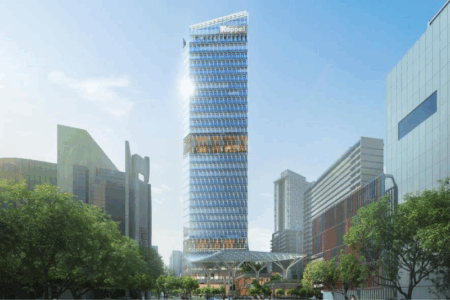
If you ever wanted to own a piece of a popular waterfront mall, look no further than Mapletree Commercial Trust (SGX: N2IU) or MCT.
The REIT owns a portfolio of retail and commercial properties, including VivoCity, Mapletree Business City (MBC), PSA Building, Mapletree Anson and Bank of America Merrill Lynch HarbourFront (MLHF).
These assets take up a total of 5 million square feet in net lettable area and are worth around S$8.9 billion.
The REIT has fared better than pure retail REITs such as Frasers Centrepoint Trust (SGX: J69U) as its commercial component has held up better compared to retail.
But knowing that Vivocity has a waterfront view is not quite enough.
As a Smart Investor, you should take the time to look into the salient aspects of the REIT if you are considering it.
Here are three important things you should note about MCT.
Dip in net property income
MCT’s fiscal 2020/2021’s first quarter ended 30 June 2020 reflected the full impact of the circuit breaker measures on its sole retail property, VivoCity.
The REIT had to dole out rental rebates to eligible retail tenants to tide them over during this harsh period.
As a result, gross revenue fell by 10.5% year on year, while net property income (NPI) declined by 10.7% year on year to S$78.9 million.
Phase II’s reopening did help to mitigate some of the damage as there was a recovery in shopper traffic and tenant sales from 19 June 2020 onwards.
Support from commercial property
The positive impact of having commercial properties within its portfolio has become apparent during the quarter.
For the first quarter of the fiscal year 2020/2021, MBC I contributed the bulk of gross revenue at 31.7% versus VivoCity at 23%.
For comparison, a year ago, during the first quarter of the fiscal year (FY) 2019/2020, the contribution from MBC I was 29.3%, while VivoCity contributed nearly half (47.5%) of gross revenue.
Meanwhile, MCT had also acquired MBC II in November 2019, thereby including the entire contribution from MBC in the current quarter rather than just MBC I during the same period last year.
If we include MBC II’s contribution, it makes up 52.7% of gross revenue for the quarter, more than double that of VivoCity’s 23% contribution for the first quarter of FY20/21.
For NPI, VivoCity’s contribution fell from 46.2% in the prior year’s quarter to 20.8% in the current quarter.
MBC I’s contribution increased to 33.6% from 30.8% last year, and the combined MBC (MBC I and MBC II) contributed 55% of NPI.
These numbers demonstrate the resilience of MCT’s portfolio as the commercial portion has not been adversely impacted by the pandemic thus far.
Stable debt and operating statistics
Despite these tough times, MCT has ensured that it maintains sufficient liquidity.
More than S$1 billion of cash and undrawn committed facilities were available as of 30 June 2020, and new loan facilities were secured to enable MCT to refinance all borrowings due in the fiscal years 2020/2021 and 2021/2022.
The REIT’s gearing ratio stood at 33.7% at the end of the quarter, way below the statutory requirement of 50% mandated by the Monetary Authority of Singapore (MAS).
The interest coverage ratio remains healthy at 4.1 times, also above MAS’ proposal of a ratio of at least 2.5 times, though this decision has now been deferred till 1 January 2022.
MCT has also managed to progressively lower its all-in cost of debt from 3% as of 30 June 2019 to 2.61% as of 30 June 2020.
Portfolio occupancy remained very high at 97.1% across the whole portfolio, roughly on par with the occupancy during the same period last year.
Get Smart: The road to recovery
Shopper traffic and tenant sales saw year on year plunge to the tune of 78.5% and 63.4%, respectively, during the quarter.
These shocking numbers underscore the major disruption that the circuit breaker measures have had on retail footfall.
While Phase II has eased this pressure and the REIT has witnessed “encouraging performance”, disruptions remain due to continued social distancing regulations and stringent temperature checks at all retail outlets.
Fortunately for MCT, its acquisition of MBC II turned out to be most timely.
The addition of this asset helped to mitigate the decline in gross revenue and NPI, and boosted the REIT’s commercial property portfolio.
Hopefully, Singapore can soon move to Phase III of its reopening.
Should that happen, shopper traffic will improve even further and provide a lift to MCT’s numbers.
With share prices battered to multi-year lows, many attractive investment opportunities have emerged. In a special FREE report, we show you 3 stocks that we think will be suitable for our portfolio. Simply click here to scoop up your FREE copy… before the next stock market rally.
Click here to like and follow us on Facebook, here for our Instagram group and here for our Telegram group.
Disclaimer: Royston Yang does not own shares in any of the companies mentioned.