Mapletree Industrial Trust (SGX: ME8U), or MIT, which operates on a March financial year-end, will report on 27 October 2026.
CapitaLand Integrated Commercial Trust (SGX: C38U), or CICT, and CapitaLand Ascendas REIT (SGX: A17U), or CLAR, will follow shortly after, on 29 October 2026.
All three managers have been actively shuffling billions of dollars in real estate.
These upcoming October announcements will offer clear evidence of whether these massive balance-sheet moves are actually trickling down to distribution per unit (DPU) growth for investors.
Is CICT’s DPU growth the real deal?
CICT remains Singapore’s premier REIT by market value.
Its first-half performance for FY2026 showed steady top-line expansion, with gross revenue growing 7.5% year on year (YoY) to S$846.8 million and net property income (NPI) rising 8.7% to S$630.5 million.
DPU managed a healthy 7.1% increase to S$0.0602, comfortably outpacing the 5.8% expansion of its unit base.
Operationally, the retail arm turned in a solid performance with an occupancy rate of 97.7%, well ahead of the islandwide benchmark of 93.5% reported by the Urban Redevelopment Authority (URA).
Rental reversions came in positive across the board, up 4.0% for retail and 6.5% for office space.
Shopper traffic also edged up 2.4% despite softer tourist arrivals in the second quarter.
The real test comes with the upcoming third-quarter updates.
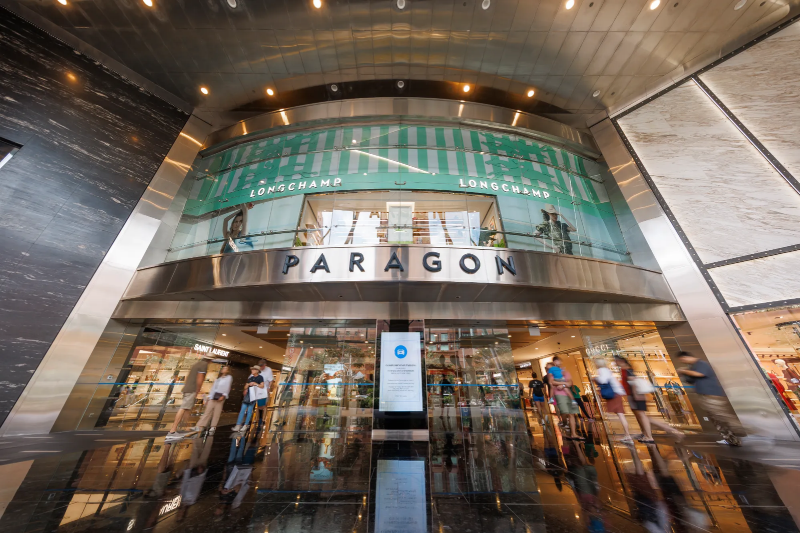
CICT completed the acquisition of Paragon on 1 July 2026 at an agreed property value of S$3.9 billion, meaning the 29 October numbers will provide the first look at how this prime asset contributes to earnings.
Meanwhile, management expects to complete the sale of Asia Square Tower 2 in the second half of the year, bringing in net proceeds of roughly S$2.45 billion.
The balance sheet appears well managed, with aggregate leverage at 37.4% and average cost of debt at 2.9%.
Where is CLAR’s distributable income growth going?
CLAR holds a massive portfolio of 234 properties valued at S$20.1 billion spanning Singapore, Australia, the US, Europe, and Japan.
First-half revenue rose 6.7% YoY to S$805.5 million, while total distributable income picked up 8.6% to reach S$359.4 million.
Look closer at the per-unit figures, however, and a different narrative emerges.
DPU rose by a mere 0.1% to S$0.07482.
Equity fundraising over the past two years has enlarged the unit count, effectively diluting the bottom-line benefit even as underlying operations expanded.
Tenants remain willing to pay higher rents upon lease renewal, as evidenced by the strong 8.5% positive rental reversion in the first half.
Management expects reversions to hold in the high single-digit range for the full year.
Overall portfolio occupancy slipped to 89.1% from 91.8% a year ago.
Two newly completed properties were partly responsible; without them, occupancy would have been 90.3%.
Capital recycling continues at full speed.
CLAR recently proposed selling the Kim Chuan Telecommunications Complex for S$200.4 million – double its original purchase price and a 32% premium to its appraised value.
The REIT completed S$1.1 billion in acquisitions in 1H2026 and has announced another S$638.1 million in deals.
Unitholders will want to pay close attention to its 29 October update to see if scale can finally translate into meaningful DPU growth.
What does MIT’s US data centre sale mean for unitholders?
MIT’s portfolio includes 135 properties spread across industrial space, hi-tech buildings, and data centres in Singapore, North America, and Japan.
Its latest reporting covers the first quarter of FY2026/2027 (ended June 2026), in which revenue fell 7.7% YoY to S$162.3 million and NPI dropped 8.5% to S$122.3 million.
DPU shrank 4.9% to S$0.0311, though it did tick up 0.6% sequentially from the preceding quarter.
The key point of friction lies in North America, where occupancy slipped to 82.5% from 86.1% three months prior as enterprise tenants consolidated footprints or vacated spaces not efficiently set up for full data centre needs.
By contrast, the Singapore portfolio improved to 94.3% occupancy, while Japan remained fully leased.
To address these headwinds, MIT is marketing 22 US data centres through its exclusive adviser JLL.
These assets, valued at US$1.07 billion based on MIT’s proportionate stake, span over 3.1 million square feet across 15 states, with a weighted average lease expiry (WALE) of 6.8 years.
This planned sale forms the centrepiece of a S$500 million to S$600 million North American divestment plan.
In its 31 August update, management confirmed the ongoing review while emphasising that no deal is guaranteed yet.
If successfully executed, the manager plans to redeploy capital into data centres backed by long-term leases to cloud and hyperscale providers across core Asian and European markets, using the proceeds to pay down debt in the interim.
Aggregate leverage currently stands at 37.5%.
Off the operational stage, leadership changes are also underway, with CEO Lily Ler stepping down on 1 October 2026 to make way for Anand Tze Ming Chandran, Mapletree’s current Asia Pacific data centre head.
Get Smart: Track DPU accretion, not just headline growth
Portfolio shuffling always comes at a price.
Acquisitions funded by new units can dilute existing unitholders, while debt funding adds interest costs.
CLAR’s first-half results made this trade-off glaringly clear, delivering an 8.6% surge in total distributable income that yielded virtually no growth in DPU.
When reviewing the upcoming October results, keep your focus on whether each manager’s buying and selling activity is actually delivering value on a per-unit basis.
Revenue and NPI growth tell you the size of the pie.
DPU growth tells you whether your slice is getting bigger.
You’ve probably shopped at their malls, banked with them, or bought their products this month. These 6 SGX companies have paid dividends for 20 straight years, GFC and COVID included. Our FREE report shows you which ones, and what has kept their dividends going for 20 years and more. Grab your copy here.
Follow us on Facebook, Instagram, Telegram and YouTube for the latest investing news and analyses!
Disclosure: The Smart Investor owns units of CICT, CLAR and MIT.