Everyone loves a good story.
But in the stock market, investors can fall for a good narrative.
Earlier this year, the market was convinced that Generative AI (GenAI) was going to kill all software-as-a-service (SaaS) firms.
The story was compelling.
With GenAI, code is getting easier to write.
AI agents can handle complex tasks.
You can “vibe-code” a software module over a weekend.
That may well be true.
But the market confused what is possible with what is valuable.
And soon, SaaS stocks found themselves in the middle of the blast radius.
So, the market did what markets do when they fall in love with a story.
It acted – and sent SaaS stocks crashing.
The decline was so sharp that a new term was coined: SaaSpocalypse.
The price of a flawed narrative
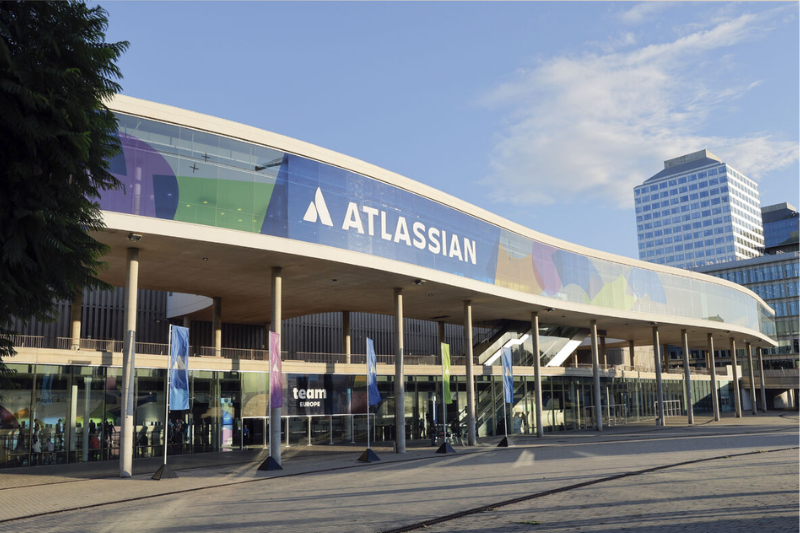
Earlier this year, shares of Atlassian (NASDAQ: TEAM) were cut in half.
Not because its business had collapsed.
The Aussie firm remained a steady, cash-flow-generating business throughout.
It simply fell on the wrong side of the “SaaS is dead” narrative.
The sheer magnitude of the decline was enough to make any investor question their conviction.
After all, if your stock is cut in half, something must have gone badly wrong.
Right?
Volatility is normal. This isn’t.
Now, before you say it – yes, volatility is the norm in the stock market.
Stocks falling for unjustified reasons is not a new phenomenon either.
That has happened before and will happen again in the future.
The REAL difference, in our eyes, is not the presence of the swings.
It’s the sheer magnitude of them, both on the upside and the downside.
In a typical stock market, a stock on the wrong side of sentiment gets marked down.
In today’s market, it gets cleaned out.
That’s the part that is not normal – watching a steady, cash-flow-generating business like Atlassian lose half its value simply because the market latched on to a narrative.
Why are bigger swings happening?
We don’t know for sure.
But if we had to guess, it’s the series of abnormal events piled up since 2020 — the pandemic, the vaccination cycle, steep interest rate hikes, global tariffs, and the US-Iran war …
… we could go on, but you get the drift.
When the story flips
Here’s what happens when the market believes its own story: prices move faster and further than the fundamentals ever justify.
In both directions.
Just as there was a severe decline in Atlassian, there has been an equally sharp recovery now that investors have come to their senses.
Shares have more than doubled, erasing the decline from the start of the year.
The narrative changed.
The business didn’t.
The Smart All Stars Portfolio is glad to have picked up more shares at US$104.58 in January 2026 and again at US$83.88 in February 2026.
At the close of the market last Friday (28 August 2026 Singapore time), shares were sitting at over US$190.
Get Smart: Watch the business, not the narrative
So, where does this leave US stock investors, moving forward?
Let’s be clear.
A volatile market is not an invitation to try your luck at timing the top or the bottom.
That is not what The Smart All Stars Portfolio is built for.
Instead, the portfolio continues to focus on the business, taking advantage if the market decides to send stock prices down.
And it has done so – picking up another two SaaS stocks at lower prices as the stock market added more wrinkles to its forehead over hyped-up narratives.
To be sure, it does not mean the road is all clear.
But whether shares are up or down, the same principle applies: the businesses that perform will eventually see their stock prices follow.
Stories come and go.
The performance of the business will be the difference-maker over the long term.
If you’ve ever asked, “But what do I do with this info?” – read Get Smart, our weekly newsletter. It helps you connect the dots, so you understand what the stories mean for your portfolio. Join thousands of investors who rely on it for steady, grounded investing ideas. Subscribe now and sharpen your insight for free.
Follow us on Facebook, Instagram, Telegram and YouTube for the latest investing news and analyses!
Disclosure: Chin Hui Leong owns shares of Atlassian.