A 6% dividend yield is a high bar in Singapore right now; above 6% almost always means accepting something – a cyclical business, a bit more leverage, or a one-off dividend that flatters the headline.
That’s not a reason to avoid these names.
It’s a reason to read the fine print, which is exactly what this article is about: making sure the dividend is sustainable and examining the fundamentals behind each name.
Why a High Dividend Yield Isn’t Always a Bargain
Remember the maths: a yield is the payout divided by the share price, so when the price falls, the yield rises even if the dividend hasn’t changed – and a falling price often means the market is pricing in trouble.
Some firms even prop up payouts by borrowing or paying out more than they earn.
So before trusting a high-yield headline, check whether the business can afford it: sustainable payout ratio, strong free cash flow, a balance sheet not drowning in debt.
For real estate investment trusts (REITs), watch the distribution per unit (DPU) trend, interest coverage, occupancy, lease structure and debt profile.
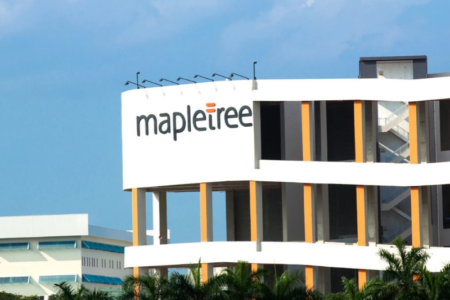
Mapletree Industrial Trust (SGX: ME8U), or MIT – The Reliable Blue-Chip Dividend Payer
For a 6% payer with genuine pedigree, this is about as solid as it gets: an S$8.3 billion portfolio spanning Singapore industrial property and North American data centres making up 57.2% of assets under management.
MIT yields approximately 6.6% at current prices, but its distributions have been easing rather than growing – S$0.0311 for the first quarter of FY2026/2027 (1QFY2026/2027), down 4.9% year on year (YoY).
Gearing is manageable at 37.5%, with an interest coverage ratio (ICR) of over 4x as at 30 June 2026.
The industrial REIT’s debt maturity profile is decent, with a weighted average debt tenor of 3.4 years.
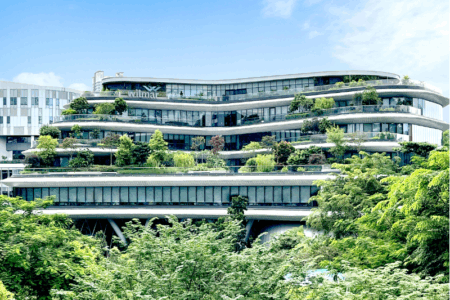
Mapletree Pan Asia Commercial Trust (SGX: N2IU), or MPACT – The High-Yield REIT
MPACT’s property portfolio spans retail, office and business-park assets in Singapore and North Asia, anchored by Singapore’s ever-reliable VivoCity.
The yield is around 6.2%, though portfolio occupancy has slipped to 84.4% from 89.4% three months earlier, and the weighted average lease expiry (WALE) is a short 2.3 years.
MPACT’s balance sheet is healthy with a gearing of 37.7%, ICR of 3.3x and a manageable refinancing schedule.
The REIT’s most recent DPU of S$0.0196 has drifted down as overseas contributions weakened – Japan the sharpest, with occupancy there falling to 56.0% from 75.1%, and China rents renewing 29.2% lower.
Singapore now contributes 61% of assets and 66% of net property income, and a key lease at Mapletree Business City starts paying later this year – so the overseas drag is being diluted rather than fixed.
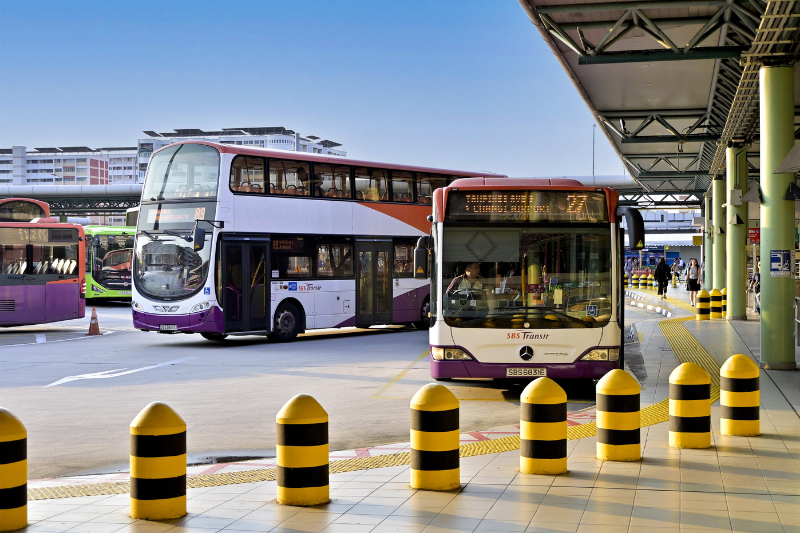
SBS Transit Ltd (SGX: S61), or SBS – The Cash-Rich Dividend Stock
The bus-and-rail operator is effectively debt-free and sits on a healthy cash position of S$310.1 million as at 30 June 2026.
In the half-year ended 30 June 2026, the group generated S$54.8 million in free cash flow (FCF), up from S$29.1 million a year ago, while earning a 9.4% return on equity (ROE) – exactly the conservative, cash-generative profile income investors want.
And did I mention the trailing yield of about 16%, given the total FY2025 dividend of S$0.496 per share?
However, do note that this includes a special dividend of S$0.3199, which management sets at its discretion and which has varied widely from year to year.
Strip it out, and the ordinary dividend is S$0.1761 per share, comfortably covered by that free cash flow.
DFI Retail Group (SGX: D01), or DFI – The Defensive Business
For a genuinely defensive operating business, DFI fits nicely.
Its business span supermarkets, health and beauty, convenience stores and IKEA franchises across Asia.
People buy essentials rain or shine, giving DFI a steady stream of income.
Margins have been thin for the group but are improving: the underlying net margin from its subsidiaries reached 2.4% in 1H2026, up from 1.7% a year earlier.
As with SBS Transit, DFI’s FY2025 total dividend of US$0.583 was flattered by a US$0.443 special dividend, which was funded by divestments.
The latest interim dividend of US$0.062 is 77% higher than a year earlier, the fifth straight increase.
Sasseur REIT (SGX: CRPU), or Sasseur – The Higher-Yield Opportunity
Now, for a roughly 9.2% yield, look no further than this REIT with exposure to China’s outlet malls.
Sassuer, with four premium outlet malls in Chinese cities such as Chongqing, has a clean balance sheet: gearing at only 25.6% as at 30 June 2026 and not a dollar of debt falling due until 2030.
Its rent model pairs a fixed base with a variable component linked to tenant sales.
DPU rose 10.2% to S$0.03366 in the first half of 2026, on 7.4% sales growth and a record-low 3.7% cost of debt.
The malls stay full at 97.2% occupancy, but spending is cooling: first-quarter sales grew 11.4%, so the second quarter came in well below that.
Make no mistake: this name is a pure bet on Chinese consumption, and your payout is exposed to RMB/SGD currency fluctuations.
Warning Signs That a Dividend May Be at Risk
Cuts rarely come out of nowhere.
Watch for a payout ratio stuck above sustainable levels, earnings and cash flow drifting down quarter after quarter, rising debt or a looming refinancing wall, and repeated asset sales used to fund distributions.
The clearest tell is management itself turning cautious.
Get Smart: A Safe Dividend Is Better Than a High Dividend
In sum, a high yield is attractive, but you should always be cautious.
It’s better to focus on the underlying fundamentals, making sure the company generates cash.
After all, a reliable dividend is only good if it can be maintained or even grow over time.
You’ve probably shopped at their malls, banked with them, or bought their products this month. These 6 SGX companies have paid dividends for 20 straight years, GFC and COVID included. Our FREE report shows you which ones, and what has kept their dividends going for 20 years and more. Grab your copy here.
Follow us on Facebook, Instagram and Telegram for the latest investing news and analyses!
Disclosure: Wilson H. does not own shares of any stocks mentioned.