FTSE Russell confirmed on 3 September that there will be no changes to the Straits Times Index (SGX: ^STI) following its September 2026 quarterly review.
The 30-stock benchmark stays as it is.
So does the reserve list – the five companies next in line if a sitting constituent is removed.
Three of those reserve list stocks have declared higher dividends in their latest half-year results.
Sheng Siong Group (SGX: OV8), First Resources (SGX: EB5), and Olam Group (SGX: VC2) each raised their payouts.
Interestingly, each company funded its increase from a very different source, and that underlying funding shapes whether these higher payouts can actually last.
What’s behind Sheng Siong’s 17% dividend raise?
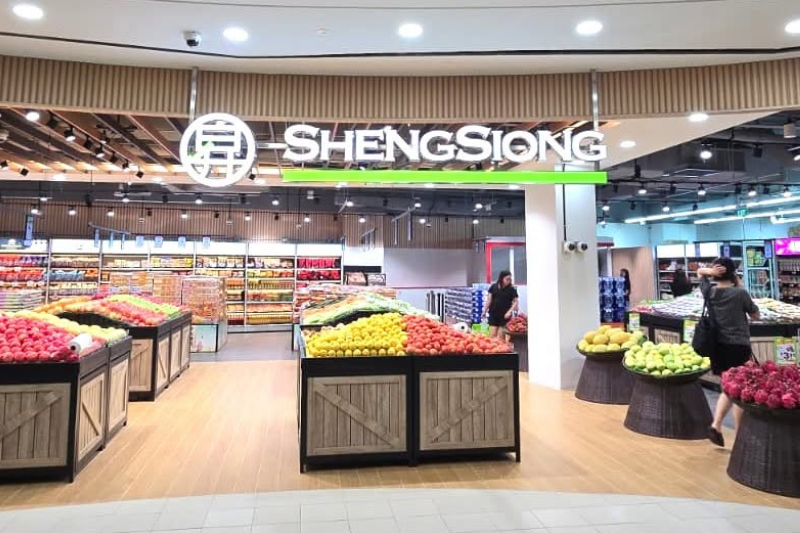
Sheng Siong declared an interim dividend of S$0.0375, up 17.2% from S$0.032 a year ago.
The supermarket operator’s solid half-year performance easily backs up the higher distribution.
Revenue rose 11.9% year on year (YoY) to S$855.4 million for 1H2026.
Sixteen new stores opened across 2025 and 1H2026, contributing 9.7 percentage points of that growth, while same-store sales added another 3.3%.
On top of that, a better sales mix widened gross margin to 31.8% from 30.8%, pushing net profit up 11.7% to S$80.8 million.
Free cash flow (FCF) is the lifeblood of sustainable dividends.
Sheng Siong’s FCF came in at S$46.4 million, down from S$78.9 million a year ago due to funds used to settle outstanding vendor balances.
However, with S$402.3 million in cash and zero debt as of 30 June 2026, its fortress balance sheet covers dividend obligations with ease.
The group operated 90 stores in Singapore and six in China at the end of June, with management expecting three more local openings in 3Q2026.
A new Foodpanda partnership launched in June also adds a fresh online delivery channel.
While competitive promotions and wage increases under the Progressive Wage Model remain key headwinds to watch, the operational core looks firm.
What drove First Resources’ 78% dividend increase?
First Resources bumped its interim dividend up 77.8% to S$0.08, compared to S$0.045 last year.
A quick look at the palm oil producer’s first-half results explains the jump.
Reporting in US dollars, revenue rose 44.5% YoY to US$973.6 million for 1H2026, while underlying net profit – which strips out biological asset fair value movements – grew 42.2% to US$216.2 million.
Higher sales volumes and improved processing margins did much of the heavy lifting.
Keep in mind that part of this gain reflects a full six-month contribution from PT Austindo Nusantara Jaya, which was acquired in May 2025 and only contributed two months of results in the prior period.
As a result, the comparison isn’t purely like-for-like.
Even so, FCF rebounded strongly to US$100.6 million from negative US$84.7 million a year ago, driven by operating cash flow of US$210.7 million.
Net gearing remained stable at 0.4x.
Of its US$229.2 million cash balance, US$115.4 million remains subject to Indonesia’s export proceeds rules.
Looking ahead, management noted that Indonesia’s palm oil export framework has cleared up, though Middle East tensions and crude oil prices remain key variables for biodiesel economics.
While prospective El Niño conditions could affect future production, Indonesia’s B50 biodiesel mandate should continue to support domestic demand.
Is Olam’s dividend boost a one-off?
At first glance, Olam Group’s total payout jumped dramatically from S$0.02 to S$0.07.
But splitting the ordinary and special components tells a very different story.
The ordinary interim dividend was actually halved from S$0.02 to S$0.01.
The headline surge was driven entirely by a special dividend of S$0.06 per share.
Olam funded this special payout using part of S$2 billion in asset disposal gains – specifically booking a S$1.34 billion gain on the sale of a 44.58% stake in Olam Agri to SALIC and a S$409.8 million gain on the sale of Mindsprint to Wipro.
Meanwhile, the continuing business sits on softer ground.
Revenue from continuing operations dropped 18.3% to S$12.5 billion, and profit from continuing operations fell 66% to S$55.6 million, hit in part by a net foreign exchange loss of S$11 million.
Although FCF swung positive to S$887.4 million, this was driven by a S$514.9 million release in receivables rather than recurring cash generation.
Total borrowings declined to S$10.2 billion from S$14.4 billion at end-2025.
Looking ahead, the second tranche of the Olam Agri sale is due within three years of April 2026, which could unlock further capital down the road.
Get Smart: How to spot real payout growth
Not all dividend increases are created equal.
Organic, recurring earnings growth can fund higher payouts year after year, whereas one-off asset sales simply cannot.
When reviewing a bumped-up payout, start by separating total dividends into ordinary and special components, then trace them back to the underlying cash generation.
If an ordinary dividend rises alongside healthy free cash flow, you are looking at a business sharing its genuine growth.
If a special dividend stems from an asset sale, the company is passing along a temporary windfall.
The distinction tells you whether you can count on the payout next year.
Many Singapore stocks fall behind inflation, which means your money quietly loses strength over time. Dividend stocks have a very different track record. Some continued delivering 6% to 13% every year across the toughest market conditions.
In this FREE report, discover 5 crisis-tested dividend stocks that kept rewarding investors while the market struggled. Download your dividend investing guide now.
Follow us on Facebook, Instagram, Telegram and YouTube for the latest investing news and analyses!
Disclosure: The Smart Investor owns shares of Sheng Siong.