A new year brings a new earnings season, with many companies set to deliver their results for the full year 2025 in early 2026.
Investors will be watching closely to see which horses to bet on in the year ahead. Spending some time to learn about these companies now may enable you to capture opportunities before big price moves.
We have curated a basket of blue chip stocks that are likely to offer stability, yet with potential upside, this coming earnings season.
They are expected to benefit from a combination of falling interest rates, rising demand for data centres, or some attractive trait – valuation or otherwise.
Keppel DC REIT (SGX: AJBU)
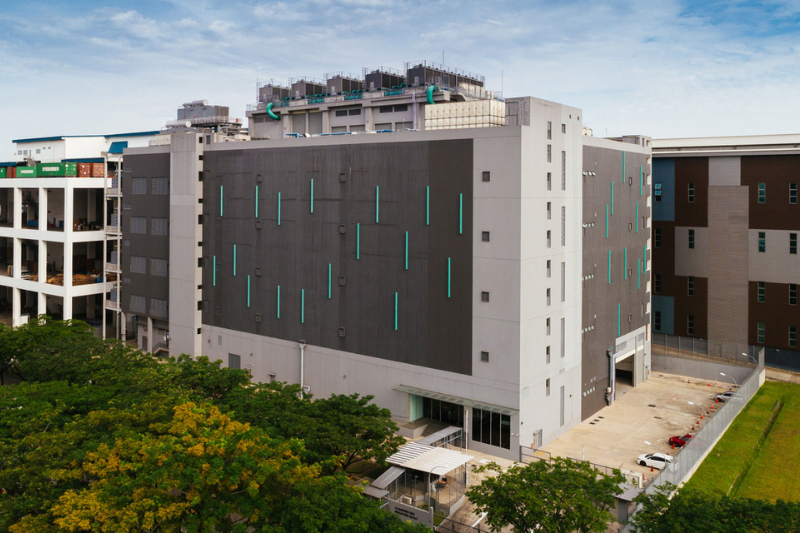
Keppel DC REIT owns data centres across three continents – Asia, Australia, and Europe.
However, it generates most of its revenue from Singapore, which accounted for 72% of revenue in H1 2025.
The REIT’s recent financial numbers have been growing at an accelerating pace. For example, in 2024, gross revenue rose 10.3%, net property income was up 6.3%, and the distribution per unit grew by 0.7%.
By comparison, these figures accelerated to 34.4%, 37.8%, and 12.8%, respectively, in H1 2025. The REIT’s strong growth during the period was mostly the result of additions of data centers to its portfolio.
As Keppel DC REIT heads into reporting its earnings for H2 2025, which should come out in January 2026, it is set to benefit from a few things.
First, interest rates have been falling. The US Federal Reserve cut benchmark interest rates by a further 0.25% in December 2025 to a range of 3.5% to 3.75%.
President Trump will appoint a new Fed Chair in 2026, and he has made clear his strong desire for significantly lower rates going forward. While there is no guarantee, this increases the odds of interest rates dropping further in 2026.
REITs tend to have large borrowings to fund the acquisition of properties.
Thus, lower interest rates should help to lower their finance costs, which will increase the amount they have to distribute to investors, and so send their unit prices higher.
Second, Keppel DC REIT also stands to benefit from the increasing adoption of AI, which should increase demand for its data centres.
Third, although all REITS carry debt, the level of leverage can differ, and Keppel DC REIT has the lowest gearing of its peer group of Singapore-listed pure-play data centre REITs.
Its aggregate leverage as at 3Q 2025 was 29.8%, compared to NTT DC REIT’s (SGX: NTDU) 32.5%, and the 38.5% sported by Digital Core REIT (SGX: DCRU).
This means that Keppel DC REIT has more headroom if it wishes to grow its distributions by acquiring data centers in the future, and is also more likely to prove resilient to any macroeconomic disturbances.
Singapore Telecommunications (SGX: Z74)
Another company that is showing positive financial momentum is Singapore Telecommunications, or SingTel, Singapore’s leading telecommunications provider.
It also owns or has significant stakes in other telcos regionally, including Australia, India, Indonesia, the Philippines, and Thailand.
For the year ended March 2025 (FY2025), group revenue inched up 0.8% on a constant currency basis, while underlying net profit – which excludes exceptional items – rose by 11.4%.
Singtel’s rate of growth accelerated in its most recent results for the half year ended September 2025 (H1 FY2026), with the same metrics growing by 1.9% and 16.7% year-on-year, respectively.
Similar to Keppel DC REIT, SingTel is also benefitting from an increase in demand for data centres.
In November, it was reported that the telco, as part of a consortium with private equity giant KKR, is in talks for a S$5 billion bank loan to support the purchase of ST Telemedia Global Data Centres, which is one of Asia’s largest data centre operators.
These assets would complement SingTel’s existing Digital InfraCo business.
Another catalyst for SingTel’s shares would be improving metrics in its core telco businesses in Singapore, India, and Australia.
In its latest report on SingTel, analysts expect average revenue per user to stablise in Singapore, grow by double digits in India, and strengthen in Australia, where SingTel subsidiary Optus is the No.2 player.
Optus’s currently low return on invested capital is also expected to stage a recovery.
Analyst expect all these to lead SingTel’s forward EV/EBITDA ratio to re-rate from 5x to the regional-average of 7x.
Sembcorp Industries Ltd (SGX: U96)
The Australian connection extends to Sembcorp, another SGX-listed stock that’s worth a look. Recently, the company announced that it is purchasing Alinta Energy, a leading integrated energy company Down Under, for S$4.8 billion.
The deal will be immediately accretive to Sembcorp’s earnings, and would have provided an uplift of 36% to adjusted EBITDA, 14% to net profit, and 280 basis points to return on equity in the last twelve months to June 2025.
However, the acquisition will also lead to Sembcorp’s net debt rising 74% from S$7.8 billion to S$13.6 billion on a pro-forma basis.
Since peaking at S$7.85 in July this year, Sembcorp’s stock price has since fallen by 24%, and traded at S$5.95 as of 22 December. But the decline means that Sembcorp is now trading relatively cheaply compared to its peers. As at 22 December 2025, Sembcorp had a trailing 12 months PE ratio 10.6.
This is less than half of the 24x median of its comparable listed peers in the region.
| Company | Trailing twelve months PE ratio |
| Keppel Corp | 20.5x |
| Keppel Infrastructure Trust | 23.8x |
| YTL Power | 11.6x |
| Malakoff Corporation | 40.3x |
| Gulf Energy Development | 24.3x |
| B.Grimm Power | 35.5x |
| Tata Power | 30.0x |
| Origin Energy | 12.9x |
| Median | 24.0x |
Sembcorp’s relatively lower valuation gives investors a margin of safety, and more room for expansion in the PE ratio going forward.
One catalyst may be positive analyst coverage of the Alinta deal. For example, Macquarie Equities Research upgraded Sembcorp to ‘outperform’ and raised his target price to S$7.04 after the Alinta acquisition was announced.
Notably, in a briefing to analysts regarding the deal, Sembcorp’s management said that the company expects to be able to maintain its dividend, which will be important to many shareholders who are looking to the company for a steady flow of payouts.
Get Smart: Position Before Results Hit the Headlines
American motivational speaker Zig Ziglar once said that “success occurs when opportunity meets preparation.”
Investors should take this to heart and prepare their investment thesis before – not after – earnings season.
By identifying blue chip stocks with strong fundamentals and clear catalysts, you can be more confident of riding the market momentum following an earnings release.
One Singapore bank has quietly become one of the strongest income engines in the market. Its dividends have grown at 16.6% a year while others were pulling back. That level of consistency can change a retirement plan entirely. Our FREE 2026 Dividend Game Plan explains why this bank keeps lifting payouts and why many long-term investors rely on it for stable income. Download your free copy today.
Follow us on Facebook, Instagram and Telegram for the latest investing news and analyses!
Disclosure: Silas owns shares in Keppel DC REIT and SingTel.