Falling markets have a way of making every dividend look like a bargain.
The Straits Times Index (SGX: ^STI) has now slipped more than 7.3% from its all-time high.
It’s tempting to reach for the biggest payouts on offer.
A lower share price does nothing to protect a dividend, though.
Cash does.
So before you buy, ask how a company pays for what it hands you.
The three SGX companies below all raised their dividends in the first half of 2026 (1H2026), though each one funded its payout in its own way.
| Company Name (Stock Ticker) | 1H2026 Dividend | Dividend Yield |
|---|---|---|
| Union Gas Holdings Limited (SGX: 1F2) | S$0.0080 (S$0.0048 Interim + S$0.0032 Special) | 3.6% |
| Nanofilm Technologies International Limited (SGX: MZH) | S$0.0060 (Interim) | 2.1% |
| ValueMax Group Limited (SGX: T6I) | S$0.0138 (Interim) | 4.5% |
Note: Yield figures are as at 27 October 2026. (Source: Fiscal.ai)
Can Union Gas keep paying more as it adds stations?
Union Gas Holdings Limited (SGX: 1F2) distributes gas fuels and runs Cnergy service stations.
Its profit attributable to shareholders rose 175.8% year on year (YoY) to S$12 million.
The board could have lifted the regular dividend to match.
It didn’t; instead, it held the interim dividend steady and paid a special dividend instead:
- Interim dividend: S$0.0048 per share, unchanged from a year ago
- Special dividend: S$0.0032 per share, the group’s first
Total dividends rose 66.7% YoY to S$0.008 per share.
All of that increase came from the special, so don’t count on it every year.
The cash backs it up.
Free cash flow climbed to S$25.1 million, up from just S$1.3 million a year ago, helping the group maintain a healthy net cash position of S$21.7 million as at 30 June 2026.
The growth was largely driven by its service station network, where total revenue rose 66.4% to S$105.9 million.
Liquid fuel revenue jumped 444.4% to S$51.7 million as new stations at Dunman Road and Queensway began contributing.
Growth won’t come free.
Stations in Marsiling and Jurong West are due to open in 2027, and the group spent S$8.2 million buying two LPG retailers on 31 July 2026.
Is Nanofilm’s bigger dividend backed by lasting cash flow?
Nanofilm Technologies International Limited (SGX: MZH) makes advanced materials coatings and nanofabricated products.
It doubled its interim dividend to S$0.006 per share on the back of a 65.6% YoY surge in net profit to S$4.3 million.
While that percentage jump looks impressive, it comes off a relatively small base from the prior period.
Cash flow told a bigger story.
Free cash flow turned positive at S$19.5 million, up from an outflow of S$10.3 million from the previous year.
Free cash flow is the lifeblood of dividends, and here it ran far ahead of profit.
Part of that gap came from customers paying what they already owed, but don’t expect that boost every half.
Revenue grew 6.1% to S$113.7 million, but the more lasting change shows up in margins.
Gross margin widened to 38.6% from 32.6% as automation and cost discipline lifted productivity.
Research and engineering expenses also rose 56.6%.
Much of that reflects accounting, not extra spending: as projects moved into production, less of the cost was set aside to be expensed in later years.
Total R&D spending actually fell to S$17.4 million from S$19.1 million.
Cash of S$88.7 million roughly matched total bank borrowings of S$88.8 million as at 30 June 2026.
The second half of the year will test the recovery.
Management expects stronger equipment deliveries in 2H2026, helped by its order backlog.
Conversely, tighter memory chip supply and rising component prices may squeeze margins.
What does ValueMax’s borrowing mean for its dividend?
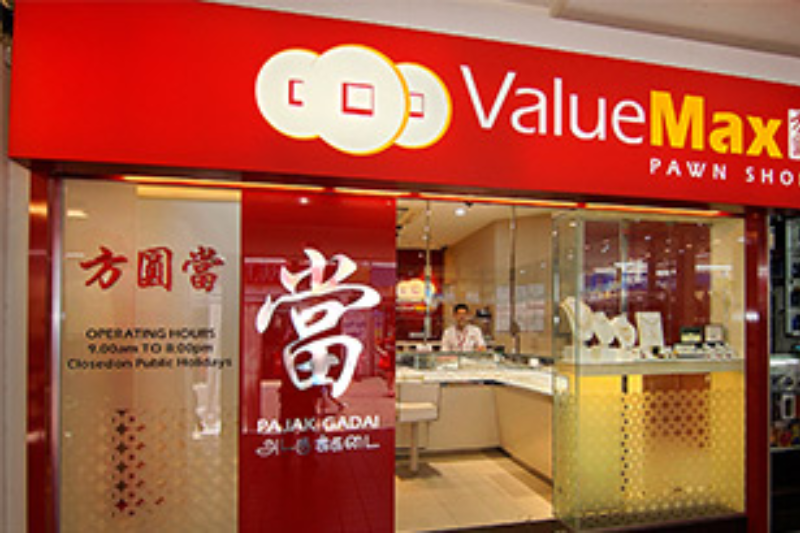
ValueMax Group Limited (SGX: T6I) runs pawnbroking and secured moneylending businesses, and retails and trades gold and jewellery.
It raised its interim dividend 15% YoY to S$0.0138 per share, which was paid out on 3 September 2026.
Net profit attributable to shareholders increased 30.4% to S$62.6 million, giving the dividend hike plenty of cover relative to earnings growth.
Revenue rose 38.2% to S$370.7 million, though gross margin narrowed to 27.0% from 30.2% as lower-margin gold sales made up more of the mix.
Here’s the thing: ValueMax lends money for a living, so its cash flow looks different.
Free cash flow came in at negative S$34.1 million, compared to negative S$14.5 million a year earlier, as trade and other receivables absorbed S$192.7 million to fund loan book expansion.
For a financial lender, growing the loan book builds future earnings power, but it naturally consumes cash upfront.
That growth leans on borrowing.
Total borrowings, excluding lease liabilities, reached S$1.05 billion as at 30 June 2026, up 18.1% over six months, against cash and bank balances of S$18.8 million.
That debt is why ValueMax is the most nuanced case of the three.
Management expects gold prices to stay volatile after peaking near US$5,300 an ounce in March 2026, and it has flagged rising competition.
Get Smart: Trace the cash before you buy the dip
A falling share price tells you nothing about whether a payout will last.
So follow the money.
Start by separating any special dividend from the ordinary payout, as Union Gas shows.
Then ask whether free cash flow came from the business or from collecting old receivables.
Nanofilm’s latest half had a bit of both.
And at ValueMax, borrowing pays for growth, so keep an eye on that debt.
The STI’s dip lets you buy dividend payers at lower prices.
Just make sure you pick the ones whose cash you understand.
S$5 billion in government backing. S$1.1 billion already deployed. Singapore’s small-cap market is about to explode, and most people are completely clueless. Our FREE report gives you the inside track on 5 companies positioned to benefit. Download now before the crowd catches on.
Follow us on Facebook, Instagram, Telegram and YouTube for the latest investing news and analyses!
Disclosure: Calvina L. does not own shares in any of the companies mentioned. Chin Hui Leong contributed to this article and does not own shares in any of the companies mentioned.