Most investors pick real estate investment trusts (REITs) for the steady income, but not every REIT is built the same.
The strongest ones own high-quality assets, maintain prudent balance sheets, and have proven they can grow distributions through different market environments.
These are three types of REITs that could be worth holding for decades.
What Makes a REIT Worth Holding “Forever”
A high yield may get investors through the door, but durability is what keeps a REIT in your portfolio.
The best REITs own quality assets, enjoy strong sponsor backing, and allocate capital prudently.
They also have a proven ability to maintain or grow distribution per unit (DPU) through economic downturns and shifting interest rate environments.
Like a well-located property, great REITs derive their value from strong foundations rather than short-term appeal.
Why REITs Can Be Powerful Long-Term Holdings
Good REITs are not just about collecting rent.
They provide a steady income, allow you to invest in tangible property, and allow you to take advantage of compounding via dividend reinvestment.
In the long run, this can help you build both your capital and passive income.
CapitaLand Integrated Commercial Trust (SGX: C38U), or CICT — The Defensive Income Compounder
CICT, Singapore’s biggest REIT, is a heavy hitter if you’re after resilience and steady income.
The REIT owns a broad range of retail, office, and mixed-use properties.
This kind of mix keeps its cash flow strong, even when markets get rocky.
CICT’s occupancy level stood at 95.2% as at 31 March 2026.
The REIT also reported a weighted average lease expiry (WALE) of three years as of 31 March 2026.
Rental reversions for both the retail and office segments were positive at 4.4% and 6.1%, respectively, reflecting healthy tenant demand.
And the numbers back it up.
CICT has been raising its DPU, from S$0.1075 in 2023 to S$0.1158 in 2025.
A mix of smart asset upgrades and careful capital moves drives that growth.
If you’re an investor who values income and stability, CICT’s reliable assets and consistent payouts make it a REIT worth hanging onto.
Frasers Centrepoint Trust (SGX: J69U) — The Growth-Oriented REIT
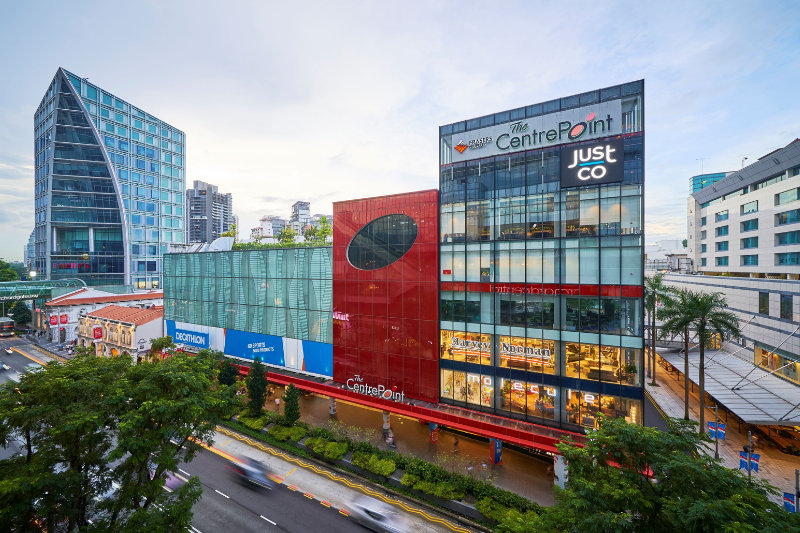
FCT has grown into Singapore’s largest suburban retail REIT, with a portfolio of nine malls located in densely populated residential catchments.
Its properties continue to enjoy strong tenant demand, reflected in a committed occupancy rate of 99.8% and positive rental reversions of 6.5% for the first half of the fiscal year ending 30 September 2026 (1HFY2026).
FCT has multiple avenues for growth.
Hougang Mall and NEX are both undergoing asset enhancement initiatives, and NEX will soon offer about 44,000 extra square feet for new tenants.
Its long-term track record is equally encouraging.
Annual DPU has increased from S$0.1001 in 2012 to S$0.1211 in 2025, demonstrating the REIT’s ability to steadily grow unitholder distributions over time.
Supported by sponsor Frasers Property (SGX: TQ5) and a proven acquisition and asset recycling strategy, FCT shows that growth can be just as important as yield when building a long-term income portfolio.
Parkway Life REIT (SGX: C2PU) — The Structural Trend Beneficiary
While many REITs ride economic cycles, Parkway Life REIT benefits from a more enduring trend: healthcare demand.
The REIT owns 74 healthcare properties across Singapore, Japan, and France, giving investors exposure to a sector supported by ageing populations and rising healthcare needs.
Just as importantly, Parkway Life REIT is backed by high-quality tenants.
Its Singapore hospitals are operated by Parkway Hospitals Singapore, a wholly owned subsidiary of IHH Healthcare (KLSE: IHH), one of the world’s largest private healthcare groups.
The REIT also enjoys a WALE of 14.85 years, with 91.8% of its gross revenue protected by downside lease structures.
On the finance side, Parkway Life keeps things healthy.
Gearing sits at 34.2% and the interest coverage ratio is a strong 8.4 times (as of 31 March 2026).
Best of all, Parkway Life REIT has increased its annual core DPU every year since listing, with distributions rising from S$0.1075 in 2013 to S$0.1529 in 2025.
If you’re after a REIT with staying power, healthcare offers a rare mix: steady rising demand, first-rate tenants, and real structural growth.
What Long-Term REIT Investors Should Watch
Even if a REIT seems like a solid, long-term investment now, you shouldn’t just set it and forget it.
Check in from time to time.
Watch for creeping debt levels, trouble with refinancing, declining asset quality, and any consistent drop in distributions per unit.
Look at how management and sponsors are handling capital; make sure they’re acting in the interests of unitholders, not just themselves.
No REIT is truly maintenance-free, as even the strongest ones need a little attention from time to time.
Why Most Investors Sell Too Early
One mistake people often make is unloading a quality REIT when the market gets shaky.
Unit prices can swing wildly if interest rates climb or the mood turns cautious, even though the properties themselves keep performing.
If you want real long-term results, you have to let patience do the work.
Time gives distributions a chance to pile up and lets compounding build real wealth.
Get Smart: The Best REITs Reward Time, Not Timing
Great REITs offer much more than just regular payouts.
They stand on strong assets and careful management, delivering reliable income and long-term growth you can count on.
Stick with them, stay patient, and you’re much more likely to outperform those who try to jump in and out with every market shift.
In investing, giving yourself time in the market usually beats trying to outsmart its ups and downs.
If you want to retire with a constant stream of dividends, these 5 stocks might be all you need. We’ve found 5 SG stocks that have kept paying (and growing) through inflation, rate hikes, and recessions. See what they are with our latest free report for SGX dividend investors. Click here to get instant access.
Follow us on Facebook, Instagram and Telegram for the latest investing news and analyses!
Disclosure: Joseph G. does not own shares of any companies mentioned.