For income-focused investors, the upcoming earnings season is about more than just numbers; it is a masterclass in how distribution sustainability is being redefined.
Gone are the days when REITs could simply collect rents and pass them through to unitholders.
In a higher-for-longer interest rate environment, active portfolio management is the primary differentiator between REITs that maintain their payouts and those that struggle.
This week, CapitaLand Ascendas REIT (SGX: A17U), Frasers Logistics & Commercial Trust (SGX: BUOU), and ParkwayLife REIT (SGX: C2PU) report earnings, each demonstrating a distinct approach to protecting and growing distributions.
Here is what dividend seekers should watch for.
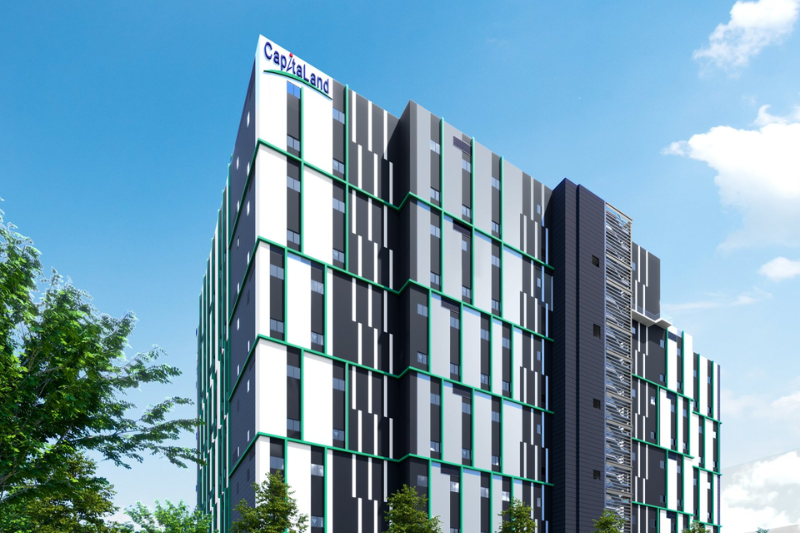
CapitaLand Ascendas REIT (CLAR): The Active Recycler
As Singapore’s largest industrial REIT, CLAR is currently proving that bigger can indeed be nimbler.
Management is executing an aggressive divestment-and-acquisition strategy to future-proof its S$17.7 billion portfolio.
By offloading older logistics assets, such as the recent S$23 million sale of 30 Tampines Industrial Avenue 3 at a 5% premium, CLAR is freeing up capital for higher-yielding opportunities.
Investors should look for confirmation that the remaining S$306 million in Singapore divestments closed as planned in late 2025.
These proceeds are being recycled into five new properties yielding between 6% and 7%, creating a healthy spread over the assets being sold.
Furthermore, the redevelopment of 5 Toh Guan Road East is a critical litmus test for the REIT’s internal growth engine.
If stabilized occupancy reaches the 65% mark soon, it validates CLAR’s ability to extract value from existing land without over-relying on expensive external acquisitions.
With rental reversions trending at 7.6% and portfolio occupancy holding firm at 91.3% in the third quarter of 2025, the REIT remains a defensive heavyweight.
The key question for this week is whether the REIT can maintain this momentum while its UK green-certified projects come online to boost future distributions.
Frasers Logistics & Commercial Trust (FLCT): The Portfolio Sharpener
FLCT is currently a tale of two sectors, and management is making a clear choice.
By divesting 357 Collins Street for A$192.1 million, the REIT has officially exited the sluggish Melbourne CBD office market.
This strategic retreat created S$507 million in debt headroom, allowing FLCT to pivot toward its powerhouse logistics and industrial segment.
While FY2025 revenue grew by 5.6% year on year (YoY), the REIT faced a familiar foe: surging finance costs, which jumped 26.4% YoY and dragged down distribution per unit (DPU).
However, the worst of the refinancing pain may now be in the rearview mirror.
Investors should focus on the quality of the distribution; capital distributions have shrunk to just 9% of 2HFY2025 DPU, down from 23% the prior year, indicating that dividends are increasingly backed by recurring operations rather than one-off gains.
At the current S$1.02 per unit, FLCT offers a 5.8% distribution yield based on FY2025 payouts.
The stars of the show are the logistics assets, which delivered a staggering 39.6% rental reversion recently.
If management can replicate even a fraction of that performance while backfilling vacancies at the Alexandra Technopark in Singapore, the current 5.8% yield will look very attractive.
FLCT is successfully sharpening its focus, trading away office uncertainty for industrial reliability.
ParkwayLife REIT: The Contractual Harvester
While others are busy trading properties, ParkwayLife REIT is reaping the rewards of patient, long-term planning.
This healthcare specialist is a rarity in the REIT world, having delivered uninterrupted DPU growth since its 2007 IPO.
The spotlight this week is firmly on the Singapore hospital rental reset.
Under the renewed master lease agreement, annual rent for its three Singapore hospitals is projected to leap by 35.4% to S$99.2 million in FY2026.
This is a massive step-up that provides a long-term runway for distribution growth.
Beyond Singapore, the REIT is diversifying into Europe, with 11 French nursing homes now contributing to the bottom line.
While gross revenue rose 8.2% YoY to S$117.3 million and NPI increased 8.1% to S$110.7 million in the first nine months of 2025, the real “kick” from the Singapore rental hike hasn’t fully hit the DPU yet.
Watch for management’s guidance on how this rental surge will be balanced against currency hedges for its Japanese and European assets.
With a portfolio of 74 properties and a dominant position in the “recession-proof” healthcare sector, PLife REIT remains the gold standard for stability.
It is the ultimate example of how a well-negotiated contract can be more valuable than a dozen acquisitions.
Get Smart: Distribution Sustainability Requires Active Management
The lesson for income investors is clear: in today’s volatile market, passive ownership is a recipe for stagnation.
The three blue-chip REITs reporting this week illustrate that sustainability is a choice made by management, not a market guarantee.
Whether it is CLAR recycling capital into modern facilities, FLCT exiting underperforming office markets, or PLife REIT harvesting contractual rental bumps, active strategies are the only way to combat elevated interest rates.
For dividend seekers, the REITs that prioritize portfolio quality over sheer size are the ones most likely to keep your passive income growing for years to come.
The upcoming results will reveal how well each strategy is working.
Some companies cut dividends in a downturn. These 5 didn’t.
Find out which Singapore blue chips have weathered past chaos…and why they could be your portfolio’s anchors in the next wave of downturn. Download the report free.
Follow us on Facebook, Instagram and Telegram for the latest investing news and analyses!
Disclosure: The Smart Investor owns all the stocks mentioned.