March is shaping up to be a particularly cheerful month for Singapore REIT (S-REIT) unitholders.
If you hold any of the local heavyweights, you might want to keep a close eye on your brokerage accounts.
Three of Singapore’s most widely held blue-chip REITs – ParkwayLife REIT (SGX: C2PU), CapitaLand Ascendas REIT (SGX: A17U), and CapitaLand Integrated Commercial Trust (SGX: C38U) – are all scheduled to drop their payouts within a tight two-week window.
While the arrival of fresh cash is always a cause for celebration, experienced investors know that a single payout isn’t the whole story.
The real question we should be asking ourselves is whether these distributions are built on solid ground.
Can these REITs continue to sustain, or even grow, these dividends in the years to come?
Let’s dig into each REIT’s latest full-year results to find out.
ParkwayLife REIT: A Built-In Growth Engine
ParkwayLife REIT, or PLife REIT, gets the party started with its distribution on 10 March 2026.
This healthcare specialist manages a portfolio of 74 properties across Singapore, Japan, and France, with a total valuation of S$2.57 billion.
The numbers for FY2025 were nothing short of healthy.
Gross revenue grew by 7.6% year on year (YoY) to S$156.3 million, while net property income (NPI) followed suit with an 8.0% climb.
For those watching the DPU, it rose 2.5% to S$0.1529.
This isn’t just a one-off win; it extends an incredible unbroken growth streak that traces all the way back to the REIT’s IPO in 2007.
It is worth noting that while distributable income actually surged by 9.1%, the per-unit increase was slightly diluted by an enlarged unit base from the November 2024 equity fund raising.
What makes PLife REIT particularly compelling for income investors is the visibility it offers.
Thanks to a renewed master lease agreement, the minimum guaranteed rent for its Singapore hospitals is set to leap by 24.3% – from S$79.7 million in FY2025 to S$99.1 million in FY2026.
This built-in escalation provides a very clear runway for future DPU growth.
With a unit price hovering around S$4.11, investors are looking at a trailing dividend yield of roughly 3.7%.
It may not be the highest yield on the board, but the predictability is top-tier.
CapitaLand Ascendas REIT: Look Beyond the Headline
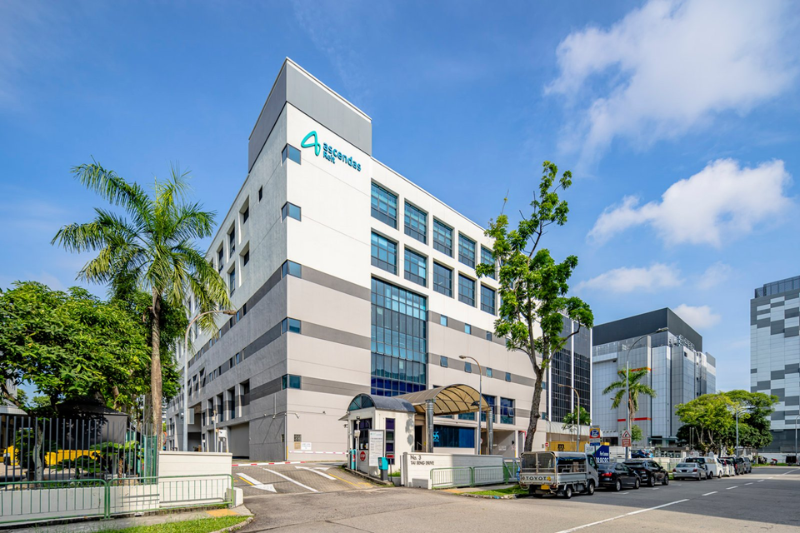
Next up is CapitaLand Ascendas REIT (CLAR), the undisputed heavyweight of Singapore’s industrial space, which pays out on 13 March 2026.
Its massive portfolio includes 222 properties valued at S$18.2 billion, spanning across Singapore, the US, Australia, and Europe.
If you only glanced at the headline DPU, you might have felt a slight sting.
DPU slipped by 1.3% to S$0.15005, primarily due to the S$500 million equity fundraising back in June 2025 which increased the number of units in issue.
However, if you looked deeper, the actual distributable income grew by 1.4% to S$678.3 million.
This tells us the underlying business is actually pumping out more cash than it was a year ago.
The operational metrics remain very robust.
Rental reversions came in at a strong +12.0% for the full year, with a particularly impressive +19.6% showing in the final quarter.
While occupancy dipped slightly to 90.9%, this was mostly due to new redevelopments that are still in the process of finding tenants.
With S$1.5 billion in fresh acquisitions yielding between 6% and 7%, and a comfortable leverage ratio of 39.0%, this DPU dip looks like a temporary hurdle rather than a structural red flag.
At a unit price of S$2.70, CLAR offers a tempting trailing yield of about 5.6%.
CapitaLand Integrated Commercial Trust: Five in a Row
Closing out the March payout calendar on the 24th is CapitaLand Integrated Commercial Trust (CICT), the largest REIT on the local exchange by market cap.
CICT manages a massive S$27.4 billion portfolio of retail, office, and integrated assets that most Singaporeans interact with daily.
FY2025 was a standout year for the giant.
DPU rose 6.4% YoY to S$0.1158, marking the fifth consecutive year that CICT has grown its distribution.
Gross revenue and NPI both saw steady gains, supported by a portfolio occupancy rate of 96.9%.
Whether it is shopping malls or office towers, CICT is keeping its spaces filled, and more importantly, it is signing new leases at rents 6.6% higher than before.
There were two major catalysts behind this performance.
First, CICT took full ownership of the iconic CapitaSpring tower, which is now a significant income contributor.
Second, management successfully lowered the average cost of debt from 3.6% to 3.2%, which goes a long way in boosting the bottom line.
With the recent divestment of Bukit Panjang Plaza at a huge premium and ongoing upgrades at properties like Tampines Mall, CICT’s management is clearly playing the long game.
At a unit price of S$2.47, the REIT provides a trailing yield of approximately 4.7%.
Get Smart: Follow the Cash, Not Just the Yield
March’s payouts are a great reminder of why we love REITs, but the real lesson here is about sustainability.
PLife REIT offers incredible visibility with its guaranteed rent hikes.
CICT is showing us the power of active management and lower interest costs.
And while CLAR had a slight DPU wobble, its strong rental reversions suggest the engine is still firing on all cylinders.
As dividend investors, we must remember that yield is what you see today, but cash flow is what pays you tomorrow.
All three of these blue-chips saw their total distributable income grow in FY2025.
That is the ultimate lifeblood of a sustainable dividend, and it’s why these three remain staples in many income-focused portfolios.
What if every stock trade in Singapore puts money in your pocket? One company earns whenever the market moves. Its free cash flow has grown close to 10% a year, and dividends are set to rise 40% over the next three years. Our free 2026 Dividend Playbook reveals this legal monopoly. Download it for free now.
Follow us on Facebook, Instagram and Telegram for the latest investing news and analyses!
Disclosure: The Smart Investor owns shares of all three REITs.